When I was about nine, a nice man in a British Rail uniform came to my primary school to talk to us about railway safety and how it was a pretty bad idea to trespass. He told us a few scary stories and showed us a few unpleasant pictures (not the seriously gruesome stuff, but plenty of stitches and broken bones), and then, just so we weren’t too traumatised, he put on a recording of ‘The Runaway Train’ and we all sang along.
A year later, or thereabouts, I was at secondary school, and the very same man came to talk to us. He gave us exactly the same talk, with exactly the same pictures. But he didn’t play ‘The Runaway Train’. He just warned us all to be careful, and left.
I think that’s the moment I realised this growing-up lark wasn’t so great after all.
Showing posts with label childhood. Show all posts
Showing posts with label childhood. Show all posts
Friday, February 15, 2019


Sunday, February 10, 2019
About Tomi Ungerer
Much of Tomi Ungerer’s work was concerned with politics and erotica but I’ll remember him best for his children’s books, such as his illustrations for Jeff Brown’s Flat Stanley and above all The Beast of Monsieur Racine. I’ve only just discovered that there’s a film of the latter, which brilliantly captures the book’s lurches from sweet melancholy to deeply weird grotesquerie. RIP.
PS: I’ve also suddenly remembered the time I was co-opted into doing some decorations for my university summer ball, which had a Summer of Love theme. “Do something Sixties-ish,” I was told. I knocked off a fairly gauche copy of one of Ungerer’s Vietnam posters. They didn’t ask me back.

PS: I’ve also suddenly remembered the time I was co-opted into doing some decorations for my university summer ball, which had a Summer of Love theme. “Do something Sixties-ish,” I was told. I knocked off a fairly gauche copy of one of Ungerer’s Vietnam posters. They didn’t ask me back.

Tuesday, July 24, 2018
About the importance of music

I last saw the Flaming Lips in Singapore, eight years ago. It was a defiantly underground event, both literally (it took place in the basement of a convention centre) and culturally; the Lips’ trippy, shambling weirdness stands in direct opposition to the earnest, aspirational, fiercely drug-free ethos promoted throughout the Lion City.
It was also a strictly 18+ event, as good Singaporean children should spend their evenings scrabbling for a foothold within the brutally competitive education hierarchy. Whereas when the band played in London last weekend, headlining the Kaleidoscope festival at Alexandra Palace, small people were actively welcomed into the mix. To an extent this makes sense. Much of what the Lips do taps into the fusion of naïvety, nostalgia and melancholia developed by the Beatles, Pink Floyd and David Bowie around 1967; barely an image from Lewis Carroll or AA Milne went unchecked, albeit through a thick fug of hallucinogens. Lips mainman Wayne Coyne comes from Oklahoma and his references tend more to The Wizard of Oz but the process is similar.
However, there’s a difference between the childhoods half-remembered by the likes of McCartney and Barrett and Coyne and those enforced by the yummy mummies of North London. The Lips’ party atmosphere includes balloons, and lots of them, big, substantial ones, half-way to beachballs. In Singapore they bounced cheerfully over the heads of the punters until they burst or were otherwise forgotten. Here, they are grabbed by adult hands and passed over to little Mungo or darling Clemency to hold onto for dear life. Smaller children, meanwhile, are decorated with industrial-grade ear protectors, which does rather raise the question of why they’re being brought to a festival featuring lots of noisy rock music.
Actually, that question might be raised about plenty of the parents, it seems. From the absence of singalonging and an air of cheerful ambivalence towards any of the musicians, even the headliners, one wonders how many of the punters have even heard of the Flaming Lips; they were as much attracted to the event by the promise of face painters and balloon animals and gluten-free pizzas and other manifestations of a lovely summer’s day out. Which is all fine and dandy, and, yes, I know, music just isn’t that important a part of life for some people. But I wonder whether the next step will be a music festival without the expense and inconvenience of musicians.
And, the following day, this happened:
Hate the snobbery #desertislanddiscs sometimes brings out in some people with reference to castaways' music choices.— Margaret Graham (@MarGraham) 22 July 2018
and I’m pretty certain it was a response to something I tweeted about yet another wholly admirable person who appears to have a pretty lame record collection. Again, I understand that many people don’t care as much about music as I do, and this applies both to the people who appear on Desert Island Discs, and many of the listeners. That said, I’d always assumed that the choice of music is intended to reflect some aspect of the subject’s life or personality in a way that can’t always be done through words alone. And as such, the music is available for public discussion and response in exactly the way the words are. If not, once again, what’s the point of having the music at all?
But I don’t launch into an unseemly Twitter Spat©, partly because I’ve got a horrible feeling that such disagreements tend to be ever-so-slightly gendered. Way back before I ever set foot in Singapore, I wrote a rather disobliging review of, among other things, Ruth Padel’s book I’m a Man. In it, she dismisses the (in her eyes) characteristically male tendency to think knowing stuff about music is very important, with a specific dig at Nick Hornby; this presumably offered her a get-out-clause for the numerous factual errors in her text. Since Padel is currently Professor of Poetry at King’s College London, I wonder whether she’s as relaxed about her students’ ignorance of Shelley or Plath. (Incidentally, when Padel herself appeared on Desert Island Discs, her music choices were perfectly respectable; which inevitably disappointed me, as I wanted her to choose eight slices of crap, just to prove I was right.
Sunday, January 21, 2018
About Christopher Robin
When I was very young, maybe five or six, there was a family holiday to Devon. At one point we ended up in a bookshop. I was probably mooching among the Ladybirds when my father nudged me and pointed towards the back of the shop, from where a bespectacled man had appeared, muttered something to the lady at the till and then disappeared again. “That’s Christopher Robin,” whispered Dad.

And it really was. Christopher Robin Milne had opened the Harbour Bookshop in Dartmouth in 1951, barely tolerating the gawpers who still saw him as the slightly fey child of his father’s books, all of them seemingly unaware (the clue’s in the last chapter of The House at Pooh Corner, people) that childhood isn’t a lifetime deal. I was still coming to terms with the distinction between fiction and real life, a confusion that wasn’t resolved by teachers who told us Bible stories in the same tones they reserved for sums and spelling; and if I’d deduced that Christopher Robin at least had his roots in reality, I couldn’t quite cope with the idea that this, to me, phenomenally old man (he would then have been in his early/mid-50s) was the blond, leggy friend to Pooh and Eeyore and all.
That said, in retrospect, he was probably the first Famous Person I’d seen in real life, outside the frame of a TV screen. And I still reckon that’s a pretty good one to start with.
Who was yours?
Monday, November 27, 2017
About loss
The late Mark Fisher, on the relatively new experience of being able to reconnect with your childhood gaze through the wonders of technology:
PS: Flashback to the time I went to Tokyo and whole swathes of childhood that I thought I’d imagined opened up before me.
By then, thanks to VHS, DVD and YouTube, it seemed that practically everything was available for rewatching. In conditions of digital recall, loss is itself lost.I think I know what he means; an extended episode of gentle melancholy, for me extending from about eight to 28, during which we thought we might never see that particular episode of The Herbs, or Ludwig, or Crystal Tipps and Alistair, again. Now they’re available wherever we look and all we have left to miss is the melancholy. But I pity kids today who’ve always been able to have Peppa Pig on tap and don’t know what missing even means.
PS: Flashback to the time I went to Tokyo and whole swathes of childhood that I thought I’d imagined opened up before me.
Friday, May 23, 2014
In Hakone: part three
Part one here.
Part two here.
The first time I visited Japan, among many other wonders, I found myself in a toyshop in Harajuku that was populated not just with wild and wonderful Japanese products but also side orders of Western TV culture that had enhanced my own childhood but then apparently disappeared, like the shape-shifting Barbapapa and plucky little Krtek (The Mole). It was as if some of my earliest memories had been tucked away in a safe place on the other side of the world until I was ready to visit and retrieve them again. You see, Japanese people have many of the same cultural reference points that we do: it’s just that they approach them from a different angle, in a different order, with different priorities.
With that in mind, we arrive at The Museum of The Little Prince. My relationship with the original book has shifted over the years: I adored it at first, even though the edition I owned was a tie-in for the crappy 1974 movie; then grew away from it as I entered my teens because it was soppy and childish and possibly a bit Goddy; and eventually came to realise that it was actually a book about the pilot rather than the prince itself and that made it all feel OK. The narrator is an unwilling existential hero, hell-bent on isolation but at the same time desperate to get back to a childhood that probably wasn’t that great in the first place, Pooh via Camus.
Part two here.
The first time I visited Japan, among many other wonders, I found myself in a toyshop in Harajuku that was populated not just with wild and wonderful Japanese products but also side orders of Western TV culture that had enhanced my own childhood but then apparently disappeared, like the shape-shifting Barbapapa and plucky little Krtek (The Mole). It was as if some of my earliest memories had been tucked away in a safe place on the other side of the world until I was ready to visit and retrieve them again. You see, Japanese people have many of the same cultural reference points that we do: it’s just that they approach them from a different angle, in a different order, with different priorities.
With that in mind, we arrive at The Museum of The Little Prince. My relationship with the original book has shifted over the years: I adored it at first, even though the edition I owned was a tie-in for the crappy 1974 movie; then grew away from it as I entered my teens because it was soppy and childish and possibly a bit Goddy; and eventually came to realise that it was actually a book about the pilot rather than the prince itself and that made it all feel OK. The narrator is an unwilling existential hero, hell-bent on isolation but at the same time desperate to get back to a childhood that probably wasn’t that great in the first place, Pooh via Camus.
 |
| (After all these years, I’ve only just noticed that the boa ate the elephant trunk-first.) |
In other hands a museum dedicated to Saint-Exupéry’s work might have turned out to be a little tacky, with staff decked out in fluffy blonde wigs and an interactive game in which you try to kill the baobabs and save the rose. (I’ve just found out that there’s a new movie coming out next year and I hope it’s a complete disaster so they won’t be encouraged to build a Little Prince Theme Park. Oh God, Jeff Bridges is playing the pilot, which is perfect casting. Damn.)
Anyway, the Japanese museum isn’t that bad. There’s a lot about the author’s life, with plenty of photographs and manuscripts and a recreation of the New York room in which he started work on his novella. There are some statues of the main characters but they’re quirky rather than kitschy. You soon realise, though, as you sip on café au lait topped with cocoa stencils based on the illustrations from the book, that this place is less about The Little Prince or its author, more about an idealised notion of Frenchness — which is a little odd, as the book isn’t even set there. One you pass through the wrought-iron gates into a precisely coiffed garden you have a cute little courtyard of mocked-up shopfronts, including one of Saint-Exupéry’s own birthplace. And once you’re done, the gift shop is packed to gunwales with je ne sais quoi both echt and ersatz: imagine if the National Trust operated in Provence. That.
But in a way this is appropriate. If The Little Prince is about yearning for an unattainable state of innocence — that sort of childlike state that’s been hovering around wherever we go in Hakone — the Museum of The Little Prince encapsulates that state of mind, offering Japanese visitors a sensibility that probably never existed and certainly doesn’t now and most of them will never find out one way or another. I’m reminded of Paris syndrome, a condition identified by a Japanese psychiatrist among his compatriots who visited the city and found it to be a far more disturbing place than they’d imagined. Much safer to take a vacation in a purpose-built simulacrum of Paris, or maybe on an indoor beach.
Or you could just read a book instead.
Or you could just read a book instead.
Sunday, May 18, 2014
In Hakone: part two
Part one here.

So after an extraordinary dinner (cherry-blossom sushi, anyone?) and a midnight dip in a sulphurous onsen we arise suitably refreshed to attend the Modigliani exhibition at the Pola Museum. It’s a good show, interspersing Modigliani’s own works with those of his friends and contemporaries (including Picasso, who seems to get bloody everywhere in Japan) and tells the tale of a short life that ended in pissed poverty at the age of 35. In fact, the bohemian destitution that informs Modigliani’s paintings casts an inevitable pall over proceedings and you wonder whether it might be better to look at them individually, stripped of the biographical barnacles and the inevitable sense of melancholy that they bring.
Someone at the museum must have been listening because within the permanent collection they have three paintings that are stripped of any identifying material. No artist, title, date or anything. The deal is that you just look at them and consider how they make you feel, almost like a child who’s never seen a painting before. It’s a superb idea which I completely ruin by spotting that the first two paintings are by Kandinsky and Delvaux. And I’m thrown back to my English S-level paper (or was it Oxford entrance?) which included an unseen, unattributed text to which we were expected to respond; I spotted immediately that it was by Ben Jonson and throughout the whole exam I was debating whether to drop that fact casually into the answer to show off what a clever bastard I am or not mention it because if I did that would suggest I’d prepared for something that was meant to be spontaneous. I can’t remember now what I did in the end. And I didn’t get into Oxford.
But not for the first time, I’m stuck in a paradox, wanting to learn more but wishing I knew less because to be honest it’s often more fun that way. The third mystery painting, incidentally, turned out to be by a Japanes surrealist called Koga Harue, of whom I’d never heard and whose stuff I’d like to investigate more — although I guess that means I’ll find out just that little bit too much and the fun will wear off again. I suppose we’re going back to the notion of innocence, an idea that’s fascinated me since a brilliant man, since departed, explained Blake to me by means of reference to the last chapter of The House at Pooh Corner:

Of course, childhood and innocence aren’t one and the same. The Pola also contains a number of pictures by the European-based Japanese artist Léonard Foujita, a friend and contemporary of Modigliani who outlived him by nearly 50 years. Some of his most startling works involve children, who are depicted somewhere on the continuum between cute and evil, like possessed Kewpie dolls. Several of the pictures are downright disturbing, although not in the same way that the sexualised nymphets of Balthus disturb, in a show we visit when we get back to Tokyo. But that’s another story.
And I start wondering whether Foujita’s depictions of childhood – and indeed of France — might have a special resonance in Japan. But maybe that’s because I know where we’re going next.
Part three here.
Someone at the museum must have been listening because within the permanent collection they have three paintings that are stripped of any identifying material. No artist, title, date or anything. The deal is that you just look at them and consider how they make you feel, almost like a child who’s never seen a painting before. It’s a superb idea which I completely ruin by spotting that the first two paintings are by Kandinsky and Delvaux. And I’m thrown back to my English S-level paper (or was it Oxford entrance?) which included an unseen, unattributed text to which we were expected to respond; I spotted immediately that it was by Ben Jonson and throughout the whole exam I was debating whether to drop that fact casually into the answer to show off what a clever bastard I am or not mention it because if I did that would suggest I’d prepared for something that was meant to be spontaneous. I can’t remember now what I did in the end. And I didn’t get into Oxford.
But not for the first time, I’m stuck in a paradox, wanting to learn more but wishing I knew less because to be honest it’s often more fun that way. The third mystery painting, incidentally, turned out to be by a Japanes surrealist called Koga Harue, of whom I’d never heard and whose stuff I’d like to investigate more — although I guess that means I’ll find out just that little bit too much and the fun will wear off again. I suppose we’re going back to the notion of innocence, an idea that’s fascinated me since a brilliant man, since departed, explained Blake to me by means of reference to the last chapter of The House at Pooh Corner:
Then, suddenly again, Christopher Robin, who was still looking at the world with his chin in his hands called out, “Pooh!”Incidentally, one of my very earliest memories is of a family holiday in Devon and a visit to the bookshop that Christopher Robin Milne owned in Dartmouth. At one point a middle-aged man popped his head out from what must have been the store room and my father whispered that it was Christopher Robin himself. And I believed him, but a few years later I started thinking that it was just some random employee and Dad was humouring me; or that it may or may not have been Christopher Robin, but Dad just wanted to create a world for me in which it was. Only in the past few years have I come to the firm conviction that, yes, it really was Christopher Robin himself.
“Yes?” said Pooh.
“When I’m — when — Pooh!”
“Yes, Christopher Robin?”
“I’m not going to do Nothing any more.”
“Never again?”
“Well, not so much. They don’t let you.”
Of course, childhood and innocence aren’t one and the same. The Pola also contains a number of pictures by the European-based Japanese artist Léonard Foujita, a friend and contemporary of Modigliani who outlived him by nearly 50 years. Some of his most startling works involve children, who are depicted somewhere on the continuum between cute and evil, like possessed Kewpie dolls. Several of the pictures are downright disturbing, although not in the same way that the sexualised nymphets of Balthus disturb, in a show we visit when we get back to Tokyo. But that’s another story.
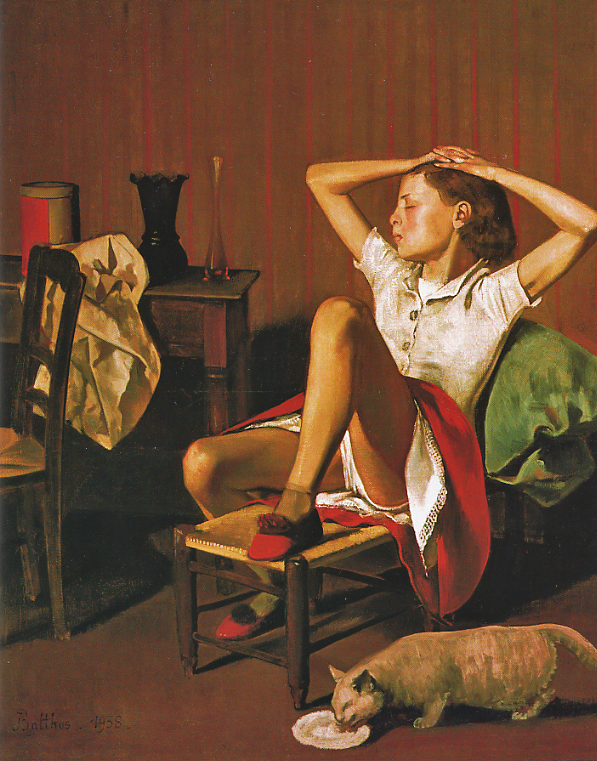
And I start wondering whether Foujita’s depictions of childhood – and indeed of France — might have a special resonance in Japan. But maybe that’s because I know where we’re going next.
Part three here.
Sunday, May 11, 2014
In Hakone: part one
(Something odd and slightly unnerving happened a bit over a week ago. You know how JK Rowling claims that the entire storyline of all seven Harry Potter books dumped itself in her head when she was stuck on a train in the Chilterns or the Cotswolds or somewhere else beginning with C? Well, I had a similar experience, but with a vast and rambling blog post that just appeared and wouldn’t go away. However, when I next put fingers to laptop, nothing came out. Maybe I need to move into a cafe in Edinburgh, I thought, which was a bit of a problem because I was in a rather sweet little hotel in Tokyo at the time. So I parked it and thought I’d come back to it. And then Philip Willey tagged me in another one of those deliciously retro meme chases and I thought, OK, I’ll have a go at that first but I couldn’t even do that. It was as if the enormous, throbbing, pulsating wordblob wasn’t content with refusing to enter the world, it was stoutly refusing to let any other thoughts to see the light either. And without delving into tired metaphors about gestating elephants and/or terminal constipation, I realised that the only way to get things shifting would be to do it in chapters. So, anyway. This.)
“A child could have done it.” That’s what they say about modern art, isn’t it? You know who, the saloon-bar sneerers, the ones who don’t know much about art and don’t much like what they do know. The aesthetic wing of UKIP, basically. There are various responses to this, from Susie Hodge’s rather literal-minded contradiction to the Groucho-esque request to find said child. The latter makes the most sense to me: much about great art involves shedding your inhibitions. Yes, if a four-year-old did it, we wouldn’t pay much attention, but for a 40-something to get inside the mind of the four-year-old, that’s impressive.
And in this frame of mind we find ourselves at the Hakone Open-Air Museum, an hour or so from central Tokyo and a brisk hike to Mount Fuji. The bulk of the space is a sculpture park with over 100 pieces covering most emotional states: moving, perplexing, arousing and just plain fun. Kids run around, gawping at the towering, shiny beasts, with a particular fascination for the figures blessed with huge arses. And I’m reminded of my nephew George on his first visit to London Zoo, at the age of three, transfixed by the wobbly great botty of a female gorilla.
 In the centre of the park is the Picasso Pavilion, which holds a pretty respectable collection of the old rogue’s pieces – obviously there are few of the sort of pictures you tend to see on tea-towels but there’s plenty to enjoy. It’s particularly strong on works from his later life – there’s at least one painting from 1972, the year before he died — and includes a lot of ceramics from the 1950s. Several of the plates have images of the fauns that captured his imagination around the time, some of them little more than quickly painted doodles, eyes-nose-mouth-horns-done. In objective terms maybe they’re not that amazing but there’s a cheeky exuberance that makes them endearing. It’s not about knowing they’re by Picasso, and therefore by definition Great Art; it’s that Picasso knows they’re not so important and yet they go out under the brand of probably the best-known artist of the past 100 years and end up in a vast temple to his genius which elevates them from being mere doodles on dinnerware and gives them a sort of subversive charm.
And then I wonder if I’m rather overthinking the whole thing. Would it maybe have been better if the pavilion hadn’t had Picasso’s name splashed all over the side, if I hadn’t known I was going to be in the company of the Great Artist; if, in fact, this had been an extension of the sculptures, many of which I enjoyed, but I’m damned if I recognised or could now recall more than one or two of the sculptors’ names. I start to wonder whether there might be mileage in a museum where the visitor is essentially sight reading, presented with paintings and sculptures stripped of attribution and explanation and context. Here it is. What do you reckon to that? Good? Bad? Indifferent? Is it by Pablo Picasso or Beryl Cook or Anthony Hancock or Nat Tate and does that matter anyway? A child may or may not have been able to do it, but how old do you have to be to appreciate it – and how old are you when you stop appreciating it?
And then, the following day, my dreams come true. Sort of.
Part two here.
Part three here.
“A child could have done it.” That’s what they say about modern art, isn’t it? You know who, the saloon-bar sneerers, the ones who don’t know much about art and don’t much like what they do know. The aesthetic wing of UKIP, basically. There are various responses to this, from Susie Hodge’s rather literal-minded contradiction to the Groucho-esque request to find said child. The latter makes the most sense to me: much about great art involves shedding your inhibitions. Yes, if a four-year-old did it, we wouldn’t pay much attention, but for a 40-something to get inside the mind of the four-year-old, that’s impressive.
And in this frame of mind we find ourselves at the Hakone Open-Air Museum, an hour or so from central Tokyo and a brisk hike to Mount Fuji. The bulk of the space is a sculpture park with over 100 pieces covering most emotional states: moving, perplexing, arousing and just plain fun. Kids run around, gawping at the towering, shiny beasts, with a particular fascination for the figures blessed with huge arses. And I’m reminded of my nephew George on his first visit to London Zoo, at the age of three, transfixed by the wobbly great botty of a female gorilla.
In the centre of the park is the Picasso Pavilion, which holds a pretty respectable collection of the old rogue’s pieces – obviously there are few of the sort of pictures you tend to see on tea-towels but there’s plenty to enjoy. It’s particularly strong on works from his later life – there’s at least one painting from 1972, the year before he died — and includes a lot of ceramics from the 1950s. Several of the plates have images of the fauns that captured his imagination around the time, some of them little more than quickly painted doodles, eyes-nose-mouth-horns-done. In objective terms maybe they’re not that amazing but there’s a cheeky exuberance that makes them endearing. It’s not about knowing they’re by Picasso, and therefore by definition Great Art; it’s that Picasso knows they’re not so important and yet they go out under the brand of probably the best-known artist of the past 100 years and end up in a vast temple to his genius which elevates them from being mere doodles on dinnerware and gives them a sort of subversive charm.And then I wonder if I’m rather overthinking the whole thing. Would it maybe have been better if the pavilion hadn’t had Picasso’s name splashed all over the side, if I hadn’t known I was going to be in the company of the Great Artist; if, in fact, this had been an extension of the sculptures, many of which I enjoyed, but I’m damned if I recognised or could now recall more than one or two of the sculptors’ names. I start to wonder whether there might be mileage in a museum where the visitor is essentially sight reading, presented with paintings and sculptures stripped of attribution and explanation and context. Here it is. What do you reckon to that? Good? Bad? Indifferent? Is it by Pablo Picasso or Beryl Cook or Anthony Hancock or Nat Tate and does that matter anyway? A child may or may not have been able to do it, but how old do you have to be to appreciate it – and how old are you when you stop appreciating it?
And then, the following day, my dreams come true. Sort of.
Part two here.
Part three here.
Subscribe to:
Posts (Atom)