
Showing posts with label fame. Show all posts
Showing posts with label fame. Show all posts
Monday, June 05, 2023


Monday, April 04, 2022
About Jordan
I’ve always felt an uncomfortable empathy with the Rosencrantzes and Guildensterns of this world, those whose greatest claim to fame is their (often accidental) proximity to a bigger, brighter star. And as such, I mourn the magnificent Pamela Rooke, aka Jordan, whose snarling presence in press coverage of the Sex Pistols made the whole three-chords-now-start-a-band formula feel too much like hard work. You didn’t even need to pick up a guitar. You just needed to be.
Monday, January 18, 2021
About Phil Spector and Lana Clarkson

I’m seeing lots of simmering rage across social media that journalists are getting the balance wrong in their coverage of the death of Phil Spector, or maybe just put things in the wrong order; he was a convicted murderer, they argue, who also produced some records.
Clearly, he was a profoundly damaged monster, even before he killed Lana Clarkson; the evidence of his wife Ronnie, and numerous others who crossed his path over the years, would back that up. But the fact is that the reason we are even acknowledging his death is not for his crimes, but because of his music, because he was at the desk for ‘Da Doo Ron Ron‘ and ‘River Deep, Mountain High’ and ‘Imagine’. If he were a moderately successful double glazing salesman who killed someone, we wouldn’t be having this conversation. And I entirely sympathise with those who want to commemorate Clarkson’s life rather than Spector’s; but – in pure news terms, to those who didn’t know her – the most notable thing about that life is that it was ended by Spector.

PS: Thoughtful contribution from Sarah Ditum.
Sunday, January 21, 2018
About Christopher Robin
When I was very young, maybe five or six, there was a family holiday to Devon. At one point we ended up in a bookshop. I was probably mooching among the Ladybirds when my father nudged me and pointed towards the back of the shop, from where a bespectacled man had appeared, muttered something to the lady at the till and then disappeared again. “That’s Christopher Robin,” whispered Dad.

And it really was. Christopher Robin Milne had opened the Harbour Bookshop in Dartmouth in 1951, barely tolerating the gawpers who still saw him as the slightly fey child of his father’s books, all of them seemingly unaware (the clue’s in the last chapter of The House at Pooh Corner, people) that childhood isn’t a lifetime deal. I was still coming to terms with the distinction between fiction and real life, a confusion that wasn’t resolved by teachers who told us Bible stories in the same tones they reserved for sums and spelling; and if I’d deduced that Christopher Robin at least had his roots in reality, I couldn’t quite cope with the idea that this, to me, phenomenally old man (he would then have been in his early/mid-50s) was the blond, leggy friend to Pooh and Eeyore and all.
That said, in retrospect, he was probably the first Famous Person I’d seen in real life, outside the frame of a TV screen. And I still reckon that’s a pretty good one to start with.
Who was yours?
Sunday, June 26, 2016
About Donald Trump and fleeting fame and cocksplats
(WARNING: CONTAINS SWEARS)
I’ve neglected this blog terribly over the past year or two, for a number of pathetic and avoidable reasons, including work pressures, general lack of inspiration and the rival lure from other forms of social media. It’s not that I haven’t had anything to say — it’s just that it seemed quicker and easier to let rip with a succinct gobbet on Twitter or even some deadpan picture caption on Instagram. Blogging — at least the way I do/did it — requires some sort of considered structure, the right word in the right place, spelled correctly if you’re lucky.
So it seems appropriate that my belated return to Cultural Snow is prompted by Twitter. What happened is this. Donald Trump, a man who might stop being funny in November, appeared in Scotland on Friday, shortly after the result of the European Union referendum was announced. He, or one of the social media gnomes who live in the yellow depths of his hair, tweeted thus:

A number of people responded that, although the UK as a whole had chosen to cut ties with the EU, Scotland as a whole was very much in favor of hanging around. One or two of them probably expressed this sentiment in sober, cogent, reasoned form. I wouldn’t know, because their tweets were lost in a maelstrom of abuse, some of it colourful and imaginative, some of it puerile and profane, plenty of it occupying both spheres. And, yes, I joined in. And, no, I wasn’t in the cogent camp.

No, it wasn’t big and it wasn’t clever but, hey, Twitter, who cares, right? Well, some people do, apparently. I went off to do something vaguely useful, somewhere with lousy phone connections and forgot about my little vent. I only checked my phone a few hours later (I normally do this far more regularly, a habit that has led my 13-year-old niece to describe me as anti-social, but yeah, whatevs) and discovered that I’d gone properly viral. The tweet was liked and retweeted around the world: the current stats, if you’re interested are 2,301 likes and 1,219 RTs, which is modest by Taylor Swift standards but not bad for a balding, middle-aged curmudgeon the focus of whose career has drifted from writing about Pet Shop Boys compilations to writing about fish soup. But it was the messages that made it such fun, especially the awe-struck Americans thanking me for encapsulating their own inchoate thoughts about Mr Trump in such elegant prose and vowing to incorporate “cocksplat” into their vocabularies; a couple of them even proposed marriage. Many of them seemed to think I’m Scottish, which is odd, but not a problem. Of course, there were some naysayers as well. Apparently I’m a “low life liberal dirtbag” which can be the title of my autobiography, if @17762point0 hasn’t copyrighted it already, and, according to one Keith Bishop, “the worst kind of ignorant moron” which makes me wonder what the best kind might be.
But these things don’t just stick to Twitter either, do they? The online barrage that The Donald had suffered was picked up my other media, most prominently on Buzzfeed but also here and here and here and here. And my little cocksplat got its time in the sun, alongside other delicious epithets, from old reliables such as “gobshite” and “tit” to relative newcomers like “cockwomble”, “jizztrumpet” and “tiny fingered, Cheeto faced, ferret wearing shitgibbon”. It was like being at a convention of Malcolm Tucker impressionists. No, change that. It was like being at a convention of Malcolm Tucker impressionists and I was one of the best Malcolm Tucker impressionists there, and lots of people were queuing up to tell me how much they enjoyed my Malcolm Tucker impression and could I sign... but sign what? What would I sign? My own Twitter account?
It wasn’t only strangers. Some of my friends who aren’t on Twitter saw these articles and posted them on Facebook, a few of them very sweetly and generously declaring that they are proud to know someone who said “cocksplat” to a man who may end up as the next President of the United States. One friend came across my contribution during her grandmother’s funeral and she said that sharing it with her family brought some welcome relief to a sad day. Which is lovely.
And people are still saying nice things as I type this, but the compliments are coming at a far less ferocious pace and pretty soon they’ll fade away. I realised that digital, viral fame is very nice, but it rarely lasts. I suspect the people we’ll remember in all this are the man who handed out swastika golfballs and this lady, who clearly decided that good, old-fashioned analogue communications would do the trick better than anything:

And while all this was going on, the pound was slumping to a 30-year low and the Prime Minister resigned. But, y'know, hee hee. Cocksplat.
PS: And then this happened.
I’ve neglected this blog terribly over the past year or two, for a number of pathetic and avoidable reasons, including work pressures, general lack of inspiration and the rival lure from other forms of social media. It’s not that I haven’t had anything to say — it’s just that it seemed quicker and easier to let rip with a succinct gobbet on Twitter or even some deadpan picture caption on Instagram. Blogging — at least the way I do/did it — requires some sort of considered structure, the right word in the right place, spelled correctly if you’re lucky.
So it seems appropriate that my belated return to Cultural Snow is prompted by Twitter. What happened is this. Donald Trump, a man who might stop being funny in November, appeared in Scotland on Friday, shortly after the result of the European Union referendum was announced. He, or one of the social media gnomes who live in the yellow depths of his hair, tweeted thus:

A number of people responded that, although the UK as a whole had chosen to cut ties with the EU, Scotland as a whole was very much in favor of hanging around. One or two of them probably expressed this sentiment in sober, cogent, reasoned form. I wouldn’t know, because their tweets were lost in a maelstrom of abuse, some of it colourful and imaginative, some of it puerile and profane, plenty of it occupying both spheres. And, yes, I joined in. And, no, I wasn’t in the cogent camp.

No, it wasn’t big and it wasn’t clever but, hey, Twitter, who cares, right? Well, some people do, apparently. I went off to do something vaguely useful, somewhere with lousy phone connections and forgot about my little vent. I only checked my phone a few hours later (I normally do this far more regularly, a habit that has led my 13-year-old niece to describe me as anti-social, but yeah, whatevs) and discovered that I’d gone properly viral. The tweet was liked and retweeted around the world: the current stats, if you’re interested are 2,301 likes and 1,219 RTs, which is modest by Taylor Swift standards but not bad for a balding, middle-aged curmudgeon the focus of whose career has drifted from writing about Pet Shop Boys compilations to writing about fish soup. But it was the messages that made it such fun, especially the awe-struck Americans thanking me for encapsulating their own inchoate thoughts about Mr Trump in such elegant prose and vowing to incorporate “cocksplat” into their vocabularies; a couple of them even proposed marriage. Many of them seemed to think I’m Scottish, which is odd, but not a problem. Of course, there were some naysayers as well. Apparently I’m a “low life liberal dirtbag” which can be the title of my autobiography, if @17762point0 hasn’t copyrighted it already, and, according to one Keith Bishop, “the worst kind of ignorant moron” which makes me wonder what the best kind might be.
But these things don’t just stick to Twitter either, do they? The online barrage that The Donald had suffered was picked up my other media, most prominently on Buzzfeed but also here and here and here and here. And my little cocksplat got its time in the sun, alongside other delicious epithets, from old reliables such as “gobshite” and “tit” to relative newcomers like “cockwomble”, “jizztrumpet” and “tiny fingered, Cheeto faced, ferret wearing shitgibbon”. It was like being at a convention of Malcolm Tucker impressionists. No, change that. It was like being at a convention of Malcolm Tucker impressionists and I was one of the best Malcolm Tucker impressionists there, and lots of people were queuing up to tell me how much they enjoyed my Malcolm Tucker impression and could I sign... but sign what? What would I sign? My own Twitter account?
It wasn’t only strangers. Some of my friends who aren’t on Twitter saw these articles and posted them on Facebook, a few of them very sweetly and generously declaring that they are proud to know someone who said “cocksplat” to a man who may end up as the next President of the United States. One friend came across my contribution during her grandmother’s funeral and she said that sharing it with her family brought some welcome relief to a sad day. Which is lovely.

And while all this was going on, the pound was slumping to a 30-year low and the Prime Minister resigned. But, y'know, hee hee. Cocksplat.
PS: And then this happened.
Sunday, December 08, 2013
Seeds of Greatness. Or otherwise...

Of course you should never read too much of the author’s life into fiction but really, come on. The narrator, David Lewin, was born and brought up in the Jewish bourgeoisie of north London, went to Cambridge and ended up living in Suffolk with an artist, all of which are also true of Canter. It’s not really a roman à clef, though: while Canter went on to a successful, if not showy career in comedy, Lewin ends up working in a bookshop, his only connection to glitz being his childhood friend Jack Harris, who becomes a hugely successful chat-show host. After Harris dies, Lewin is commissioned to write his biography and much of the plot is effectively a flashback as he tries and fails to fulfill his commission. There’s a crucial moment when he has the chance to write material for Harris’s comedy club act but spurns it; could this be an alternative reality, Canter wondering what might have happened had he not seized one particular opportunity?
The inevitable temptation is to try to fit the fictional characters to real faces; for example, is “the ranting Scots stand-up Tam Vietnam” who reinvents himself as legit actor Clive Duncan really Craig Ferguson, formerly Bing Hitler? And while Harris himself comes over as some sort of Jonathan Ross/Chris Evans hybrid, there are also elements of the all-but forgotten Jack Docherty; Harris is eventually usurped by a gobby gay Irishman, just as Docherty’s star was eclipsed by his stand-in Graham Norton. Ah, the days when people cared about Channel 5...
It’s a good but not a great book; it all ends too neatly and there’s a definitely tinge of Nick Hornby/Tony Parsons-style bloke confessional to it (and Parsons himself is responsible for another of the glowing acclamations). But it did make me thing about how we judge our own successes or failures against those of our contemporaries. Does Canter, respected as he may be in his field, that he’s somehow in the shadow of Adams or Stephen Fry or Rowan Atkinson? Maybe, maybe not; more importantly the reader’s response to the characters’ varying fates inevitably refracts into self-contemplation. Yes, I admit to feeling a gentle pang of inadequacy when one of my contemporaries gets his own TV show or wins an Emmy or inhabits a Dalek or fronts a globally successful rock band. But at the same time am I flattering myself to wonder whether my own very modest successes (a few books published, the odd bit of telly, a Wikipedia page even) ever prompt similar pangs in others after some ill-advised nostalgia-Googling. Who is the most successful person I’ve known? And the least? What are the criteria? Who decides? I mean, it’s very nice to write a book, but isn’t it better to have one written about you? Even if you have to die first, of course.

The inevitable temptation is to try to fit the fictional characters to real faces; for example, is “the ranting Scots stand-up Tam Vietnam” who reinvents himself as legit actor Clive Duncan really Craig Ferguson, formerly Bing Hitler? And while Harris himself comes over as some sort of Jonathan Ross/Chris Evans hybrid, there are also elements of the all-but forgotten Jack Docherty; Harris is eventually usurped by a gobby gay Irishman, just as Docherty’s star was eclipsed by his stand-in Graham Norton. Ah, the days when people cared about Channel 5...
It’s a good but not a great book; it all ends too neatly and there’s a definitely tinge of Nick Hornby/Tony Parsons-style bloke confessional to it (and Parsons himself is responsible for another of the glowing acclamations). But it did make me thing about how we judge our own successes or failures against those of our contemporaries. Does Canter, respected as he may be in his field, that he’s somehow in the shadow of Adams or Stephen Fry or Rowan Atkinson? Maybe, maybe not; more importantly the reader’s response to the characters’ varying fates inevitably refracts into self-contemplation. Yes, I admit to feeling a gentle pang of inadequacy when one of my contemporaries gets his own TV show or wins an Emmy or inhabits a Dalek or fronts a globally successful rock band. But at the same time am I flattering myself to wonder whether my own very modest successes (a few books published, the odd bit of telly, a Wikipedia page even) ever prompt similar pangs in others after some ill-advised nostalgia-Googling. Who is the most successful person I’ve known? And the least? What are the criteria? Who decides? I mean, it’s very nice to write a book, but isn’t it better to have one written about you? Even if you have to die first, of course.

(This is a picture of me in 1989, when I should have been planning my career, or at least revising for my finals. Maybe my books would have sold better if I’d done that. Maybe.)
PS: Two snippets from the book that particularly appealed to me, on a purely solipsistic level. One sums up everything you need to know about restaurant reviewers: the teenaged Jack and David are bunking off from Yom Kippur and nip into a restaurant.
Jack complains to the waiter that his kidneys are ‘overcooked’. He bisects one with his knife, exposing a pinkish tinge. ‘Look, it’s bloody.’And the second is the description of the discreetly gay father of the narrator’s on-off girlfriend: “a bald man with invisible floppy hair.” I’ll take that.
‘You mean “undercooked”, sir.’
Jack, the little big man, stares at the waiter with the full force of his ignorance.
‘What am I, a chef? Take them away and bring them back when they’re different.’
Monday, August 27, 2012
The deep superficiality of Andy Warhol
So if you’re running an exhibition featuring 260 works by one of the most famous, collectible artists of the past 100 years, you’d make a big song and dance about it, right? Right? Well, apparently not if you’re the ArtScience Museum in Singapore, where Andy Warhol: 15 Minutes Eternal appears to be doing rather less well than Harry Potter: The Exhibition. They didn’t even want to us to pay for our tickets; we just needed to photograph ourselves amidst the soup cans and soap boxes strewn around the foyer – simulacra of simulacra, extra postmodern points there guys – and we were waved in.
In many ways it’s an impressive show; the pieces range from very early sketches to his photos of the ugly/beautiful denizens of New York’s mid-80s club scene. As with several other artists often dismissed as charlatans – Pollock, Klein, Emin – you need to get up close to the real works to discern that Warhol could actually draw and paint.

I bet they’re already planning 50 Shades of Grey: The Exhibition. But with all the sex taken out.
Thursday, August 12, 2010
Too Goody to be true
 I’m forever tripping over things that would have been useful nuggets to include in my book about the Noughties. That’s the glory of print media, I suppose; as Zadie Smith put it, “...the perfect state of mind to edit your own novel is two years after it’s published.” Anyway, in the section about reality TV, I argued that Noughties celebrities in general, and Jade Goody in particular, needed to be “at once real, unreal and hyperreal.” Now the excellent Billy Stockbroker directs us to a thread on David Icke’s site, which starts with the contention that the whole Jade story was a conspiracy to persuade us, the sheepy people, to accept cervical cancer jabs and then gets even weirder:
i challenge you to find me any verifiable proof that Jade Goody existed at all. by verifiable proof I mean a copy of a birth certificate, copy of a tax return, or someone who knew her growing up in her poor white trash lifestyle she supposedly had. Jade Goody was a character played by an actor.Well, as far as the last sentence goes, aren’t we all? But another user appears to have been reading Baudrillard with one eye and Robert Anton Wilson with the other:
That’s perhaps the most amazing thing about that woman when you think about it. He [sic] whole bizarre life, celeb status and surreal demise was real... She could only be something that could be real in an illuminati controlled world.So that’s answered that then. She was real. But she was only obeying orders.
Sunday, August 08, 2010
The Piper at the Pearly Gates
I’ve been reading Tom Cox’s Educating Peter, described on the front cover as being “a bit like Fear and Loathing in Las Vegas, but with crisps...” It’s the rock journalist’s memoir of a period when he was asked to take under his wing the 14-year-old son of a friend, which mainly involved going on long car journeys, listening to and talking about music, and meeting a few musicians. It’s a slightly contrived scenario, notwithstanding its apparently factual basis (I don’t think we’ve got a James Frey thing going on here), as it seems to have been purpose-built for any Nick Hornby fans who might want the best bits of High Fidelity and About a Boy in one tidy package.
 Inevitably, one of the themes of the book is that Cox learns as much from the experience as the black-clad, Slipknot-loving Peter does, forcing himself to interrogate his own likes and dislikes, and the very nature of the relationship between the fan and the music. So they visit the petrol station where the Rolling Stones pissed against a wall in 1965; attend a Brian Wilson concert at the Royal Festival Hall, and find themselves sharing a lift with Brian himself; and go to the tree on Barnes Common that took the life of Marc Bolan. It becomes clear that Tom and Peter differ in their musical tastes not because of anything inherent in the noises that come out of the speakers, but because of their contrasting responses to the mythology that surrounds them, the connotations rather than the denotations. Before they go to the Wilson gig, Peter thinks he might know three songs by the Beach Boys: “‘the one with the weird video that they always show on VH-1’, ‘the one about surfing’ and ‘the one about California’.” Instead of playing him more of the music, Cox
In an ideal world, maybe we should be able to order our idols to die at the optimum time, and in the most appropriate manner: Dylan, in the bike crash in 1966; Wilson, burning to death in his sandpit as he finishes Smile; Barrett, overdosing on Mandrax and Brylcreem; Bowie, shot while trying to scale the Berlin Wall at the end of the 1970s; at the photoshoot for Thriller, Michael Jackson gets rabies from the tiger, rather than his weirdly anticlimactic demise in 2009. I briefly covered the last one in my book about the Noughties, still available, blah blah:
Still, the whole thing gives me an excuse to post this clip of Syd defending his music, rather than his myth. Fortuitously, it also includes a brief glimpse of the magnificent Robert Robinson, whose retirement was announced a few days ago. Maybe, in years to come, there will be diehard fans hanging around his Chelsea flat, swapping bootleg DVDs of Call My Bluff and talking about what might have been.
 Inevitably, one of the themes of the book is that Cox learns as much from the experience as the black-clad, Slipknot-loving Peter does, forcing himself to interrogate his own likes and dislikes, and the very nature of the relationship between the fan and the music. So they visit the petrol station where the Rolling Stones pissed against a wall in 1965; attend a Brian Wilson concert at the Royal Festival Hall, and find themselves sharing a lift with Brian himself; and go to the tree on Barnes Common that took the life of Marc Bolan. It becomes clear that Tom and Peter differ in their musical tastes not because of anything inherent in the noises that come out of the speakers, but because of their contrasting responses to the mythology that surrounds them, the connotations rather than the denotations. Before they go to the Wilson gig, Peter thinks he might know three songs by the Beach Boys: “‘the one with the weird video that they always show on VH-1’, ‘the one about surfing’ and ‘the one about California’.” Instead of playing him more of the music, Cox
...attempted to fill Peter in on the essential elements of the group’s story: the early good-time hits followed by the descent into madness and darkness, friendship with Charles Manson and strange songs about worms. To me, this was stuff that had been repeated by so many deferential rock critics that even grazing the subject seemed like a monumental cliché. But to Peter it was new and mysterious. Or – as was equally likely – plain boring and fogeyish.Later, they go to Cambridge, not so much in search of Syd Barrett, who was still alive in 2002 when the story is set, more to look for the myth. After all, as Cox admits, he doesn’t really care much for Barrett’s songs per se, especially not the solo stuff:
I was in Cambridge because I was enchanted by his legend, or at least my own romanticised version of it, and, in a way, I felt even that was losing its appeal, now I’d stopped pretending that I liked his music.Peter shares his scepticism (“Did they not have proper studios in those days, then?” he asks as they listen to The Madcap Laughs on the way.) but still tags along for the ride. When they arrive, they find little evidence of the lost genius, and little interest in him from the locals:
The place seemed somehow beyond Syd Barrett. And while he was surely still here somehow, painting or being diabetic or hanging out in someone’s local pub or having a picnic or gardening or having a secret party with Brian Eno, his ghost had obviously skipped town aeons ago.Cox ponders whether his home town might have been more respectful had Syd actually died decades before, like proper rock legends do; then fans would have been free to fill the intervening 30 years with imagined, projected glories, rather than the mundane reality of a tubby, ill man trying to avoid his more besotted fans. But if we do consider the pantheon of died-too-young rockers, in very few cases (Holly? Hendrix? Redding?) is there evidence that they might have gone on to make music even better than what we have available to us now. Far more common are the stars who are still young, but already past their best. As Lennon said, Elvis really died when he joined the army; Lennon himself recorded very little of any real worth after about 1971; Jim Morrison maybe never really had it to start with.
In an ideal world, maybe we should be able to order our idols to die at the optimum time, and in the most appropriate manner: Dylan, in the bike crash in 1966; Wilson, burning to death in his sandpit as he finishes Smile; Barrett, overdosing on Mandrax and Brylcreem; Bowie, shot while trying to scale the Berlin Wall at the end of the 1970s; at the photoshoot for Thriller, Michael Jackson gets rabies from the tiger, rather than his weirdly anticlimactic demise in 2009. I briefly covered the last one in my book about the Noughties, still available, blah blah:

...but in truth Jackson the man had died years before, to be replaced by a grotesque post-human, a parody of celebrity concocted by a cabal of publicists and plastic surgeons.Of course, we’d then lose some of the unexpected late flowerings of rock gods in their mature years. That said, great as these can be, if you were to play ‘Hurt’ to someone who’d never heard of Johnny Cash, he’d just hear an old man ranting about drugs and self-harm. And I was at the same Brian Wilson concert that Tom and Peter attended, and it was probably the most enjoyable gig that I’ve ever attended; but I know that was probably down to the huge outpouring of goodwill towards the man on stage, and the recognition that he’d at least partly defeated his demons. Watching footage of the same event, you see a slightly befuddled Wilson fronting a well-drilled covers band.
Still, the whole thing gives me an excuse to post this clip of Syd defending his music, rather than his myth. Fortuitously, it also includes a brief glimpse of the magnificent Robert Robinson, whose retirement was announced a few days ago. Maybe, in years to come, there will be diehard fans hanging around his Chelsea flat, swapping bootleg DVDs of Call My Bluff and talking about what might have been.
Tuesday, June 30, 2009
The revenge of the Belle & Sebastian fans
Ruminating about death and Wikipedia and Swells and the various levels of famousness, at Prospect.
Sunday, January 25, 2009
Known unknowns
 One of the rules that most writers learn is to be very wary of the word "famous". The phrase "the famous actor Judd Nelson" is wrong, goes the logic, because if he is indeed famous, the adjective is pointless, and if he is not famous, it is untrue.
I used to follow this diktat, until I started working in Bangkok. Writers here seem desperately keen on the adjective "renowned", which is really just "famous" with a built-in positive spin. A hotel bar will be proud to present "the renowned jazz saxophonist Wally Schtuppe"; a restaurant will promise diners traditional Thai dancing from "the renowned Hogplum Theatre".
At first I cringed at all this incessant renown; until I worked out what it really meant. You have to understand that Thailand, as a rapidly developing nation, has people in positions of wealth and influence whose parents were rice-picking peasants; it is also home to a great many expatriates who would have led fairly humdrum lives at home, but suddenly find themselves in a lifestyle they might previously only have seen in the pages of Hello magazine. Add to this the overwhelming social pressure, prevalent in many east Asian societies, to maintain face at all times; and you've got a critical mass of people who are suddenly expected to be au fait with fine wine, classical music, designer frocks and all the cultural gewgaws associated with a successful lifestyle.
So what "renowned" means in these cases is an implicit nod to the culturally befuddled: this person is worthwhile, it says; this person's name is worth dropping. And if everybody in Bangkok (or everybody in Bangkok who matters) reads that Wally Schtuppe is renowned, then everyone will believe it. The fact that Wally Schtuppe's been playing bar mitzvahs in suburban Omaha for most of his career is neither here nor there, and certainly not to be mentioned in polite society.
Of course, once you leave Bangkok and start raving about Wally, and the Hogplums, and the renowned modern artist Cornelius Ding, and the renowned post-fusion tapas chef Mimosa Pondicherry, you're on risky territory. You might be exposed as someone who knows nothing about jazz or dance or art or food, beyond what you read in a fawning advertorial in a free magazine in Starbucks at Central Chidlom. On the other hand, you might discover that your new friends in London or New York know bugger-all either, and they'll start hymning these people's praises too, just as art critics began fawning over the entirely invented Nat Tate. And from such combinations of chance and embarrassment are lasting reputations made.
(All names changed to protect the irrelevant.)
Wednesday, October 01, 2008
Coulda been a contender
The splendid Ian Hocking Twitters me to the fact that Google has resuscitated its index from January 2001. Another world. No Twitter, no Blogger, no Wikipedia, no YouTube, no Facebook. There was, however, a World Trade Center.
The inevitable temptation is to type one's own name in: I know who I am, but who was I nearly eight years ago? Well, in January 2001, I was in a bit of a slump, having recently been made redundant. However, I did have my name attached to one of the best-selling books of the previous year, so my results soared to a startling 450. To offer a bit of context, an Illinois state senator named Barack Obama only made 672.
PS: Correction... Blogger did exist. But who knew?
The inevitable temptation is to type one's own name in: I know who I am, but who was I nearly eight years ago? Well, in January 2001, I was in a bit of a slump, having recently been made redundant. However, I did have my name attached to one of the best-selling books of the previous year, so my results soared to a startling 450. To offer a bit of context, an Illinois state senator named Barack Obama only made 672.
PS: Correction... Blogger did exist. But who knew?
Friday, October 05, 2007
To grunt and sweat under a weary life
Now, it's not as if Toby and I were bosom buddies or anything. But you know what college is like, that big social Venn diagram. We crossed each other's paths, went to some of the same parties, some of the same clubs. In my second year I shared a house with someone who'd been at school with him, and I reckon she still carried a very faint flame. He looked a bit like Johnny Depp, although we probably didn't know that at the time. Maybe when I first saw a Johnny Depp film I thought, "Crikey, that bloke looks like Toby!"
 And then he disappeared to the States, and then I heard some vague news that he was back and presenting music shows on some satellite channel, but nobody I knew had satellite back then. That was pretty impressive, and I felt a slight pang because I'd applied for one of those jobs, and they never even replied, and I think it was because I must have seemed too enthusiastic about De La Soul, or maybe I wasn't quite enthusiastic enough, or maybe it was the Soup Dragons. And now I'll probably never know.
And then I bumped into Toby when we both auditioned for a presenting job on The Word and he said "What are you doing here?" and he was perfectly friendly, but in retrospect maybe he stressed the "you" bit just a little too much, but if he did, he was right. I was always going to be a backroom boy, but that's OK. At least he didn't get the job this time. Neither did Davina McCall, incidentally, or that bloke off Teenage Health Freak. Katie Puckrik got it. I knew she'd get it as soon as she walked in, because I'd seen her in i-D magazine. It was the early 90s by then, and these things mattered.
And then Toby ended up on MTV Europe, and he interviewed Madonna and talked about grunge bands. And then he sort of went off the radar as far as I was aware, until I heard him this week explaining techno to Radio 4 listeners. He described the collective emotional experience of listening to techno in a field with 5,000 other people as something akin to winning the Boat Race. Well, it was Radio 4.
I do feel old.
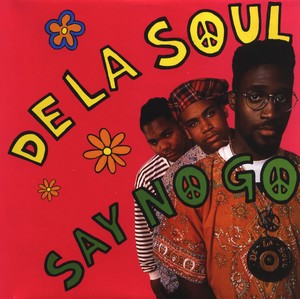 And then he disappeared to the States, and then I heard some vague news that he was back and presenting music shows on some satellite channel, but nobody I knew had satellite back then. That was pretty impressive, and I felt a slight pang because I'd applied for one of those jobs, and they never even replied, and I think it was because I must have seemed too enthusiastic about De La Soul, or maybe I wasn't quite enthusiastic enough, or maybe it was the Soup Dragons. And now I'll probably never know.
And then I bumped into Toby when we both auditioned for a presenting job on The Word and he said "What are you doing here?" and he was perfectly friendly, but in retrospect maybe he stressed the "you" bit just a little too much, but if he did, he was right. I was always going to be a backroom boy, but that's OK. At least he didn't get the job this time. Neither did Davina McCall, incidentally, or that bloke off Teenage Health Freak. Katie Puckrik got it. I knew she'd get it as soon as she walked in, because I'd seen her in i-D magazine. It was the early 90s by then, and these things mattered.
And then Toby ended up on MTV Europe, and he interviewed Madonna and talked about grunge bands. And then he sort of went off the radar as far as I was aware, until I heard him this week explaining techno to Radio 4 listeners. He described the collective emotional experience of listening to techno in a field with 5,000 other people as something akin to winning the Boat Race. Well, it was Radio 4.
I do feel old.
Subscribe to:
Posts (Atom)