Someone called me “a minefield of information” today, which was rather lovely, so I didn’t pull on my pedantic trousers. I did, though, grimace inwardly when the sack of lumpy custard pretending to be the Prime Minister encouraged people to go “into the breach”, one of the more persistent and tiresome misquotations of Shakespeare; and when, even less forgivably, in the latest episode of Doctor Who, the unseen Lethbridge-Stewart is referred to as a Corporal...
Showing posts with label Dr Who. Show all posts
Tuesday, November 30, 2021
Wednesday, March 04, 2015
A Turkish Ruskin
I wouldn’t claim to be an expert on the more obscure avenues of the Turkish art scene, beyond a passing observation that Turks seem unusually fond of tortoises. Indeed, recent events have persuaded me to go no further in my studies, after President Recep Tayyip Erdogan was fined 10,000 lira (about 2,500 pounds) for inflicting “psychological damage” on a sculptor by saying that his Monument to Humanity was a bit rubbish.
Apparently it’s not a straightforward case of a highly-strung artist finally losing his rag with critical snark and attempting to restage Whistler v Ruskin in the back end of Anatolia. The piece in question was intended to symbolise friendship between Turkey and Armenia, just the sort of political statement that’s going to wind someone up somehow; indeed, it’s still an offence under Turkish law to claim that the horrors inflicted upon the Armenian people 100 years ago might be described as genocide. (Meanwhile, in some other countries it’s illegal to say that it isn’t genocide, which strikes me as equally daft.) It’s tempting to revel in Erdogan’s current predicament, since he’s a supporter of the not-a-genocide protocol, committed to the notion that what happened in 1915 is a bit of unpleasantness best left to historians, but preferably not for a while yet. And yet, as is so often the case when a law is passed to stop people saying a particular thing, the effect is considerably more far- reaching, as it contributes to a general discouragement against talking, or indeed thinking, about anything of any significance. Which is presumably what those in power ultimately want.
But if it’s any comfort to the beleaguered Prez, he was entirely right. The sculpture, which has since been removed, was bloody horrible, resembling at best a bad waxwork rendition of the robot mummies from Pyramids of Mars. I wouldn’t presume to comment on his political credentials but I’d give him a job as an art critic.
Friday, January 24, 2014
The information superhighway: do you remember the first time?
I’m reading – do forgive me – Volume 4 of Philip Sandifer’s Tardis Eruditorum (Tom Baker and the Hinchcliffe Years) and this pops out:
...the charmingly dated phrase “information superhighway.” This phrase rightly serves as a sort of memetic tombstone for a particular historical moment in digital technology: the last point where it was possible to talk about it without actually knowing a single thing about it.
It’s about a novel by Justin Richards called System Shock, published in the years when Doctor Who wasn’t really a thing for most people, but that’s not particularly relevant and I haven’t read it anyway. But it did get me thinking about the way in which the web sort of oozed up on people throughout the 1990s. I’d had a bit of a conceptual head start over many of my contemporaries because the company I worked for at the beginning of the decade marketed a vast database that clients were able to access remotely from proprietary terminals (which were forever breaking down and always reminded me of Etch-a-Sketches). Towards the end of my time there we installed an intranet and I’m pretty sure that the first e-mail I ever sent was directed to one of my colleagues with whom I’d just endured a rather messy break-up.
But the first time I ever properly used the world wide web must have come in about 1995 – coincidentally the same year that System Shock was published. It was in an internet cafe (remember them?) somewhere in central London and you paid not just for your time online but also for the assistance of some bright young thing who’d tell you what to do while also bringing your coffee, a sort of browser barista. And the first thing I typed into a search engine, prompted by all the smut and innuendo that attended the protracted death rattle of the Major government, was:
MICHAEL PORTILLO GAY?
Anyway, over to you, my dwindling band of heedless bots and casual passers-by. When you went on the www for the very first time, what did you do, where did you go, what did you ask?
Friday, December 20, 2013
The blog is not dead, it’s just Peter Capaldi
I am informed – via Facebook, of course, because that’s how it works these days – that the blog is dead. Even more dead than when it died a couple of years back. Except of course that it isn’t dead at all; for one thing, the obituary that brings the news appears to be a blog of sorts. Less a death, more a meme thing, or maybe a Who-style regeneration:
So, R.I.P. The Blog, 1997-2013. But this isn’t cause for lament. The Stream might be on the wane but still it dominates. All media on the web and in mobile apps has blog DNA in it and will continue to for a long while. Over the past 16 years, the blog format has evolved, had social grafted onto it, and mutated into Facebook, Twitter, and Pinterest and those new species have now taken over. No biggie, that’s how technology and culture work.
I suppose it’s just the same as arguing that the e-book will never really kill the book, because without the book there would never have been e-books. The difference is that none of us were around when books first crept their way into existence but we now see whole technologies – and the cultures they spawn – born and dying within a matter of years, months even. And it feels as if Doctors used to last longer in the old days as well. Well, some of them.
Saturday, November 23, 2013
Rutherford Chang: other people’s Beatles
I can’t remember when I first heard or heard of the Beatles because where I lived, they were always around, always a presence. I’m not quite ancient enough to remember them being a living breathing, extant thing, a news story (stop-everything moments like ‘Hey Jude’ on the Frost show and ‘Get Back’ on the Apple roof happened during my lifetime but too early for me to remember) and yet the music has been there in the background for as long as I can remember. And the story, too, even if I sometimes got the details wrong. I remember poring through my dad’s copy of The Beatles Complete that was inside the hinged piano stool, simultaneously besotted and disturbed by the variously underclad ladies but above all obsessed with Alan Aldridge’s picture on the inside front cover that depicted the incremental transition from cheeky ‘Love Me Do’ moptops to bearded ‘Let It Be’ litigants. (I can’t for the life of me find the image online and the version that I
remember is, as far as I know, tucked away in a bookcase somewhere in
Hampshire after the piano gently wept itself to oblivion but if anyone
has a scan please let me know.) And without knowing many of the details of their lives beyond the names and the music and a couple of viewings of the Yellow Submarine movie I invented a whole narrative for the foursome, much as I did for Doctor Who and my other imaginary friends. These were characters, puppets of my mind. Intellectually I knew that the dull farmer who sang ‘Mull of Kintyre’ was also the weird jester behind ‘The Fool on the Hill’ but it was as if – like the Doctor – he’d reincarnated, becoming something only tenuously connected with his previous persona. Wings was a foreshadowing of the Colin Baker years. And as for what John, George and Ringo were doing in the 1970s, I don’t think it ever crossed my pre-pubescent mind. They may as well have been dead.
And then one of them was. I was 12 years old when Lennon died and the acres of newsprint prompted by the event filled in a lot of the empirical gaps; this was the first time I’d heard of Brian Epstein and the Maharishi. Shortly afterwards I read Philip Norman’s Shout!, the first of many Fabs books I’d devour, and got to grips with the actual history, albeit one that turned out to be rather skewed: it set in place the orthodoxy of Lennon the angry saint and McCartney the prim sell-out, which persisted until Ian MacDonald’s Revolution in the Head more than a decade later. Macca referred to the Norman volume as Shite!. I also found myself on an educational cruise in the eastern Mediterranean where the evening’s entertainment pretty much consisted of alternating showings of the 1966 World Cup final and A Hard Day’s Night. I came home with a temporary aversion to Turkish delight and convinced that I’d been born 15 years too late.
And it was around that time that I started properly, actively to listen to the music. Previously it had been something going on, tapes of the Red and Blue albums soundtracking long family car journeys in the gaps between the Ella songbooks and the weather forecast. But now I was bold enough to raid the paternal vinyl collection, going back to the source, to Rubber Soul and Revolver and, of course, Sgt. Pepper. The one I left till last, because it looked at the same time forbidding and dull, was The Beatles, aka The White Album, recorded and released in 1968, the year of my birth. The critical consensus is that it’s potentially a superb single album, foolishly stretched over four sides by a combination of drugs, arrogance, jealousy and post-Epstein (he’d died the previous year) indiscipline. But it quickly became – and remains – my favourite of their LPs for the same reason that In Utero, The Holy Bible and This Is Hardcore would be among my favourite albums of the 1990s; I’m fascinated by things falling to bits and people recording the moment through their art, at once participants and observers.
Anyway, I kept listening and reading and life carried on, as it does. And I encountered people who didn’t much care for the Beatles, which seemed odd then but less so now; I still reckon it’s perverse to deny their cultural significance but if you don’t enjoy listening to the music itself it’s just a matter of aesthetic preference; who am I to judge? And I also found people for whom the Beatles were simply the best band ever, which felt even weirder and still does. Surely they were outside any ranking system of bests and favourites; that was for Captain Beefheart and James Brown and Joni Mitchell and Prince and the Raincoats, to be loved or hated and argued about at two in the morning over bottles of Bulgarian pinot? The Beatles were just sort of there, like the Bible and Shakespeare on that imaginary desert island.
But then it hit me – not entirely coincidentally, this was around the time that I first got interested in postmodernism and all that malarkey – that these differing perceptions of the Beatles were down the fact that there were not just different Beatles, there were different The Beatles. I described in my still-just-about-available Radiohead book how the release of Sgt Pepper on CD allowed listeners to re-sequence the album to create the track listing that the band originally conceived; the shift from ‘With a Little Help From My Friends’ to ‘Being For the Benefit of Mr Kite’ immediately sounds wrong, because it grates against decades of listening. And when I bought the CD of the White Album, my first move was to try to concoct the perfect single-album, 14-track version. But although the shift to digital permitted this level of bespoke album creation, it also led to a degree of uniformity, in that the distinctive sounds of individual slabs of vinyl, the pops and buzzes that made up the battle scars of an album’s life were erased, polished into a sheen of ones and zeroes, a product that simply played or didn’t play, with very little in between.
Which is why I’m fascinated by the work of Rutherford Chang, who owns over 900 different copies of the White Album, many of them seriously bruised. One of his recent projects involves recording 100 of these copies on top of each other, so the differences between them all are exposed and amplified, speeds shifting, accumulated scratches, fluff and grime making themselves known, each making a tiny impression on the overall work...
...and at that point the manuscript ends. I was going to attempt to tie all the threads together and bring it back to the current Doctor Who anniversary fandango, something about how everybody’s perspective on Who is dependent on the actor who was at the controls when they were seven years old and thus tonight’s episode is hundreds of layers of fluff and grime on top of each other but then I took a break to drink brandy and listen to David Quantick’s Blaggers Guide to DW and he pretty much did the Beatles/Who continuum thing (and he wrote a very droll book about the White Album, which I namechecked in my aforementioned Radiohead tome) so I won’t bother (although the Listen Again version inexplicably dies in the midst of a Zarbi bitchslap). Except to mention that the Fabs appeared in the Hartnell-era The Chase (introduced by Jimmy Savile, so officially it didn’t happen) and also, slightly tangentially, in the first story that I’m certain I saw, The Three Doctors...
PS: And here’s the last time I got all pomo on the Fabs’ bottoms.
Labels:
art,
Beatles,
books,
Dr Who,
life,
memory,
music,
postmodernism,
radio,
TV,
unabashed self-promotion
Sunday, August 04, 2013
Twitter: enjoying the silence
I like Twitter. I like it because it’s the perfect environment for smartarse one-liners; and smartarse one-liners make me laugh. I don’t buy the argument that it’s a symptom of shortened attention spans; as Pascal said, “I’m sorry to weary you with such a long letter, but I didn’t have time to write a short one.” And in any case, suggesting that a fondness for short, punchy things precludes an appreciation of more sustained efforts is like saying you can’t enjoy the Ramones and Shostakovich.
This is not to say that Twitter is perfect, of course. In recent weeks, some users of the service have said some downright vile things about certain high-profile women; wherever we might draw the line in limits on free speech, direct threats to kill or rape individuals fall on the wrong side of it. OK, Twitter has been lackadaisical in its attitude to such abuses and has now been shamed into some sort of action. But surely the main blame for such activities lies with the perpetrators rather than with any particular social media platform; we may as well demand the English language be called to account.
So I don’t agree with Caitlin Moran’s campaign to make today a day of #twittersilence, although I appreciate the anger that lies behind it. Apart from anything, what with The Archers omnibus, a crucial day in the Test Match and the revelation of the new Doctor, it’s a bloody silly time to do it. And I suppose there’s a sound argument that, as a man, I can’t properly appreciate the true impact of the misogynistic bile that the likes of Caroline Criado-Perez and Mary Beard have had to face. It’s all about the patriarchy, innit.
Well, fair enough. But if we’re talking about inequalities of power, it does seem a little rum that #twittersilence has come from individuals, such as Moran, who have plenty of other avenues through which they can communicate to the wider public. She uses Twitter, and uses it well, but she doesn’t need it, what with her Times column and best-selling book and TV and radio appearances and all that. The same goes for India Knight, who demonstrated just how little she needs it by closing her account yesterday. But not before leaving the following message (and thanks to Mic Wright for flagging this one up).
Well, yes. I suppose that means if I say something horrid about India Knight she wouldn’t even notice it, what with this being a mere, forelock-tugging blog and all. Which leads us to the fundamental question raised by Moran’s boycott; if someone takes to Twitter to say something revolting about Criado-Perez or Beard, Moran or Knight or any other man, woman or blogger and nobody notices because everyone else is boycotting Twitter, does that person automatically become the new Doctor?
PS: In the Standard, Sam Leith says:
Twitter is the Pub. It’s a private space where the landlord’s rules go. No principles are at stake, and your best hope of persuading the landlord to chuck out the obnoxious drunks is to persuade him that he’ll lose more customers if he doesn’t. Twittersilence is a consumer boycott in which, technically, we’re the drinks rather than the customers.
Saturday, November 10, 2012
Savile, McAlpine, Petraeus and the truth about Leonard Cohen and me
I wasn’t going to say something about the latest bizarre developments in... well, what I don’t even know what to call it for a start. It’s not Savilegate, because things are moving so fast that Jimmy Savile, who a few weeks ago had become some sort of conceptual synthesis of Myra Hindley, the Yorkshire Ripper, the Child Catcher from Chitty Chitty Bang Bang and Satan himself, has almost been forgotten; when you’re brought on as a stooge so that a not-fondly-remembered Doctor Who can say he didn’t like you much and oh, by the way, I’m going into the jungle with Nadine Dorries, then you know you’re on the margins. Well, you would know if you weren’t dead.
No, the story’s moved on, spewing out rumours and counter-rumours. Reputations of the living and dead have been left in shreds; not least that of the BBC, which was still apologising for not acting on allegations of sexual abuse when it was forced to apologise for acting on allegations of sexual abuse. Lord McAlpine is threatening legal action, even though he was never actually named by Newsnight; maybe he’s going to sue Philip Schofield’s piece of paper.
Two things, though. First, this is by no means a new story; I first became aware of the (unfounded, scurrilous, etc) allegations about McAlpine over 20 years ago. There’s been lots of grumbling about how various social media are to blame for rumour and innuendo taking hold, but in truth the likes of Twitter only amplify and accelerate the effect. The other point is that, allergic as I am to most conspiracy theories, I can’t help but wonder if somebody with an agenda (Anti-BBC? Anti-Twitter? Attempting to discredit accusations of abuse and those who make them? Any or all or more of those?) set some sort of journalistic honeytrap, an apparently solid story that was going to fall to pieces as soon as it saw the light of day, thus destroying the credibility of those involved in bringing it to public attention. Again, I’m not suggesting that MacAlpine was any part of this; he’s a MacGuffin.
But I wasn’t going to talk about that, was I? In the States, they’ve got a sex scandal that seems to be – on the face of it at least – far more straightforward. David Petraeus, the boss of the CIA, has resigned because he’s been having an extra-marital affair. Now I’m not sure whether he’s broken some particular clause in his contract, or if he’s just falling on his sword (oo-er) because he feels he’s brought shame upon his office; if the latter, it seems terribly old-fashioned, but there you go. No, the weird thing is... well, the first weird thing, as a number of people have pointed out, is that the whole messy business seems to have been prefigured in a problem page in the New York Times back in July (see the second letter). But the really weird thing is that the woman with whom he was cavorting is also his biographer. Which raises all sorts of questions about objectivity and the awkward threesome formed by subject, writer and reader. I mean, would we read Boswell’s life of Dr Johnson differently if we found out that James and Sam were an item? What of Charles Moore’s only-when-she’s-dead tome about Margaret Thatcher? Paradoxically, I suspect that even as the credibility of Paula Broadwell’s book about Petraeus falls apart, sales will rocket.
So I suppose it makes sense for me to announce, in the light of disappointing sales for my 2009 biography of Leonard Cohen, that I have enjoyed regular bouts of rudeness with the septuagenarian crooner, although he kept his fedora on at all times. Hallelujah, indeed.
But I wasn’t going to talk about that, was I? In the States, they’ve got a sex scandal that seems to be – on the face of it at least – far more straightforward. David Petraeus, the boss of the CIA, has resigned because he’s been having an extra-marital affair. Now I’m not sure whether he’s broken some particular clause in his contract, or if he’s just falling on his sword (oo-er) because he feels he’s brought shame upon his office; if the latter, it seems terribly old-fashioned, but there you go. No, the weird thing is... well, the first weird thing, as a number of people have pointed out, is that the whole messy business seems to have been prefigured in a problem page in the New York Times back in July (see the second letter). But the really weird thing is that the woman with whom he was cavorting is also his biographer. Which raises all sorts of questions about objectivity and the awkward threesome formed by subject, writer and reader. I mean, would we read Boswell’s life of Dr Johnson differently if we found out that James and Sam were an item? What of Charles Moore’s only-when-she’s-dead tome about Margaret Thatcher? Paradoxically, I suspect that even as the credibility of Paula Broadwell’s book about Petraeus falls apart, sales will rocket.
So I suppose it makes sense for me to announce, in the light of disappointing sales for my 2009 biography of Leonard Cohen, that I have enjoyed regular bouts of rudeness with the septuagenarian crooner, although he kept his fedora on at all times. Hallelujah, indeed.
PS: Ooh, and the New York Post does well on the Petraeus front:
PPS: And a rather good blog post concerning the meme that says Morrissey knew all about Savile way back when...
PPPS: And yet more; Buzzfeed kicks Petraeus when he’s down, but does it well.
Labels:
BBC,
books,
crime,
Dr Who,
Leonard Cohen,
sex,
TV,
Twitter,
unabashed self-promotion,
USA,
writing
Sunday, September 30, 2012
Hooray! It’s the return of old-style blogging!
This blog has been going nearly seven – count them – not that it’s all that much effort to count them – unless you’re really bad at counting – although, thinking about it, that “nearly” does make it a bit trickier, so maybe the last one’s a sort of “seve” rather than a “seven” – years. And this is my 1,251st post, which means... well, it certainly means, although whether it means anything in particular, I’m less sure. Maybe that I missed some sort of milestone in the last post? Dunno. Anyway, yes, right, and in that time, well, woo, hasn’t everything changed? Well, not really, give or take a few iPhone models. But this blog has changed, and so has blogging as a whole.
I mean, back in those oldenny timey days I had no shame in doing compendium posts on any number of only tangentially related subjects, usually ending with an arbitrarily chosen picture or YouTube clip; and everyone would weigh in with their contributions and contradictions and corrections and it was, as the sainted Patroclus called it, one big conversation; but then something happened somewhere along the line; and I’m still blogging, but Cultural Snow seems to have turned into a continuum of discrete articles, each about a subject. And plenty of people are reading what I’m writing (I don’t know if it’s more or less than it was in the old days, because I’ve only had the magic thingy wotsit that tells me how many people are reading for the past three years) but far fewer are commenting.
So, if I were blogging now under proper old-style blogging conditions (only one substitute allowed, two points for a win, highlights later on Match of the Day), I’d probably have some choice words for Booker judge and all-round silly sausage Peter Stothard, who said of the rise of literary bloggers:
Eventually that will be to the detriment of literature. It will be bad for readers; as much as one would like to think that many bloggers’ opinions are as good as others. It just ain’t so. People will be encouraged to buy and read books that are no good, the good will be overwhelmed, and we'll be worse off. There are some important issues here.
...to which I’d point out that bloggers are simply people with opinions, just like professional literary critics and that while there are doubtless some literary bloggers who are a bit crap, anyone who tries to argue that every paid literary critic on a highbrow newspaper or magazine knows what s/he’s talking about is either arrogant or stupid or probably both. And then I’d point out that criticism is no longer (never was, to be honest) about a select few handing down verdicts from above; it’s about argument and dialectic and kite-flying, and about how very often a statement can be wrong, but can still have value because of the intellectual fireworks it provokes in others; and I’d probably remind my readers that this is what Stothard is saying is pretty much what Andrew Keen said, and Keen was talking bollocks as well. But it doesn’t matter because between them they’ve prompted me to say something far more sensible, which is how this whole thing works, so thanks guys, you bloody imbeciles. And this would have been pretty much par for the course, because looking back, we didn’t half blog a lot about the nature and purpose and meaning of blogging.
And that line of argument would sort of trail off a bit, and I’d start talking about how I don’t much like the sound of Steven Poole’s new book, which appears to argue that because he’s not that interested in food, we shouldn’t be either. And then I’d remember that I was quite rude about his previous book as well, and then felt very guilty because he was subsequently very generous about my Radiohead book, but in fact I didn’t feel guilty, it was just an excuse to squeeze in a mention of my Radiohead book and maybe some of the others.
But then I might have changed tack completely and reflected on the most recent episode of Dr Who, with its scary cherubs and time paradoxes and, ooh just a little splash of Dennis Potter, maybe. And then I’d ponder the metafictional nature of Melody’s pulp novel, with its plot lines that the characters are doomed to follow, which rather obscures the fact that the characters are really doomed to follow the diktats of Steven Moffat, who wrote the script. And I’d ask whether the Doctor cheated by reading the chapter headings, whether they exist in advance of the action or in parallel to it.
And I’d make a clumsy effort to pull together various elements of the above (blogging and self-aggrandizement and postmodernism, basically) and suggest once again that you really ought to be reading my Infinite Jest blog, in which I am currently exercised by David Foster Wallace’s cavalier attitude to chapters and chapter headings. Oh, and snot. There’s lots of snot going around.
And then I’d say, yay! That Rockmother’s blogging again!
And finally I’d probably put in a picture of Helen Mirren and/or Charlotte Rampling not wearing very much, but still tasteful, like. OK, Helen it is:
But of course I won’t do any of that, because we don’t do that old-style blogging any more, do we?
Friday, March 23, 2012
Only puppets, you know... for children...
It’s all Nick Hornby’s fault, I suppose. Fever Pitch kicked off that whole genre of Blokes Remembering Stuff That Was Important To Them When They Were Younger, Preferably in The Seventies, which at its best could offer a potent blend of pop psychology and social history; at its, well, not-best, it involved the likes of Jamie Theakston sitting in front of a camera mumbling “Buck Rogers... space dust... Torvill and Dean... clackers... ” until someone turned off the lights.
The problem with these memoirs is that the reader responds to them not because of their intrinsic merits, but on the basis of empathy with the experiences described. So if you like football, you’ll like Fever Pitch; if you like Arsenal you’ll really like Fever Pitch; and if you’re also a bald 50-something novelist who likes Springsteen and Anne Tyler as well as Arsenal, well why don’t you and Hornby just book a hotel room together?
I didn’t mind football when I was a kid, but I preferred Doctor Who. So I guess I’m a closer fit with Nick Griffiths, the author of Dalek I Loved You, which is basically Fever Pitch with Liam Brady replaced by Jon Pertwee. Ah, but then one starts getting picky. Griffiths is three years older than me, and his first DW memory is Spearhead from Space, also the first Pertwee story. I’m not quite sure what mine is – I do have distinct memories of The Sea Devils, but I would only have been three years old when that was first broadcast. Maybe I only remember the net-clad reptiles because one of their number appeared on the back cover of the 10th anniversary special; Griffiths still has his copy, carefully wrapped in plastic, but I’ve no idea what became of mine.* So my first story was probably The Three Doctors (and I do definitely remember that show, not just the Radio Times cover).
Anyway, it’s a gently amusing memoir as far as the Doctor-related stuff goes, taking you from collecting the Weetabix cards to actually meeting Elisabeth Sladen, but for some reason Griffiths insists on running through the various other things he got up to while he was growing up (his model seems to be Andrew Collins rather than Hornby) and this plays havoc with his structure as we leap from Who-related stuff to his other crazes, such as Action Man. Moreover, his grasp of fact and detail is less strong on the non-Who bits: he thinks the TV show On The Move was aimed at deaf people (it was made to tackle adult illiteracy) and Fanny Cradock’s name is misspelled. C’mon, if you’re going to be a geek, get it right.
But all this can be forgiven because at one point Griffiths lets slip his childhood address and it turns out that he lived not just in the same village, but on the same road as me. OK, he’d moved out about a decade before I arrived, and by that time Peter Davison had taken over and DW had become rather less essential. But for a moment, that weird bond of shared geography (yes, Nick, I know the Co-op of which you speak) dragged me in just a little closer to his world. And then of course, I realised I’d fallen into the tiresome trap set by the whole genre: these books are more about the reader than they are about the writer.
*The cover of the 10 anniversary special is also the only instance of Pertwee encountering a Cyberman during his stint as the Doctor, unless one counts his return in The Five Doctors (1983). But you knew that, of course.
The problem with these memoirs is that the reader responds to them not because of their intrinsic merits, but on the basis of empathy with the experiences described. So if you like football, you’ll like Fever Pitch; if you like Arsenal you’ll really like Fever Pitch; and if you’re also a bald 50-something novelist who likes Springsteen and Anne Tyler as well as Arsenal, well why don’t you and Hornby just book a hotel room together?
I didn’t mind football when I was a kid, but I preferred Doctor Who. So I guess I’m a closer fit with Nick Griffiths, the author of Dalek I Loved You, which is basically Fever Pitch with Liam Brady replaced by Jon Pertwee. Ah, but then one starts getting picky. Griffiths is three years older than me, and his first DW memory is Spearhead from Space, also the first Pertwee story. I’m not quite sure what mine is – I do have distinct memories of The Sea Devils, but I would only have been three years old when that was first broadcast. Maybe I only remember the net-clad reptiles because one of their number appeared on the back cover of the 10th anniversary special; Griffiths still has his copy, carefully wrapped in plastic, but I’ve no idea what became of mine.* So my first story was probably The Three Doctors (and I do definitely remember that show, not just the Radio Times cover).
Anyway, it’s a gently amusing memoir as far as the Doctor-related stuff goes, taking you from collecting the Weetabix cards to actually meeting Elisabeth Sladen, but for some reason Griffiths insists on running through the various other things he got up to while he was growing up (his model seems to be Andrew Collins rather than Hornby) and this plays havoc with his structure as we leap from Who-related stuff to his other crazes, such as Action Man. Moreover, his grasp of fact and detail is less strong on the non-Who bits: he thinks the TV show On The Move was aimed at deaf people (it was made to tackle adult illiteracy) and Fanny Cradock’s name is misspelled. C’mon, if you’re going to be a geek, get it right.
But all this can be forgiven because at one point Griffiths lets slip his childhood address and it turns out that he lived not just in the same village, but on the same road as me. OK, he’d moved out about a decade before I arrived, and by that time Peter Davison had taken over and DW had become rather less essential. But for a moment, that weird bond of shared geography (yes, Nick, I know the Co-op of which you speak) dragged me in just a little closer to his world. And then of course, I realised I’d fallen into the tiresome trap set by the whole genre: these books are more about the reader than they are about the writer.
*The cover of the 10 anniversary special is also the only instance of Pertwee encountering a Cyberman during his stint as the Doctor, unless one counts his return in The Five Doctors (1983). But you knew that, of course.
Saturday, August 06, 2011
Androzani McCarthy
Despite the assertions from the producers that American money would not have a detrimental effect on the new series of Torchwood, things aren’t looking so good. It’s not just the bit where the undead CIA bloke had to have Wales explained to him, or the tiresome pants/trousers badinage; it’s the feeling that they’ll be using the show as a dumping ground for Brat Pack stars whose careers started to falter in the 1980s. In fact, the whole show could be seen as something akin to one of the overflow camps into which the should-be-deceased beneficiaries/victims of the Miracle are being herded.
In the most recent instalment, we were blessed not only with Mare Winningham (St Elmo’s Fire) but also a barely recognisable C Thomas Howell (The Outsiders and the frightful Soul Man); this coming on top of the President from Independence Day, Dennis Nedry from Jurassic Park and Winston from Ghostbusters, the whole thing is a delight for devotees of the “hey-didn’t-you-used-to-be...?” tribe. But surely it’s a warning sign as to where Torchwood, and the whole Whovian universe is headed. Within a couple of series, I can see Jack Harkness (Emilio Estevez) crashing his dad’s car because he’s so angry that Amy Pond (Molly Ringwald) won’t go to the Gallifrey Prom with him, preferring as she does the smooth charms of The Master (Rob Lowe, in a cap-sleeved t-shirt). Co-starring Ralph Macchio as Davros and Demi Moore as The Rani, with the theme tune arranged by Wang Chung.
Actually, it all sounds rather marvellous.
In the most recent instalment, we were blessed not only with Mare Winningham (St Elmo’s Fire) but also a barely recognisable C Thomas Howell (The Outsiders and the frightful Soul Man); this coming on top of the President from Independence Day, Dennis Nedry from Jurassic Park and Winston from Ghostbusters, the whole thing is a delight for devotees of the “hey-didn’t-you-used-to-be...?” tribe. But surely it’s a warning sign as to where Torchwood, and the whole Whovian universe is headed. Within a couple of series, I can see Jack Harkness (Emilio Estevez) crashing his dad’s car because he’s so angry that Amy Pond (Molly Ringwald) won’t go to the Gallifrey Prom with him, preferring as she does the smooth charms of The Master (Rob Lowe, in a cap-sleeved t-shirt). Co-starring Ralph Macchio as Davros and Demi Moore as The Rani, with the theme tune arranged by Wang Chung.
Actually, it all sounds rather marvellous.
Sunday, May 15, 2011
Thoroughly spoiled
Sorry if you’re getting bored with Doctor Who, and apologies also if you’re getting fed up with all these underclad women who’ve started populating my blog – see previous appearances of Charlotte, Helen, Lily, some feet, etc, – hey I don’t make the rules – although of course the nipples-for-eyeballs transaction is purely abstract if Blogger enjoys another spectacular global brainfart – in which case I’ve already staked a preliminary claim over at WordPress, a bit like a Nazi in around 1944 trying to get his paintings out of Berlin – anyway, yes, Doctor Who – that’s Katy Manning, incidentally, who played Jo Grant, an assistant to the Third Doctor, in the early 1970s, but she usually wore more clothes – but yes, chief writer Steven Moffat has unleashed a fearsome diatribe – I think he was probably wearing clothes at the time – against people who leak plot details of the show before transmission:
But although the revived Doctor Who has helped to recreate the notion both of event TV (it’s nearly six, got to get home for Who) and family viewing, we’re also in a cultural universe that is at the same time more atomised (I’ll watch Who when I choose, not with my family while we’re having tea) and more connected (but if I do watch it live, I’ll Tweet it at the same time). The notion of an entire nation simultaneously gasping as River Song is revealed to be the bastard love child of The Master and K9 belongs to another, happier, less wibbly-wobbly time. And in any case, many of those for whom stories – according to Moffat – depend on surprise then go and watch the same stories over and over again, having bought the box set. For all the Spoiler Alerts Moffat can try to deploy, he’s fighting a losing Time War. Just ask anyone who’s tried in recent weeks to protect his dignity with a superinjunction.
That said, I only got round to watching the first episode of The Killing last night, so shush, OK?
It’s heartbreaking in a way because you’re trying to tell stories, and stories depend on surprise... Stories depend on shocking people. Stories are the moments that you didn't see coming, that are what live in you and burn in you forever. If you are denied those, it’s vandalism.Is it really? Is that what stories depend on? There must be a literary equivalent to Godwin’s law, something along the lines of “As a discussion grows longer, the probability of a comparison involving Shakespeare becomes one” and if there wasn’t, there is now, and it shall be called Bradley’s Law, after the deliciously anachronistic Bardic scholar, but anyway – when people went to see Shakespeare’s plays, most of the time they knew what the story was going to be, who was going to die, who was going to get the girl and so on. Before him, the same was true of medieval mystery plays and, even earlier, Greek drama. It’s only in the past few hundred years that the unexpected has become a key element in fiction and drama – think of the Dickens fans in New York calling out to arriving ships “Is Little Nell dead?” – and that readers and viewers have really started to enjoy not knowing what happens next. Indeed, it’s become something of a marketing gimmick, especially for thrillers. Audiences at The Mousetrap and Psycho being entreated not to give the ending away, and TV shows as different as Dallas, Twin Peaks and The Killing being hyped on the basis of the identity of a murderer, successful or otherwise.
But although the revived Doctor Who has helped to recreate the notion both of event TV (it’s nearly six, got to get home for Who) and family viewing, we’re also in a cultural universe that is at the same time more atomised (I’ll watch Who when I choose, not with my family while we’re having tea) and more connected (but if I do watch it live, I’ll Tweet it at the same time). The notion of an entire nation simultaneously gasping as River Song is revealed to be the bastard love child of The Master and K9 belongs to another, happier, less wibbly-wobbly time. And in any case, many of those for whom stories – according to Moffat – depend on surprise then go and watch the same stories over and over again, having bought the box set. For all the Spoiler Alerts Moffat can try to deploy, he’s fighting a losing Time War. Just ask anyone who’s tried in recent weeks to protect his dignity with a superinjunction.
That said, I only got round to watching the first episode of The Killing last night, so shush, OK?
Monday, May 02, 2011
Osama bin Laden: what really happened
PS: Osama’s mansion/compound apparently had no internet access, to avoid attracting attention from US intelligence: in the end, this very anomaly was one of the things that attracted their attention. If he’d got broadband, but only used it to look at old Dr Who clips on YouTube, he might have got away with it.
PPS: It’s come to my attention that if you Google “osama bin laden what really happened” at the moment, this post appears on the first page. If that’s how you came here, welcome! Feel free to have a look around. Let us know what you think. Fancy a cup of tea, maybe a custard cream? And, um, yes. Terror of the Autons. Sorry about that.
PPPS: OK, if you do want something a bit meatier, here’s DE Wittkower’s splendid piece on the role of social media in the search for Osama; and here’s a slightly more depressing roundup of some of the Facebook responses to the big news; and here’s evidence that dead-tree media hasn’t been doing that much better.
PPS: It’s come to my attention that if you Google “osama bin laden what really happened” at the moment, this post appears on the first page. If that’s how you came here, welcome! Feel free to have a look around. Let us know what you think. Fancy a cup of tea, maybe a custard cream? And, um, yes. Terror of the Autons. Sorry about that.
PPPS: OK, if you do want something a bit meatier, here’s DE Wittkower’s splendid piece on the role of social media in the search for Osama; and here’s a slightly more depressing roundup of some of the Facebook responses to the big news; and here’s evidence that dead-tree media hasn’t been doing that much better.
Sunday, May 01, 2011
The black death
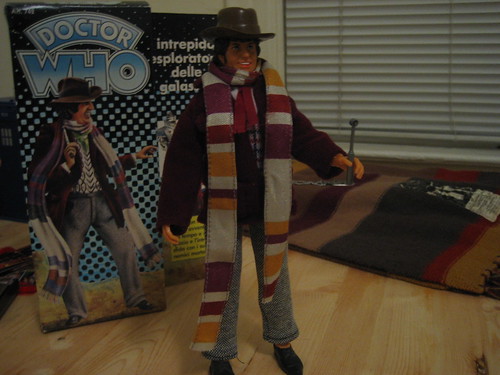
When I was rather smaller than I am today, I was a fan of Doctor Who. Actually, I say I was a fan, but fandom is an entirely relative concept. I watched the show religiously, of course. And I’d also seen both the movies (in which Peter Cushing played the Doctor) when they cropped up on TV. But my loyalty wasn’t all-consuming. I can’t remember ever going to the Longleat exhibition, for example. I did buy and read lots of the Target novelisations, but I wasn’t a completist, and in the end I sold my collection. And although I pestered my mother to up the family’s fibre intake so I could amass the Weetabix card set, I’ve no idea what happened to it; the same goes for the 10th anniversary Radio Times special and the Tom Baker doll. I started to lose interest some time during the Romana era, and by the time Colin Baker’s unlovely persona had dragged the show into an 18-month hiatus, I barely noticed. By comparison with some fans, I was a complete bloody lightweight.
One area into which I did put a little extra effort was in writing my own Doctor Who fiction. To be honest, even there I was something of a dilettante, as I don’t think I ever finished a story. I’d come up with a title, something like The Daleks of Doom, or maybe Doom to the Daleks, then begin with an incredibly violent opening passage, usually involving the spectacular destruction of several Ogrons. (These were the hulking, simian sidekicks of the Daleks, who helped them with the stuff they couldn’t do in those days, like carrying things and climbing stairs. I think I saw them as analogous to the hard boys at school who were good at football and laughed at my glasses and said Doctor Who was for poofs.) Then the Doctor would arrive and survey the carnage and wonder what was going on and so would I and I’d go off and have some lemon squash and forget about it.
One thing I didn’t do was to attempt to render the stories that I’d seen on TV as prose. This was partly because of the existence of those Target books: I knew that if I waited long enough, Terrance Dicks or Philip Hinchcliffe or someone like them would put each story between covers. Instead, I was intent on creating my own narratives, even if they were never going to go anywhere. Of course, after the show had gone off air, an entire sub-culture of original stories appeared in print form, with hundreds of books to keep the Who brand alive, but as I said, I was well out of the loop by that point.
Although I was careful not to tread on Target’s turf, I probably took a few hints from the books, albeit subconsciously. (Not that I have any examples of my deathless genius to hand, and I suspect they suffered the same fate as the Weetabix stuff, so this is all based on my increasingly fuzzy memory.) I wasn’t a slave to the house style, though: the Target books were careful not to acknowledge the real-world status of Doctor Who, beyond a cursory acknowledgement of the scriptwriter of the story on which the book was based. So the much-derided artwork might depict the actor who played the Doctor, but Pat or Jon or Tom never got a mention. Instead, there would be a stock explanation of which incarnation was in play, such as:
Whereas I preferred:
Moreover, whenever a character in a Target book incurred the wrath of the Daleks, there would be a searing flash of light, a scream, and the unfortunate individual would slump to the floor, often with wisps of smoke rising from his body. Whereas I knew what happened to people who were exterminated. They went negative. You could see it happening. So when the Daleks exterminated someone or something in my stories (I’m not sure how old I was when I realised that “exterminate” was a proper word, not one invented for the purposes of the show, like TARDIS) I’d write something along the lines of “The Dalek fired his gun and everything went negative and the Zygon died.”
In many ways, it betrayed an early fondness for metafiction and similar postmodern japeries, although at that stage I probably thought metafiction was next door to Metebelis III. Yes, that’s the sort of thing that passed for humour back then. These days, although I do like the resurrected Who immensely, it’s more of an indulgent, nostalgic fondness. Although I finally have a sofa with plenty of space behind it, I don’t hide there. And in retrospect, I even feel a tiny bit sorry for the Ogrons.
One area into which I did put a little extra effort was in writing my own Doctor Who fiction. To be honest, even there I was something of a dilettante, as I don’t think I ever finished a story. I’d come up with a title, something like The Daleks of Doom, or maybe Doom to the Daleks, then begin with an incredibly violent opening passage, usually involving the spectacular destruction of several Ogrons. (These were the hulking, simian sidekicks of the Daleks, who helped them with the stuff they couldn’t do in those days, like carrying things and climbing stairs. I think I saw them as analogous to the hard boys at school who were good at football and laughed at my glasses and said Doctor Who was for poofs.) Then the Doctor would arrive and survey the carnage and wonder what was going on and so would I and I’d go off and have some lemon squash and forget about it.
One thing I didn’t do was to attempt to render the stories that I’d seen on TV as prose. This was partly because of the existence of those Target books: I knew that if I waited long enough, Terrance Dicks or Philip Hinchcliffe or someone like them would put each story between covers. Instead, I was intent on creating my own narratives, even if they were never going to go anywhere. Of course, after the show had gone off air, an entire sub-culture of original stories appeared in print form, with hundreds of books to keep the Who brand alive, but as I said, I was well out of the loop by that point.
Although I was careful not to tread on Target’s turf, I probably took a few hints from the books, albeit subconsciously. (Not that I have any examples of my deathless genius to hand, and I suspect they suffered the same fate as the Weetabix stuff, so this is all based on my increasingly fuzzy memory.) I wasn’t a slave to the house style, though: the Target books were careful not to acknowledge the real-world status of Doctor Who, beyond a cursory acknowledgement of the scriptwriter of the story on which the book was based. So the much-derided artwork might depict the actor who played the Doctor, but Pat or Jon or Tom never got a mention. Instead, there would be a stock explanation of which incarnation was in play, such as:
THE CHANGING FACE OF DOCTOR WHO.
The cover illustration of this book portrays the third DOCTOR WHO whose physical appearance was altered by the Time Lords when they banished him to planet Earth in the Twentieth Century.
Whereas I preferred:
THE CHANGING FACE OF DOCTOR WHO.
The cover illustration of this book portrays the third DOCTOR WHO who was played by Jon Pertwee.
Moreover, whenever a character in a Target book incurred the wrath of the Daleks, there would be a searing flash of light, a scream, and the unfortunate individual would slump to the floor, often with wisps of smoke rising from his body. Whereas I knew what happened to people who were exterminated. They went negative. You could see it happening. So when the Daleks exterminated someone or something in my stories (I’m not sure how old I was when I realised that “exterminate” was a proper word, not one invented for the purposes of the show, like TARDIS) I’d write something along the lines of “The Dalek fired his gun and everything went negative and the Zygon died.”
In many ways, it betrayed an early fondness for metafiction and similar postmodern japeries, although at that stage I probably thought metafiction was next door to Metebelis III. Yes, that’s the sort of thing that passed for humour back then. These days, although I do like the resurrected Who immensely, it’s more of an indulgent, nostalgic fondness. Although I finally have a sofa with plenty of space behind it, I don’t hide there. And in retrospect, I even feel a tiny bit sorry for the Ogrons.
Labels:
books,
death,
Dr Who,
nostalgia,
postmodernism,
science fiction,
TV,
writing
Saturday, July 10, 2010
Sunday, May 23, 2010
The curse of fatal immortality
Watching the latest Dr Who, as everyone else is focusing on the last-ever episodes of Lost and Ashes to Ashes, and all the loose ends that get tightened, as if scriptwriters were just literary boys scouts, and I wonder: can Dr Who ever really end? I know there’s the idea that Time Lords have a maximum of 12 regenerations, but if they can bring back Davros and the Daleks and the other Time Lords when the occasion demands it, why should that be insurmountable. Canonicity is as tedious as plausibility. Let’s say there’s a climax that leaves the Doctor and his incarnations and various other crypto-selves (including the Watcher and the Valeyard and the Dream Lord), plus the Tardis and all his companions and enemies past, present and future (including those from Torchwood, Sarah Jane, New Adventures and all) exterminated, cremated and broken down to their individual atoms, which are then fired into black holes in 17 different parallel universes where all the return flights have been grounded by volcanic dust. Steven Moffat could come up with 15 ways out of that one before breakfast.No, it can never really be properly finished. A bit like a jar of Marmite.
Sunday, May 02, 2010
Cherub rock
I never really bought into the whole Matrix thing, especially the idea that it was in some way indebted to Baudrillard. Just because something looks real but isn’t, doesn’t make it a simulacrum.SF/theory wonks need to look elsewhere. “That which holds the image of an angel becomes itself an angel.” That’s more like it. And as a bonus, when the Doctor dismisses Pandorica as a fairy tale, and River Song replies “Aren’t we all?”, that’s Barthes and Calvino and metafiction and all that good stuff as a bonus.
Labels:
Barthes,
Baudrillard,
Dr Who,
film,
postmodernism,
TV
Tuesday, March 16, 2010
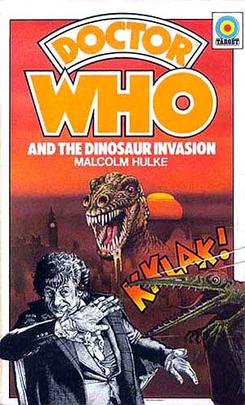
KKLAK!
Back in the olden days, when we were all analogue, I was rather fond of Doctor Who. But this wasn’t just about the sacrosanct ritual of Saturday evenings (did anyone actually try to hide behind their sofas, most of which were surely flush against the wall?) but also about the books. In those pre-video days, the Target novelisations were pretty much the only way you could relive your favourite stories, or discover the ones that had been shown before you were sentient.
The thing is, the books were a sort of parallel universe to DW as seen on TV, essentially similar, but with additions and subtractions, especially when the author was someone other than the original scriptwriter. Subplots, back stories, peculiar Biblical allusions would be thrown in to replace something that wouldn’t work so well in the new medium, to pad out the word count, or just to allow the writer to indulge his personal obsessions.
Moreover, although the books ultimately derived from the scripts, there was little explicit connections with the broadcast programmes. Opposite the title page in each volume was a sentence headed “THE CHANGING FACE OF DOCTOR WHO”, which would put the relevant incarnation of the Time Lord into contex. For example: “The cover illustration of this book portrays the third Doctor Who whose physical appearance was altered by the Time Lords when they banished him to planet Earth in the Twentieth Century.” But there was no reference to the actor who played the Doctor (in this case, Jon Pertwee), nor were any stills from the show included in the books. Instead, we had to make do with line drawings (eventually phased out) and cover art that was of distinctly variable quality, but still hangs around in the memory many decades after I got rid of my collection, about the time of the second Romana.
So just trust me, the following picture, which I half-inched from Cat Machine, is very amusing indeed.
As is the post title.
The thing is, the books were a sort of parallel universe to DW as seen on TV, essentially similar, but with additions and subtractions, especially when the author was someone other than the original scriptwriter. Subplots, back stories, peculiar Biblical allusions would be thrown in to replace something that wouldn’t work so well in the new medium, to pad out the word count, or just to allow the writer to indulge his personal obsessions.
Moreover, although the books ultimately derived from the scripts, there was little explicit connections with the broadcast programmes. Opposite the title page in each volume was a sentence headed “THE CHANGING FACE OF DOCTOR WHO”, which would put the relevant incarnation of the Time Lord into contex. For example: “The cover illustration of this book portrays the third Doctor Who whose physical appearance was altered by the Time Lords when they banished him to planet Earth in the Twentieth Century.” But there was no reference to the actor who played the Doctor (in this case, Jon Pertwee), nor were any stills from the show included in the books. Instead, we had to make do with line drawings (eventually phased out) and cover art that was of distinctly variable quality, but still hangs around in the memory many decades after I got rid of my collection, about the time of the second Romana.
So just trust me, the following picture, which I half-inched from Cat Machine, is very amusing indeed.
As is the post title.
Saturday, November 29, 2008
Together in electric dreams
Oddly enough, I didn't read much science fiction as a child. I'm sure I looked and dressed as if I did; and plenty of my friends were the sort of high-functioning sociophobes who devoured the oeuvres of Isaac Asimov and Stanislaw Lem and L. Sprague du Camp and Dean Koontz. (Incidentally, I've long believed that all the birth names of actors that are rejected as marquee-inappropriate - names such as Issur Danielovich Demsky and Spangler Arlington Brugh and Herbert Kuchacevich zu Schluderpacheru and Diana Fluck - are redistributed to SF authors whose monickers are deemed to be too ordinary.)I loved Dr Who, of course, and must have had about 40 of the Target novelisations, but that wasn't *proper* SF, any more than Star Wars was. I think I dabbled with a bit of HG Wells and John Wyndham, and I know I read Fahrenheit 451. But one book that has stuck in my memory is Ben Bova's The Dueling Machine, which I remember borrowing from Leigh Park library at least three times.
So when I picked up a second-hand copy a few weeks ago, it was more than a potential read or even a re-read; it was a matter of revisiting my own younger self. What was it that grabbed my eight-year-old imagination so fiercely?
The eponymous machine is a device that allows people to settle disputes without bloodshed, in a virtual arena; problems arise when combatants actually start dying. The obvious comparison is with the Dr Who story The Deadly Assassin, written by Robert Holmes, which would have been transmitted at around the time I first read Bova's book. Passably interestingly, the conceptual battleground in which the Doctor takes on Chancellor Goth is called The Matrix, and if we leap forwards a further 20-odd years, there are also clear similarities between ideas in Bova's and Holmes's works and the notions that underpin the Wachowski franchise (although that's really only a remake of Tron, but with better clothes and worse acting).Not only does Bova get his head round the concept of virtual reality over three decades before Second Life, he also second-guesses both how the Web would work, and the uses to which it would be put:
The order was scanned and routed automatically and finally beamed to the Star Watch unit commandant in charge of the area closest to the Acquataine Cluster, on the sixth planet circling the star Perseus Alpha. Here again the order was processed automatically and routed through the local headquarters to the personnel files. The automated files selected three microcard dossiers that matched the requirements of the order...
The personnel officer selected the third man, routed his dossier and Sir Harold's order back into the automatic processing system, and returned to the film of primitive dancing girls that he had been watching before this matter of decision had arrived at his desk...
When I first read The Dueling Machine it was a fantasy; now it seems almost spookily perceptive (although the gender roles underpinning the entirely superfluous love story must have looked pretty outmoded even in 1969) . Back then, I missed his nods to Marshall McLuhan and Vance Packard, which may even have extended to the Situationist appreciation for the subversive power of the decontextualised slogan. The hero and villain are fighting in a TV editing suite, and one of them falls onto a row of switches:
"LOOKING FOR THE IDEAL VACATION PARADISE?" a voice boomed at them. From behind Odal's shoulder a girl in a see-through spacesuit did a free-fall somersault. Hector blinked at her, and Odal looked over his shoulder, momentarily amazed. the voice blared on, "JOIN THE FUN CROWD AT ORBIT HOUSE, ACQUATAINIA'S NEWEST ZERO-GRAVITY RESORT..."
Through his mind flashed another maxim from his old instructor: "Whenever possible, divert your opponent's attention. Create confusion. Feint, maneuver!"
Hector rolled off the desk top and ran along the master control unit, pounding every switch in sight.
"TIRED OF BEING CALLED SHORTY?" A disgruntled young man, standing on tiptoes next to a gorgeous, statuesque redhead, appeared beside Odal...
Of course, it's only when they're out of context that these texts and images make us feel truly uneasy. Under normal circumstances, they're designed to lull us into a dream state, as much a replacement for reality as the dueling machine itself; even if they create insecurity, the solution is inevitably in the next paragraph. And when the prescribed solution to a financial crisis caused by injudicious consumption is for people to go out and buy stuff, sometimes with fatal consequences, you know the slogan-makers have won the war.

Which is why I find the newest purported mental dysfunction on the block so unconvincing. People afflicted with Truman Show syndrome apparently believe they are unwitting performers in some kind of reality TV show, and their only desire is for some omnipotent director to call "cut!"
But surely that's not a psychiatric disorder. Rather, it's the most sensible coping mechanism for modern existence, and I suspect everyone in the developed world does it to some extent. When I was a child, when I first read The Dueling Machine, I would sometimes create a fantasy life, and believe it to be reality. Now, I tend to look at reality, and wish it were a fantasy.
Labels:
advertising,
books,
Dr Who,
film,
nostalgia,
psychiatry,
reality,
science fiction,
Situationism,
technology,
TV
Monday, November 24, 2008
Wot no chameleon circuit?
From the background notes for Dr Who, in the BBC archive, to which James Blue Cat so kindly directed us:
"Therefore, we do not see the machine at all; or rather it is visible only as an absence of visibility, a shape of nothingness..."
Production meetings in those days were clearly spun off from Cambridge philosophy tutorials. It amazes me that the show ever made it to the screen.
"Therefore, we do not see the machine at all; or rather it is visible only as an absence of visibility, a shape of nothingness..."
Production meetings in those days were clearly spun off from Cambridge philosophy tutorials. It amazes me that the show ever made it to the screen.
Sunday, November 02, 2008
One of us
Yesterday saw a delightful evening with my old chums Nick and Barney, who are such erudite polymaths (books, paintings, songs, plays and more) that it seems rather reductive to describe them as Dalek operators, but I suspect that's what will appear on their gravestones. Sadly, none of their Dr Who gossip is fit to repeat in the public sphere, but by the end of the evening we had decided that this
should be remade starring these guys:

Which leads, I suppose, to a meme of sorts: pick a film to be reimagined (as is now the preferred terminology) and the band you'd like to see populating it.
Or, if you prefer, just make up something sordid about Dr Who.
should be remade starring these guys:

Which leads, I suppose, to a meme of sorts: pick a film to be reimagined (as is now the preferred terminology) and the band you'd like to see populating it.
Or, if you prefer, just make up something sordid about Dr Who.
Subscribe to:
Posts (Atom)