Showing posts with label Japan. Show all posts

Friday, June 14, 2019

About etcetera

Back in the olden days, when I’d get nervous if I hadn’t blogged for 48 hours, I’d often end up with half a dozen half-finished, half-arsed posts, all entirely unrelated to each other, that I’d crunch together into a single slab of incoherence. Inevitably these would usually turn out to be more popular than the finely crafted single-issue bits.

In that spirit, but with considerably less bang for your digital buck: a fascinating look at the Tokyo that nearly was; then a slice of urban strangeness that actually happened, with Simon Reynolds interviewing the late Andy Gill about the Sheffield music scene in the late 70s/early 80s; and this:


and this:


PS: ....aaand how we feel when we realise exactly how bloody old our favourite music is.

Saturday, February 23, 2019

About Conrad and Disneyland


Two things I learned this week.

1. When Joseph Conrad’s novella The Nigger of the ‘Narcissus’ was first published in the United States it was re-titled The Children of the Sea; not because potential readers might find the original title offensive but because if they knew it was about a black person they probably wouldn’t want to read it.

2. When Tokyo Disneyland first opened in 1983, rival theme park operators nicknamed it kurofune, a reference to the American “black ships” that forced Japan to open up to the wider world in the 19th century.

Tuesday, August 19, 2014

Murakami takes a trip


There’s a joke about two-thirds of the way through Haruki Murakami’s latest novel, Colorless Tsukuru Tazaki and His Years of Pilgrimage. At least I think it’s a joke. Tsukuru is in southern Finland, sitting on a bench, eating cherries, when he is accosted by two local girls who ask where he’s come from. He explains that he’s come from Japan and the flight took 11 hours.
“During that time I ate two meals and watched one movie.”
“What movie?”

“Die Hard 12.”
This seemed to satisfy them.
Now, it could be that Tsukuru is just making a facetious, smartarse remark that sails over the girls’ heads, but that doesn’t seem likely. In common with most of Murakami’s central characters (neither “hero” nor even “protagonist” sufficiently addresses their essential passivity), he’s not a smartarse. Instead, because the exchange is so deadpan, so matter-of-fact, the reader could reasonably infer that in the fictional universe that Tsukuru inhabits, there really is a 12th instalment of the John McClane franchise.

Or is it something deeper? The set-up of the story is that Tsukuru finds himself ostracised from his tight-knit group of high-school friends, for reasons they won’t explain. Many years later, when he finally plucks up courage to ask what provoked this expulsion he finds himself retrospectively accused of a heinous crime and once he’s recovered from the shock, he starts to wonder whether there’s some alternative plane of reality in which he might actually have been capable of committing it, even though he has no memory of the act.

This notion of parallel existences harks back to Murakami’s previous book, the behemoth 1Q84, in which the heroine accidentally enters another version of the world without at first realising it. Only when she starts noticing random incongruities both small (Tokyo policemen suddenly appear to be carrying a different model of revolver) and substantial (there are two moons) does it sink in that something’s different. So maybe Tsukuru has entered another realm, one in which everything is as we know it in our own world, except that Bruce Willis got divorced again and really needed the money. Incidentally, the reference to a non-existent film did make me think of a book by Kazuo Ishiguro, an author who is sometimes lazily bracketed with Murakami simply because they were born in the same country. In The Unconsoled, the narrator, Ryder, visits a cinema where 2001: A Space Odyssey is playing and notes without surprise the performances of Yul Brynner and Clint Eastwood. This lurch from reality is one of the first suggestions (it’s never explicitly confirmed) that Ryder is dreaming: and Murakami’s penchant for vivid, often erotic dreams that may or may not be real is maintained in Colorless Tsukuru.

Of course, in the new book Murakami gives rein to many of his other habitual tropes, without which his fans would feel short-changed: music, enigmatic women, telephones and – very tangentially and only towards the end – religious cults. The cats, one suspects, are merely resting. Ultimately, though, his theme is the state of his central characters, the state of being slightly apart from the rest of the world. This is especially resonant for Tsukuru because, unlike most of Murakami’s characters, he leaves Japan, if only for a few days. (As far as I recall, the only time this has happened before was in what I regard as his weakest effort, Sputnik Sweetheart, which involves a sojourn in Greece.) When Tsukuru reaches Finland, the author hammers home his otherness in uncharacteristically explicit terms, heavy-handed, even:
It finally struck him: he was far from Japan, in another country. No matter where he was, he almost always ate alone, so that didn’t particularly bother him. But here he wasn’t simply alone. He was alone in two senses of the word. He was also a foreigner, the people speaking a language he couldn’t understand. It was a different sense of isolation from what he normally felt in Japan.
But, possibly coincidentally, there’s another aspect of the novel that makes the reader empathise with this sense of isolation. To a degree that doesn’t happen in Murakami’s other books, the specific peculiarities of the Japanese language are mentioned several times. The other members of the high-school gang that rejected Tsukuru all have names that refer in some way to colours, whereas his doesn’t, hence the first word of the title. However, it is significant that his own name refers to construction, as he gets an engineering job, building train stations. Later, it is remarked that a character uses high-flown honorifics to address Tsukuru; whereas another character uses informal, even rough pronouns. Later still, a Finnish character finds himself searching for the right word in Japanese. The translator, Philip Gabriel, deals with these potential pitfalls elegantly but each time they occur you are inescapably reminded that you are reading a translation, that you are not Japanese, that you are somehow isolated, apart, other from the absolute essence of what’s going on. Just as Tsukuru can safely eat his pizza in Helsinki but will probably never feel entirely part of the action, we as gaijin are always on the outside of Murakami’s world of outsiders, looking in. If you’ve never before fully identified with the archetypal Murakami not-quite-hero, here’s your chance.

Saturday, August 02, 2014

Wikifibs, Jarvis cakes and the memorial scarecrows of Nagoro

Way back when blogging was still A Thing, I’d actually worry if I hadn’t posted in the past two or three days. Now it can slide to a week or more before I get an itch of guilt. Of course, in those olden days, if I couldn’t think of anything compelling enough to use as raw material I’d just put up a few links to stuff that had recently interested or amused me and then maybe top it off with an equally random YouTube clip and I’d feel a bit better.

Well, I haven’t posted anything for nearly a week and I feel not so much worry as a vague sense that if I don’t make use of this thing once in a while that it will atrophy and die like an inactive limb, or I’ll forget the password, whichever is the worse. So, without indulging in any further self-analysis, I offer up: an excoriating review of a project with which I was involved several lifetimes ago, which generously describes my own modest contribution as “entertainingly prissy”; musing on what it feels like to be the original for a fictional character (and I point once again to my own form in this area); the tale of a Wikipedia fib that took on a life of its own; Jarvis Cocker in cake form; a debate on whether the highbrow/lowbrow divide has any particular meaning any more; which leads in a roundabout way to the fact that the new Murakami novel will hit the shelves—digital or otherwise—in a matter of days; and from there, it seems to be a short hop to the Japanese woman who found a new way to replace absent friends.

Seems almost like old times.

Tuesday, June 24, 2014

The green rose

When I was 17 I found myself in a strange land full of strange people. Well, maybe not so strange in retrospect; it was Canada, which some would say is a byword for not-strangeness, although of course the ordinariness of things and places and people can become a bit strange if taken to extremes. And when I was 17, a time when a day trip to London was still quite exciting, getting deposited five time zones away, in a place where I knew nobody, delivered a certain frisson. Even if they did speak English, sort of.


The shock was eased by a number of welcoming souls, including a fellow newcomer, a teacher called Campbell MacKay. It was he who introduced me to James Joyce, including this passage, from A Portrait of the Artist as a Young Man, which has stuck in my head ever since:
White roses and red roses: those were beautiful colours to think of. And the cards for the first and second place and third place were beautiful colours too: pink and cream and lavender. Lavender and cream and pink roses were beautiful to think of. Perhaps a wild rose might be like those colours and he remembered the song about the wild rose blossoms on the little green place. But you could not have a green rose. But perhaps somewhere in the world you could.  
I still don’t really know what Joyce meant by this, and there’s a valid interpretation that it’s about a yearning for an independent Ireland. But I interpreted it as a more general yearning for freedom and independence, a disregard for convention in a conventional, conformist world (did I mention that I was 17?) and aspiring to something better. I must have bored people silly with my convoluted ramblings about the symbolism and significance of green roses: at my graduate formal (a high school prom by any other name) I was presented with two blooms, one dyed and one made of fabric, to wear on my tailcoat. Yeah, because an ordinary tuxedo would have been too, well, ordinary.

And now I discover that, at last, there is somewhere in the world you could. And inevitably it’s Japan, a society that’s deeply conformist and at the same time utterly weird. Which kind of makes sense. I just wish that Campbell had still been around to see it.

 
Hat-tip to Richard Lloyd Parry for the horticultural alert.

Friday, May 23, 2014

In Hakone: part three

Part one here.

Part two here.

The first time I visited Japan, among many other wonders, I found myself in a toyshop in Harajuku that was populated not just with wild and wonderful Japanese products but also side orders of Western TV culture that had enhanced my own childhood but then apparently disappeared, like the shape-shifting Barbapapa and plucky little Krtek (The Mole). It was as if some of my earliest memories had been tucked away in a safe place on the other side of the world until I was ready to visit and retrieve them again. You see, Japanese people have many of the same cultural reference points that we do: it’s just that they approach them from a different angle, in a different order, with different priorities.

With that in mind, we arrive at The Museum of The Little Prince. My relationship with the original book has shifted over the years: I adored it at first, even though the edition I owned was a tie-in for the crappy 1974 movie; then grew away from it as I entered my teens because it was soppy and childish and possibly a bit Goddy; and eventually came to realise that it was actually a book about the pilot rather than the prince itself and that made it all feel OK. The narrator is an unwilling existential hero, hell-bent on isolation but at the same time desperate to get back to a childhood that probably wasn’t that great in the first place, Pooh via Camus.

(After all these years, I’ve only just noticed that the boa ate the elephant trunk-first.)

In other hands a museum dedicated to Saint-Exupéry’s work might have turned out to be a little tacky, with staff decked out in fluffy blonde wigs and an interactive game in which you try to kill the baobabs and save the rose. (I’ve just found out that there’s a new movie coming out next year and I hope it’s a complete disaster so they won’t be encouraged to build a Little Prince Theme Park. Oh God, Jeff Bridges is playing the pilot, which is perfect casting. Damn.)

Anyway, the Japanese museum isn’t that bad. There’s a lot about the author’s life, with plenty of photographs and manuscripts and a recreation of the New York room in which he started work on his novella. There are some statues of the main characters but they’re quirky rather than kitschy. You soon realise, though, as you sip on café au lait topped with cocoa stencils based on the illustrations from the book, that this place is less about The Little Prince or its author, more about an idealised notion of Frenchness — which is a little odd, as the book isn’t even set there. One you pass through the wrought-iron gates into a precisely coiffed garden you have a cute little courtyard of mocked-up shopfronts, including one of Saint-Exupéry’s own birthplace. And once you’re done, the gift shop is packed to gunwales with je ne sais quoi both echt and ersatz: imagine if the National Trust operated in Provence. That.

But in a way this is appropriate. If The Little Prince is about yearning for an unattainable state of innocence — that sort of childlike state that’s been hovering around wherever we go in Hakone — the Museum of The Little Prince encapsulates that state of mind, offering Japanese visitors a sensibility that probably never existed and certainly doesn’t now and most of them will never find out one way or another. I’m reminded of Paris syndrome, a condition identified by a Japanese psychiatrist among his compatriots who visited the city and found it to be a far more disturbing place than they’d imagined. Much safer to take a vacation in a purpose-built simulacrum of Paris, or maybe on an indoor beach.

Or you could just read a book instead.

Sunday, May 18, 2014

In Hakone: part two

Part one here.


So after an extraordinary dinner (cherry-blossom sushi, anyone?) and a midnight dip in a sulphurous onsen we arise suitably refreshed to attend the Modigliani exhibition at the Pola Museum. It’s a good show, interspersing Modigliani’s own works with those of his friends and contemporaries (including Picasso, who seems to get bloody everywhere in Japan) and tells the tale of a short life that ended in pissed poverty at the age of 35. In fact, the bohemian destitution that informs Modigliani’s paintings casts an inevitable pall over proceedings and you wonder whether it might be better to look at them individually, stripped of the biographical barnacles and the inevitable sense of melancholy that they bring.

Someone at the museum must have been listening because within the permanent collection they have three paintings that are stripped of any identifying material. No artist, title, date or anything. The deal is that you just look at them and consider how they make you feel, almost like a child who’s never seen a painting before. It’s a superb idea which I completely ruin by spotting that the first two paintings are by Kandinsky and Delvaux. And I’m thrown back to my English S-level paper (or was it Oxford entrance?) which included an unseen, unattributed text to which we were expected to respond; I spotted immediately that it was by Ben Jonson and throughout the whole exam I was debating whether to drop that fact casually into the answer to show off what a clever bastard I am or not mention it because if I did that would suggest I’d prepared for something that was meant to be spontaneous. I can’t remember now what I did in the end. And I didn’t get into Oxford.

But not for the first time, I’m stuck in a paradox, wanting to learn more but wishing I knew less because to be honest it’s often more fun that way. The third mystery painting, incidentally, turned out to be by a Japanes surrealist called Koga Harue, of whom I’d never heard and whose stuff I’d like to investigate more — although I guess that means I’ll find out just that little bit too much and the fun will wear off again. I suppose we’re going back to the notion of innocence, an idea that’s fascinated me since a brilliant man, since departed, explained Blake to me by means of reference to the last chapter of The House at Pooh Corner:
Then, suddenly again, Christopher Robin, who was still looking at the world with his chin in his hands called out, “Pooh!”
“Yes?” said Pooh.
“When I’m — when — Pooh!”
“Yes, Christopher Robin?”
“I’m not going to do Nothing any more.”
“Never again?”
“Well, not so much. They don’t let you.”
Incidentally, one of my very earliest memories is of a family holiday in Devon and a visit to the bookshop that Christopher Robin Milne owned in Dartmouth. At one point a middle-aged man popped his head out from what must have been the store room and my father whispered that it was Christopher Robin himself. And I believed him, but a few years later I started thinking that it was just some random employee and Dad was humouring me; or that it may or may not have been Christopher Robin, but Dad just wanted to create a world for me in which it was. Only in the past few years have I come to the firm conviction that, yes, it really was Christopher Robin himself.


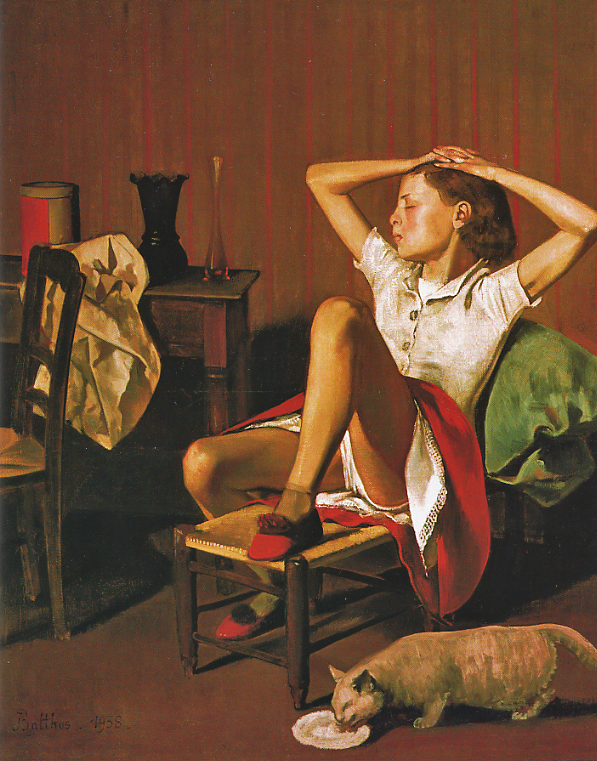
Of course, childhood and innocence aren’t one and the same. The Pola also contains a number of pictures by the European-based Japanese artist Léonard Foujita, a friend and contemporary of Modigliani who outlived him by nearly 50 years. Some of his most startling works involve children, who are depicted somewhere on the continuum between cute and evil, like possessed Kewpie dolls. Several of the pictures are downright disturbing, although not in the same way that the sexualised nymphets of Balthus disturb, in a show we visit when we get back to Tokyo. But that’s another story.

And I start wondering whether Foujita’s depictions of childhood – and indeed of France — might have a special resonance in Japan. But maybe that’s because I know where we’re going next.

Part three here.

Sunday, May 11, 2014

In Hakone: part one

(Something odd and slightly unnerving happened a bit over a week ago. You know how JK Rowling claims that the entire storyline of all seven Harry Potter books dumped itself in her head when she was stuck on a train in the Chilterns or the Cotswolds or somewhere else beginning with C? Well, I had a similar experience, but with a vast and rambling blog post that just appeared and wouldn’t go away. However, when I next put fingers to laptop, nothing came out. Maybe I need to move into a cafe in Edinburgh, I thought, which was a bit of a problem because I was in a rather sweet little hotel in Tokyo at the time. So I parked it and thought I’d come back to it. And then Philip Willey tagged me in another one of those deliciously retro meme chases and I thought, OK, I’ll have a go at that first but I couldn’t even do that. It was as if the enormous, throbbing, pulsating wordblob wasn’t content with refusing to enter the world, it was stoutly refusing to let any other thoughts to see the light either. And without delving into tired metaphors about gestating elephants and/or terminal constipation, I realised that the only way to get things shifting would be to do it in chapters. So, anyway. This.)

“A child could have done it.” That’s what they say about modern art, isn’t it? You know who, the saloon-bar sneerers, the ones who don’t know much about art and don’t much like what they do know. The aesthetic wing of UKIP, basically. There are various responses to this, from Susie Hodge’s rather literal-minded contradiction to the Groucho-esque request to find said child. The latter makes the most sense to me: much about great art involves shedding your inhibitions. Yes, if a four-year-old did it, we wouldn’t pay much attention, but for a 40-something to get inside the mind of the four-year-old, that’s impressive.

And in this frame of mind we find ourselves at the Hakone Open-Air Museum, an hour or so from central Tokyo and a brisk hike to Mount Fuji. The bulk of the space is a sculpture park with over 100 pieces covering most emotional states: moving, perplexing, arousing and just plain fun. Kids run around, gawping at the towering, shiny beasts, with a particular fascination for the figures blessed with huge arses. And I’m reminded of my nephew George on his first visit to London Zoo, at the age of three, transfixed by the wobbly great botty of a female gorilla.

In the centre of the park is the Picasso Pavilion, which holds a pretty respectable collection of the old rogue’s pieces – obviously there are few of the sort of pictures you tend to see on tea-towels but there’s plenty to enjoy. It’s particularly strong on works from his later life – there’s at least one painting from 1972, the year before he died — and includes a lot of ceramics from the 1950s. Several of the plates have images of the fauns that captured his imagination around the time, some of them little more than quickly painted doodles, eyes-nose-mouth-horns-done. In objective terms maybe they’re not that amazing but there’s a cheeky exuberance that makes them endearing. It’s not about knowing they’re by Picasso, and therefore by definition Great Art; it’s that Picasso knows they’re not so important and yet they go out under the brand of probably the best-known artist of the past 100 years and end up in a vast temple to his genius which elevates them from being mere doodles on dinnerware and gives them a sort of subversive charm.

And then I wonder if I’m rather overthinking the whole thing. Would it maybe have been better if the pavilion hadn’t had Picasso’s name splashed all over the side, if I hadn’t known I was going to be in the company of the Great Artist; if, in fact, this had been an extension of the sculptures, many of which I enjoyed, but I’m damned if I recognised or could now recall more than one or two of the sculptors’ names. I start to wonder whether there might be mileage in a museum where the visitor is essentially sight reading, presented with paintings and sculptures stripped of attribution and explanation and context. Here it is. What do you reckon to that? Good? Bad? Indifferent? Is it by Pablo Picasso or Beryl Cook or Anthony Hancock or Nat Tate and does that matter anyway? A child may or may not have been able to do it, but how old do you have to be to appreciate it – and how old are you when you stop appreciating it?

And then, the following day, my dreams come true. Sort of.

Part two here
Part three here.

Monday, January 20, 2014

Race in Asia: shades of beige


I haven’t written very much about the current brouhaha in Thailand because the whole thing’s at once too deadly serious – a battle for the very soul of an entire nation – and too bloody silly – uh oh, Frankie Valli just cancelled his Bangkok gig sceduled for Wednesday. But I was tickled by this stand-off last week between John Sparks of Channel 4 and Dr Seri Wongmontha, or “the flamboyant Dr Seri” as it’s almost obligatory to describe him, a supporter of the anti-government protests. It’s all entertaining stuff, with a sort of ramshackle panache that would enliven Western political debate immeasurably. But once the duel was over, Seri apparently addressed his adoring fans thus:
Do they think we’re stupid? It’s proven people with yellow skin are smarter than people with white skin... Thais who study abroad get better marks than their classmates.
Well, that’s unpleasant, although I suspect the good doctor is simply expressing what a lot of people in these parts think. The problem is that his reference to yellow skins (implicitly those of Chinese ancestry, albeit sometimes at a remove of several generations, and overwhelmingly the sort of people who tend to study abroad) bestows this supposed genetic superiority on the Bangkok elites while potentially excluding the far darker-skinned rural Southerners who have provided much of the heavy lifting for this month’s attempted shutdown. And since the organisers are attempting to stamp out the notion that the protests are all about maintaining class privileges – despite some of their most ardent supporters going off-message when there’s a microphone in front of them – that’s a bit awkward.

But hey, it’s not just Thailand that’s got caught up in a bit of hey-aren’t-foreigners-a-bit-rubbish? embarrassment. Thanks to Richard Lloyd Parry for directing me towards this gem from Japan:


PS: And this, by Patrick Winn, is another good take on the class aspects of the struggle for Bangkok’s streets.

PPS: Oh, it’s all coming up now. This, from China, courtesy of James Crabtree. It’s the line drawings that are particularly noteworthy: 


Saturday, March 30, 2013

Harlem Shake, makankosappo and the death of the dream

Well, it was fun while it lasted. That brief, glorious window when web culture was all about happy, random accidents and people having fun for the hell of it is officially over; although people will need to be conned into thinking they’re still free agents or the whole edifice will fall over, probably taking what remains of consumer capitalism with it. This article identifying the people who really benefited from the Harlem Shake phenomenon is a sobering read, not because I ever gave much of a damn about the meme itself but because of the whole end-of-innocence vibe it represents; the Altamont of Web 2.0, maybe. Of course, people will still do daft, innovative things and bung them up on YouTube; but by the time most of us see them, the pimps will have got to work. “The world is divided into two categories,” said the Dadaist Francis Picabia, “failures and unknowns.” Yup.


So there’s just time to say that I rather like this most recent daft meme, makankosappo, which basically involves Japanese schoolgirls pretending to have superhuman powers. But since its arrival mysteriously coincides with the imminent release of a new movie, maybe I’m already going off it.

Friday, September 14, 2012

Jean and Haruki sitting in an artificial tree, K-I-S-S-1-Q-@-∫-¶-¿


I seem to remember that I once joked, probably on this blog (because, frankly, who else would listen?) that if Haruki Murakami and Jean Baudrillard were ever to meet, something inside my head would happen akin to that science-fiction trope of two parallel worlds coming into contact, which usually means the destruction of everything, or something. But I can’t find it anywhere, so maybe I imagined it or dreamed it, or said it in real life, which doesn’t have a search function. And anyway, then Baudrillard died.

Well, here’s the next best thing, or next-next best at least. From a review of Murakami’s 1Q84, by Jess Row, in The Threepenny Review:
The dispersal and demise of modern subjectivity has long been evident in Japan, where intellectuals have chronically complained about the absence of selfhood. The postmodern erasure of history is the stuff of Japanese nativist religion (shintoism) in which ritual bathing is intended to cleanse the whole past along with evil residues from the past. Japanese hostility to logic and rationalism is a clichéd source of embarrassment to native philosophers… so much so that Karatani Kojin and Asada Akira could boast to Derrida that there is no need for deconstruction because there has never been a construct in Japan. Even Baudrillard might find Japan’s devotion to simulacra a little frightening. And finally, so desubjectified and decentralized, citizens simply live—produce and consume, buy and sell—in late stage capitalism, and politics (that is, a critical examination and intervention in interpersonal and intertypological relationships) has been practically abolished.
Oh, Jess. You had me at “intertypological”.
 

Wednesday, June 06, 2012

Orville that ends well

 
Maybe I’ve got a heart of congealed kitty-litter, but I really can’t find it in me to get offended by the news that Dutch artist Bart Jansen has turned his late cat into a remote-controlled helicopter. It’s not as if Jansen slaughtered Orville for the purpose: the luckless moggy was hit by a car. And the artist actually knew and loved Orville when he was alive, which distinguishes the relationship from that between Damien Hirst and the various anonymous beasts that he’s dismembered and pickled over the years. Orville loved watching birds and that’s why his friend decided this was a good way to commemorate him. I find the whole thing quite touching, to be honest.

I seem to be in a minority though, as Jansen puts himself on a collision course with three quintessentially modern attitudes: squeamishness about death; sentimentality about animals; and disdain for the supposed excesses of contemporary art. But art has always concerned itself with death; think of the countless Crucifixions and Pietà in galleries around the world. And all art has been modern at some point, and most of it has annoyed someone at some point. Furthermore, if you’re really concerned about the sacred dignity of animals, take a look at this:


In Japan, meanwhile, artists have to push a little harder if they want people’s shock bulbs to light up, as we see in the case of Mao Sugiyama, who served up his own genitals (with Italian parsley and button mushrooms) to five lucky diners in a Tokyo restaurant last month. Which makes poor old Orville seem positively earthbound.

Tuesday, February 07, 2012

Social media explained

I notice that the following does not include any blogging sites per se.  Not even Posterous. The only thing worse than having the piss taken out of you is of course, not having the piss taken out of you. Have blogs finally gone Betamax?


While I’ve got you though, this is rather lovely. Even if its sole purpose is to sell t-shirts.

Thursday, December 22, 2011

Pining


Pretty soon it will be possible to concoct bespoke entertainments based on the preferences you express – possibly inadvertently – through your behaviour on Facebook, Amazon, iTunes and the like. A book or movie or piece of music will be cobbled together on the basis that on Monday you retweeted three jokes about Kim Jong-Il and once put a Jeanette Winterson novel on your wishlist. In fact, with the release of Tran Anh Hung’s Norwegian Wood, the process might have been perfected already. It’s based on a novel by Haruki Murakami, who gave this blog its name; it’s set in Japan, a country for whom I hold a befuddled affection; it stars Rinko Kikuchi, by far the best thing in the tiresome Babel; the director was responsible for the excellent The Scent of Green Papaya; and the music is by one of the blokes out of Radiohead, about whom I’ve written two and a bit books. Yesterday, I finally got round to watching it.

And it was... all right, I guess, but could have been half an hour shorter. I think the software may need tweaking.

Thursday, March 24, 2011

Monday, March 14, 2011

Imanust

That was odd. I don’t know how it happened, but for a few minutes today, the BBC’s online coverage of the post-quake scenario in Japan was running backwards. Not out of sequence: properly backwards, waves receding, boats reassembling, flames shooting back inside a nuclear power station and being capped by the intact roof, emergency teams yanking loaded stretchers out of ambulances, death and disaster unhappening itself before our eyes. All accompanied, of course, by a suitably Lynchian narration. And because, for most of us, the image and the reality have become inextricably confused, I almost – almost – half-believe that it really is unhappening, that it really all was a bad dream. And then some anonymous Beeb techie realised what was happening and pressed the right button – or unpressed the wrong button – and it all went horribly real again. Except that it was as if you’d seen the Wizard of Oz on the toilet, and for a while, the vile reality still felt a bit dreamy.

Friday, March 11, 2011


John Martin, The Great Day of His Wrath, 1853.

The humanity

I don’t believe in self-censorship, but in retrospect the rather flippant post I put up about figures of speech a few minutes ago feels slightly hollow as I watch the footage from Japan. Another day, perhaps.

Wednesday, December 22, 2010

Finger food


One of the odder things that’s happened to me since I became a part-time ethnic minority is that I have turned into a food writer of sorts. Not, it must immediately be said, a food critic – a combination of cultural sensitivities and media economics mean that I’m rarely able to unleash the full-strength AA Gill-style vitriol that some establishments deserve. If the pasta’s overcooked, I find that biting my tongue offers the full al dente experience.

I have thought of setting up a food blog to vent my frustrations, but that would eventually put me in the potentially awkward position of slagging off an eatery with which I’ve previously had to play nice. And I’d have to take photos of all the dishes and, as Small Boo can attest, I’m the world’s worst photographer. Many people meeting her in person for the first time have expressed surprise that she possesses feet, or a whole head.

So any honest attempt at food writing has to be a bit of a guerrilla operation, ideally dealing with food from somewhere I’ve never worked. On this basis, and inspired by the magnificent Jen Ken’s Kit Kat Blog, Small Boo and I carried out a taste test on five Japanese Kit Kat varieties.

The first thing to be said about these particular bars is that they’re sweet. I mean, ordinary Kit Kats are sweet, but these are ostentatiously, painfully, pancreas-assaultingly sweet. It soon becomes clear that the success of each variety depends on the extent to which the additional flavouring is able to stand up to the sugar overdose. So, clockwise from top left:

Tamarayua-honten Wasabi: Well, it looks right, or at least appropriate. The chocolate has the pale green hue of the legendary Japanese horseradish that perks up sushi across the planet. But then, as you taste, there’s a disconnect; your tongue is assailed by an intense white chocolate flavour, as if you’re being snogged against your will by the Milky Bar Kid. Only after the shock of the assault clears do you get the pleasing hotness of the wasabi, but even then it’s just a passing hint, like the vermouth in a super-dry Martini. Frustrating. 6

Uji Maccha (green tea): I love Japanese green tea itself, but I’ve never been fond of green-tea flavoured things. Again, this gets the colour right, but again the milk/sugar overload leaves the bitterness of the tea fighting a losing battle. Imagine dropping a tablespoon of double cream into a cup of weak, sweet Typhoo. Not great. 3

Satsumaimo-Aji (sweet potato): A yellowish bar this time, and a pretty accurate aroma of baked sweet potato; it makes you think of Violet Beauregarde chowing down on a three-course meal in chewing-gum form. Unfortunately, the deception isn’t maintained once it passes the lips, as an oddly floral note begins to dominate; it’s as if someone’s dosed your spuds with Febreze. Disconcerting. 4

Sakura Maccha (cherry blossom and green tea): Cherry blossom has deep and resonant cultural implications for the Japanese people, so one wonders how they feel about the weird, cough-medicine taste on offer here. It stages a mini-sumo bout with the bitterness of the tea and the vaguely coconut tones of the biscuit, and nobody really wins. Icky. 1

Syoyu-tumi (soy sauce): The only variety that I’d actually choose to eat for pleasure. For once, the novelty flavouring is powerful enough to withstand the sweetness, creating something not a million miles from a salty caramel. Not bad at all. 8

Overall: I’m sure all chocolate manufacturers come up with wacky ideas like this on a regular basis, but Nestlé Japan seems to be the only one that takes them all to market. As it stands, they’re like the purest form of conceptual art, with the ideas far more successful than the execution. Still, at least I’m allowed to slag them off...

Sunday, August 23, 2009