Wednesday, August 30, 2006

Tasty

Vladimir Tretchikoff has died. Who?


Yes, that Vladimir Tretchikoff, the man who painted The Chinese Girl, the image that blighted a million lower-middle sitting rooms, until it became an emblem of ironic kitsch. Obituaries have focused less on his achievements, than on notions of taste and critical consensus and artistic snobbery.

Oh well, if he'd been a better artist, he probably wouldn't have had any obituaries at all. As Arnold Bennett said: "Good taste is better than bad taste; but bad taste is better than no taste."

Also: anyone hear this idiot's guide to blogging? It focuses on the "whimsical" Little Red Boat, whose author touches on the old vs new media schtick, but neglects to mention the not insignificant fact that she works for The Guardian. Hmmm.

And, I'm astonished to say, this is the best record of the year so far.

Sunday, August 27, 2006

Of books and Bert

As I suggested a few days ago, the Web has given us unlimited new ways to waste our time. I found a new one the other day; the annoyingly compulsive LibraryThing. If you haven't discovered it yet, it's an online catalogue for your book collection. It sounds like the ultimate solipsist's daydream, where you can sit at your keyboard imagining yourself as some sort of tweedy don, bowtie and half-moon specs askew, sitting among your slightly foxed first editions and heavily-notated editions of Ovid and Wittgenstein (pencilled marginalia: "true - so true!").

But it's not like that, of course. On LibraryThing, your own list of books isn't in a vacuum. You're not just putting up things that you happen to own; you're putting up components of your cultural identity. Just as when you're appearing on a TV show, or writing a blog, you're creating an on-line simulacrum of yourself. And this is where things get fun. How honest are you? Do you simply stick up all the printed matter on your shelves, from Proust to pizza flyers? Or do you rationalise, consciously or unconsciously filtering out the dross to buff up your on-line identity, making your 'self' seem cleverer or cooler or sexier. As I've mentioned before, my shelves bear two copies of The Da Vinci Code. But, um, well, yeah, neither of them are actually mine - they were left behind by visitors. And they don't really sit very well next to the Austers and Murakamis, do they?

Your bibliodigital identity is constantly up there for admiration or derision, and above all, comparison. Alongside your user profile is a list of "Users with your books", which lists, in descending order, the users whose catalogues have most matches with your own; in a way, it's a much more sophisticated variation of those favourite books/films/music fields on the Blogger profile. And, inevitably, once I'd stuck in 300 titles, the member at third place on my list (matching a quarter of my entries) was a bloke I knew from university. Simulacrum and reality collide like Zidane and Materazzi.

More doodles in the margin of the last few days: apartheid gets the reality TV treatment; Bob Dylan declares that "I don't know anybody who's made a record that sounds decent in the past twenty years, really" (this from a man who lost his spark when he fell off his bike in '66, and don't give me Blood on the Tracks - one and a half great tracks do not a great album make); and I'm sure the intentions are good, but Ruth Kelly's Commission on Integration and Cohesion sounds disturbingly similar to the Taleban's Ministry for the Promotion of Virtue and the Suppression of Vice - and both sound like discarded song titles by Heaven 17.

And the obits seem to be piling up. The sad duty falls on me to record the passing of Bertie Bucket, aged about 12-ish, part Jack Russell, part Norfolk, part bundle of damp straw. He'd been ill for years, but rejoiced in disproving the pessimism of successive vets. They gave him three months, seven years ago. The end, when it came, was mercifully swift and apparently painless.

Bert brought love and laughter to all who encountered him, and was particularly popular with local urchins, who would follow him, chortling and pointing at his stumpy tail. His hobbies included eating things he wasn't supposed to, chasing crows, sunbathing, having his chest scratched, and wearing his smart blue jumper. Thanks to Small Boo's mum and sister, who had shared the exasperating but often highly comical task of tending to his peculiar needs since we moved abroad. It is apparently modish at times like these to suggest that pet and owner will meet "at the rainbow bridge" but Bert would have treated such hippy nonsense with a resonant fart. I'll miss the little bugger more than I can say.

PS: Small Boo would like to register her disgust that I am transforming a personal tragedy into a media event.

Thursday, August 24, 2006

Panel beating

Late to the game, as ever, I've been catching up on Rob Brydon's Annually Retentive. (Dig that ambiguous apostrophe!) If you're even further out of the loop than I am, it's Have I Got News For You meets The Larry Sanders Show. Brydon plays himself (or a Welsh comedian of the same name), hosting a fictional, derivative panel game. We see behind the scenes: the banal, demographic-obsessed production meetings; the preparation of 'spontaneous' quips; and, above all, 'Brydon''s pompous, thin-skinned, two-faced megalomania. And we see the 'show', which has all the trappings of HIGNFY, They Think It's All Over, Buzzcocks and all those other repositories for moderately competent circuit comedians. The attention to detail makes it convincing (the obvious question being, does the studio audience know it's not 'real'?), but because we see it in context, we know it's fake, and by extension, so are all the panel shows it mocks. Although, as Small Boo points out with a sigh, its fakeness does not stop me from shouting out the answers.

What Brydon is doing is, of course, not new. Before Larry Sanders, Garry Shandling played 'himself' in It's Garry Shandling's Show ("This is the music that you hear as you watch the credits/We're almost to the part of where I start to whistle..."), which was, in turn, suspiciously like the almost forgotten Kelly Monteith Show. Then, of course, Seinfeld had a character called 'Jerry Seinfeld' (played by Jerry Seinfeld) surrounded by characters who seemed less 'real', more 'extreme', partly because the actors didn't share their names. Although one of them (George) was clearly based on the show's co-creator, Larry David - who then came up with his own show, in which he played a character called...

Annually Retentive seems to owe even more to Bob Mills' notorious flop The Show; the key difference being that the backstage bits in the Mills offering were real. Or were they? Well, certain stars complained because they felt they'd had their privacy invaded. Or did they? The fact that Mills ('Mills'?) appears as a panellist on 'Brydon''s fake show adds to the fun.

There seem to be two forces at work here. One is that producers now accept that audiences are relaxed about post-modernism, self-reference, metafiction and all that fancy French stuff, even if they can't put a name to it. The other is that performers now need to show that they don't take themselves too seriously. This is a fairly recent development: look at the difference between Peter Falk, playing Peter Falk straight in Wings of Desire (1987) and the character-self-assassination implicit in Being John Malkovich, just 12 years later. The extraordinary sight, in Extras, of 'Les Dennis' being informed of his cuckold status with his saggy arse ('arse'?) on display, is just a logical progression.

But there's a subtle difference. Malkovich and Dennis have taken the public perception of themselves, their lives, their personalities, and used them to make a particular character. "Fair enough, there are bits of us here," they say. "But this is clearly a self-caricature. We know we're not perfect, but by doing this, we're proving ourselves to be a bit less imperfect than you might have thought." Brydon, however, never seems to be out of character, even in the 'reality' of an interview situation. In the past, there was always a bit of Keith Barratt-style loserdom about him; now, I suspect, the 'Rob Brydon' style arrogance will resurface, even when it's Rob Brydon (no quotes) on the guest list.

We know more about the life of his colleague Steve Coogan (Ferraris, coke and shagging on a bed of money, apparently), but his own personality is still a mystery; any difficult question and he'll pull in Alan Partridge or Gareth Cheeseman to fend it off. He too has gone the Malkovich route, portraying 'himself' in Jim Jarmusch's underrated Coffee and Cigarettes as a complete shit, snubbing 'Alfred Molina''s overtures of friendship until he finds out that 'Molina' has Spike Jonze's phone number. (Jonze, of course, directed Being John Malkovich.)

Brydon and Coogan, of course, play themselves, playing roles (if, in fact, 'themselves' are not roles) in Michael Winterbottom's A Cock and Bull Story, which, being based on the pioneer postmodern fiction Tristram Shandy, is also about Tristram Shandy, and about itself, as well as up itself. Or so I'm told. I haven't seen the film. But Coogan hasn't read the book. Or so he said.

(Winterbottom, of course, plays the po-mo thing as if it's second nature - the appearances in the Tony Wilson biopic 24-Hour Party People of the 'real' Howard Devoto, Clint Boon, Wilson himself being the most obvious examples - that when something 'real' happens, the audience is temporarily thrown. The sex in 9 Songs is 'real', because we can see the ins and outs and bodily fluids. But, because it's Winterbottom, and the non-boudoir action takes place at 'real gigs', we're constantly aware that they're actors, following a script, only 'really' sucking and fucking in the way that actors in a Woody Allen film are 'really' talking.)

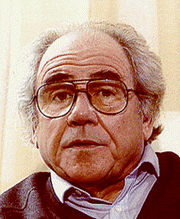
Coogan and Brydon, then, are the next step in celebrity culture, keeping their 'real' selves hidden, or at least ambiguous, even when apparently taking the piss out of those very 'real' selves. And in the Baudrillard sense - that's him on the right, by the way - say "bonjour", Jean - doesn't he look like Ronnie Corbett? - "le producteur dit à moi, il dit, Rrrronnie" - and who does the better Corbett impression, Coogan or Brydon? - and isn't the whole thing impressionism in a way? - post-modern post-impressionism? - in playing these versions of themselves, they have become true simulacra. Because, since the real Brydon and Coogan are kept away from the public domain, 'Brydon' and 'Coogan' are representatives of things that (in a cultural sense) do not exist.

So why do I still feel the urge to shout out the answers?

Monday, August 21, 2006

I got those How the Web will destroy capitalism by the back door, if only by accident (it's that Herbert Marcuse, I tells ya!) blues

I'm rather stung (nah, not really) by the allegations of dumbing down that arose from the previous post. I'm working quite hard at the moment, so I don't have much time for recreational reading, watching, listening, etc - the sort of thing that tends to provide the meat for this blog. As a result, the stuff that's crossing my radar tends to be work-related, and therefore has a personal context, as well as purely intellectual/cultural. It's tied to what I'm doing, as much as what I'm thinking or in the Adorno/Raymond Williams sense (HA!), consuming.

So, the next couple of months may involve more of the old-school, diary-type blogging that Betty recently toepoked into the back of the Zeitgeist. Being a naturally shy, grumpy, anti-social bastard, the overall effect may be like that of Stevens, the butler in The Remains of the Day, desperately trying to engage in what he thinks is "banter" with the men in the pub. And, if you must know, I did read the book before I saw the film.

Anyway...

I used to mock employers who restricted web access to their wage slaves, claiming it encouraged time-wasting, but as I get older and more right-wing I start to see the point. Here's an example. As some of you know, my current Big Writey Project is a book about Radiohead, with specific reference to OK Computer. One of the tracks that was considered for the album, but never included (indeed, never released in any form) is called 'Lift'. Yesterday, I was trying to find a definitive set of lyrics for 'Lift'. I tracked down what I was looking for on a Radiohead fan site; but a few lines along, I saw a reference to an earlier version of 'No Surprises' (a track that did make it to the album) with very different lyrics. This was news to me.

So, I checked that out, and realised that I'd need to add a few paragraphs to what I'd written about 'No Surprises'. In particular, there were these rather arresting lines: "He was sick of her excuses/To not take off her dress when bleedin' in the bathroom." I immediately thought of that brilliant and blood-obsessed songwriter Bill Callahan, aka Smog, aka (Smog). But which song was I thinking of? I remembered that a few years back I'd written a piece about Smog and his claret fixation for Tangents.

So I went there, and realised I hadn't visited for a few weeks. I read some of the new pieces; wondered why I'd never really got Michael Head/Shack/the Pale Fountains (but damn, John Carney gives good footnote); and made a note to track down the BMX Bandits' version of 'Hopelessly Devoted To You'. Then I noticed an approving mention from Alistair regarding a site called Popmusicology. So I went there and nosed around for a bit, and it was OK, but not scintillating.

By that stage I fancied a cup of tea, so I shut down Safari, which revealed an open Word document - the draft of my chapter about the rejected songs from the OK Computer sessions, with the word 'LIFT' followed by several question marks. And I looked at my watch and realised that I'd typed that, and begun to search for those lyrics, two hours ago.

So I wrote a blog post about it...

Sunday, August 20, 2006

Flab and groovy

Most spam goes to my bin without passing GO or collecting 200 baht. I opened one today, though, intrigued by the address of the sender: Freida@youareadork.com. It was something of an anti-climax to see that it was just another weight loss product on offer. But imagine my joy when I read, in Freida's breathless testimonial:

"I literally saw 15 pounds melt away within the first few weeks!"

I just hope the manufacturers provide a free drip tray.

Friday, August 18, 2006

RCM RIP

Leeds United chairman Ken Bates has been accused of racism for describing his successors at Chelsea as shysters. As far as I'm aware, the word has no anti-Semitic connotations; in fact, "shyster" is a Yiddish word and, oddly enough, people who speak Yiddish aren't all that prone to using anti-Semitic epithets. Is Bates being accused of racism simply for appropriating the language of his opponents? And, to be frank, if I were an anti-Semite, Leeds would be the last place I'd move to. It all sounds completely meshugge.

Also... following on from the Old/New Media musings I posted yesterday, a fun piece from the Graun about how Hollywood is bypassing print critics in favour of internet-driven word of mouth. But interestingly, they only seem to do this for popcorn schlock; films aimed at people who can read without moving their lips still get the old media treatment. Maybe with print critics, you know the opinion is coming from someone who has seen at least one film that is either a) free of CGI; b) black and white; or c) foreign.

And, in the skateboarding duck slot, the story of the Filipino judge and the three imaginary mystic dwarves reaches its conclusion. For further details, read his blog.

As I said in the last post, I usually blog about stuff, rather than about myself. Not that I have any problem with old-school, diary-type blogging, or confessionals, or reminiscences, or those that give intimate details of one's own sexual exploits. (Is there a word for those? Blogjobs?) It's just that I'd rather write about Belle and Sebastian, or Kandinsky. Or even Ken Bates.

But, for a change, two bits of moderately personal importance. One is to note that the guy who's being held in connection with the JonBenet Ramsey case was arrested about 50 metres from my front door.

The other is rather less lurid and, to me at least, far sadder; the death of Campbell MacKay. Campbell was one of my English teachers at Appleby College in Ontario, 20 years ago. He directed me in his never-to-be-forgotten, Mafia-themed production of Rosencrantz and Guildenstern are Dead; he got me reading Joyce and Beckett and Burgess and Larkin. When people talk about inspirational teachers, you get the image of Robin Williams doing John Wayne impressions, and kids standing on desks. Campbell wasn't like that. He was a grey-bearded, chainsmoking, clarinet-playing Glaswegian, with the lugubrious demeanour of a slightly hungover bloodhound. He was one of the best teachers I've ever had, and I've been lucky with teachers. He was also a kind, funny, clever, gentle gentleman. Tonight, a glass will be raised.

"But you could not have a green rose. But perhaps somewhere in the world you could."
James Joyce, A Portrait of the Artist as a Young Man

Thursday, August 17, 2006

Paper tigers

Bob Swipe is characteristically droll and perceptive on the subject of The Girl With A One-Track Mind and her recent difficulties; and also on the self-evident superiority of Spinsterella's blog to The Girl's. I don't want to stay in a solipsistic quagmire, musing about the Nature And Future Of Blogging, and the whole Old/New Media thang; and I promise this is going to be the absolutely final reference to all those mad women at The Independent. (No links. Just Google "Mary Dejevsky gynaecology" and stand back.)

Small Boo was in Hong Kong over the weekend, and came back with a couple of the UK Sunday broadsheets. Now, I scan the UK press quite intensively via the WWW; but there is still something different about reading a paper. Because you're not choosing to summon up discrete articles, you get an overall view of the whole product; as the advertising slogan for the News of the World used to declaim, "All human life is there".

Essentially, most articles in a modern newspaper fall into one of three categories: news; comment/analysis; and lifestyle. Now, news is one area where old media has an edge over blogs, and will do for some time. It's a question of resources and access: we don't have a Murdoch expense account; we don't have accreditation; we won't get embedded with the Marines. Yes, individuals can get an invite to the party with their cellphone footage of the 7/7 attacks; but, despite the efforts of Matt Drudge and his ilk, the networks and the big corporations still run the show here.

Comment/analysis (which, I suppose, is the sort of ground on which I've pitched my tent) is a greyer area. In theory, all you need is a basic level of subject knowledge, and smattering of critical intelligence. In practice, the big guns have the advantage, because they have access to raw material ahead of us. I can't come up with any serious analysis of the Booker longlist, because I can't afford that many hardbacks, and some of them haven't even been published yet. However, as producers start to realise that word-of-blog is a decent selling tool, they're starting to send pre-release review copies of books, CDs, etc to certain bloggers; doubtless this practice will continue, and increase. But I'm not the literary editor of the New York Times and I know it.

But when it comes to lifestyle, I think something interesting is going on. Newspapers are full to gag-reflex point with columns in which middle-class journalists tell us about how amusing their children are. In small doses, this can be interpreted as a quasi-sociological snapshot of modern life. In practice, it gives an entirely warped view of what's going on, because all these views are expressed by journalists, who by definition are not normal. (This is not a dig at hacks; it would be ridiculous if all these columns were written by architects, or butchers, or redheads, none of whom, collectively, are 'normal' either.)

People have joked about how banal these Polly Filler columns are; bloggers have proved this is one area where they have the edge, because bloggers are amateurs, and come from a much wider range of backgrounds and lifestyles. But what's freaked out some journalists is that rather too many of these lifestyle bloggers - stand up Spinster again, but there are plenty more of you out there - are equally good, if not better, as writers. So Old Media has a choice. It can co-opt them: whether to turn them into 'real' journalists/authors, thus compromising their objectivity; or to add blogs to their own outlets. Or it can follow the lead of The Independent and make feeble squawking noises from the sidelines.

It's fairly clear which course is in the best interests of Old Media. And as someone who was working in various manifestations of that media for 15 years before I started blogging, I've got no scruples if someone offers me an inducement to extend in a cross-platform direction. But I think The Girl's experiences indicate that it's not always going to be a smooth transition. In other words, Spinster - if someone comes waving a cheque, you're worth it, but don't jump in head-first.

Unless you fancy him, of course.

Wednesday, August 16, 2006

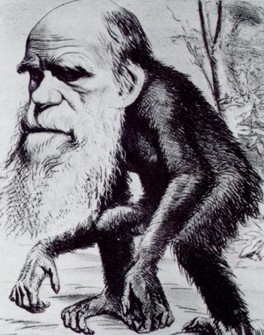
Derrida 1: Darwin 0

30% of students at UK universities believe in non-Darwinian theories about the development of life on earth.

Now, student life is when you are allowed to believe 66 impossible things before breakfast, and get union funding to start a relevant club. When I was at college, I began as a middle-of-the-road liberal with green tinges, lurched via Trotskyism into anarchism and ended up concocting my own blend of aesthetic situationism, which demanded that kids should be fluent in the thoughts of Oscar Wilde and the Zurich Dadaists before they've learned their times tables.

But this creationist/ID thing is a bit worrying. Some are blaming the rise of religious fundamentalism; others the decline in rigorous science teaching. But Steve Jones, professor of genetics at UCL, has another idea, according to the Guardian report: he blames "political correctness among teachers here who feel they have to give a reasonable hearing to beliefs held by people from other cultures, particularly Muslims."

PC and its cousin, postmodernism, are despised by religious fundamentalists, because they deny the possibility of one universal truth, one interpretation of reality, one true way (beyond themselves, but that's another matter). But could it be that the loony God squad (both the Jesus and Mohammed wings) has learned how to play these heathen philosophies to their own ends?

UPDATE: See the Spaghetti Monster for more details.