 Is it me, or is it getting kinda metafictional in here? First of all, This Life is to return, reuniting the famous five by deploying the device of Egg writing a roman à clef about his former flatmates; essentially, a fictional fiction that disguises a fictional reality that was successful because it was so 'real'. Fortunately, writer Amy Jenkins has resisted the urge to slap on another few layers of unreality by scripting the whole thing as a mockumentary, or the whole self-referential edifice would surely come crashing down, like an overambitious Black Forest gateau from Heston Blumenthal. Or England's second innings.
But maybe it was always thus. Kingsley Amis's biographer has uncovered the manuscript of an unpublished novel, The Legacy, in which the resolute foe of all flavours of postmodernist silliness creates a hero called - wait for it - 'Kingsley Amis'. Although this isn't actually Kingsley Amis, of course, any more than his son's 'Martin Amis' was really Martin Amis. The 'real' Kingsley described the character as "a young man like myself only nastier", and if you know half the stories of Amis Sr's misdeeds, that's pretty damn nasty.
Of course, if The Legacy had been published in the early 50s, its impact would have been weakened because hardly anybody knew who Amis was. Or, more specifically, it wouldn't have worked because the public Amis persona wasn't fully developed, to whatever extent that related to the real Kingsley. Walk-on roles for TV celebs work because a critical mass of the viewing public will have an idea of what they're like, or what they're not like. Keith Chegwin as bigot, or Chris Martin as cynical opportunist, are ploys that worked in Extras, because they're so comically out of sync with how these people are usually portrayed. (It would be interesting to see how Ricky Gervais might have used someone with a serious PR problem - Michael Barrymore? OJ Simpson? Jonathan King? Mel Gibson? Michael Richards? - and the extent to which they might have been prepared to play ball.)
Most fiction writers can't pull stunts like this, because their lives and personalities don't tend to be so public. Obviously there are exceptions, such as the celeb fiction peddled by the likes of Pamela Anderson, or the bizarre reality fiction genre that I spotted a few weeks ago (effectively, celebrity fiction by non-celebrities).
But most modern writers of literary fiction lead mundane little lives, well below the radar of the paparazzi, although Salman Rushdie's hasn't been without incident, and he had a bash at fictionalising it in Fury. Usually, though, the knowing winks are restricted to Paul Auster-style writing-about-writing. It takes a special kind of writer to merge Austerian metafiction with the pile-'em-high celeb tradition - not because few writers have the technical ability, but because even fewer of them are allowed behind the velvet rope in the first place. Margaret Atwood's fluctuating weight doesn't make the pages of Heat magazine, and nobody gets excited at the thought of a video of Julian Barnes having sex with a rock drummer.
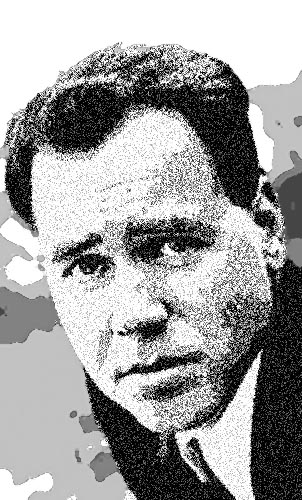 The closest the two worlds have come in recent years was the advent of the literary Brat Pack in the 1980s: and it seems fitting that it falls to Bret Easton Ellis to create this kind of fictional mash-up, which is effectively what his last novel Lunar Park turned out to be. Like Amis (père et fils) and Auster, he creates a character with his own name. But from this mundane starting point, he begins playing with the reader's expectations and preconceptions from the start. Even before the action starts, the book's dedication commemorates Ellis's father (who has a looming presence in the narrative) and his boyfriend (who doesn't, since in this version of Bretland, the superstar novelist is married, albeit messily, to an actress). So, this clearly isn't 'really' BEE - except that so many of the 'real' reference points are there, including fellow BratPacker Jay McInerney, with whom 'Ellis' shares a nostril or two of 1980s nostalgia. And there are countless acknowledgements of his past oeuvre, including the Elvis Costello poster from Less Than Zero and even a fully-realised character from American Psycho, whose significance is surely spotted by the alert reader many pages before the narrator susses it.
It's these literary nods and winks that the author takes to a deliriously illogical conclusion, when Ellis realises that another crucial character has stepped out of the pages of a novel that was never published. Or was it? The McInerney walk-on and the American Psycho brouhaha can raise a knowing chuckle or two for his devoted fans. But did Ellis - the real one, the gay one - write the unpublished novel he describes? Or has he invented it - has he invented the reality of a fiction? Which raises all sorts of subsidiary questions, chief among them: can a fiction be autobiographical if we, the readers, don't know the real details of the autobiography?


