Showing posts with label fashion. Show all posts

Saturday, May 11, 2024

About nostalgia(s)

In an otherwise tedious and banal article about, of all things, Virgin’s cruise line, the CEO comes up with this inadvertently fascinating nugget: “People like to be reminded of nostalgia.”

It sounds daft, of course it does; surely it’s nostalgia that does the reminding. But then I realise that when watching the old episodes of Top of the Pops that BBC Four is running on Friday nights, some of my favourite moments come from Darts, a band that achieved success in the late 1970s by providing kooky versions of songs that were even then already 15 or 20 years old. And then when I was at university, when mainstream pop was wallowing in post-Live Aid earnestness, my friends and I constructed a world that resounded to soul and funk from past decades (and an aesthetic that merged 40s zoot suits and 50s Soho and 60s Left Bank blankness). So, sorry Mr Saverimuttu, I guess I do like to be reminded of nostalgia. Just not the crappy nostalgia you’re peddling.

And now I find out that Britpop, another trend that had more than one eye on an imagined past, has apparently been revived (although it appears that translates as “wears a Fred Perry and has a St George’s flag in the back of the video” but maybe that’s enough).


PS: And then there are conflicting nostalgias. I was annoyed when stories covering the death of the actor Bernard Hill led with his appearances in Titanic and The Lord of the Rings, with (to me at least) his most important role, as Yosser Hughes in The Boys from the Blackstuff relegated to a later paragraph (even on the BBC, where Blackstuff was first broadcast). Of course Blackstuff was over 40 years ago; but Titanic was nearly 30...

Thursday, December 23, 2021

About dressing gowns

Ivan Goncharov, in one of the many 19th-century Russians novels I haven’t read, coined the word halatnost, most readily translated as “dressing-gown-ness”, to describe the sloppy idleness of the aristocrats of his time, a mode of existence that would come back to bite them a few decades on.

I wonder whether Jonathan Chew had Oblomov in mind when he appeared clad in such a garment during his trial for assaulting chief medical officer Chris Whitty. Although since the core of his defense appears to be “I feel like I’m innocent”; and his response to the judge’s criticism of his attitude was “What does cavalier mean?”, I rather suspect not.

Wednesday, January 27, 2021

About poetry

It is late and I am tired so regard this as a place holder; simply to note the news that Amanda Gorman, who became world famous a week ago for the poem she declaimed at Joe Biden’s inauguration has been signed not by a publishing house or record company or a university but by a modelling agency.

Wednesday, May 08, 2019

About Camp

From this week’s Met Gala.


When something is bad (rather than Camp), it’s often because it is too mediocre in its ambition. —Susan Sontag, Notes on Camp, 1964
PS: The reliably tiresome Piers Morgan characteristically misses the whole big thing point by calling one of the red carpet sillies “preposterous”

Friday, May 03, 2019

About cultural appropriation

This afternoon, in South London, I saw a black man (I’m guessing African-Caribbean, but can’t be sure), wearing an Asian conical hat, the sort that in less enlightened times we used to call a “coolie hat”. Genuine question: is this cultural appropriation?


Thursday, February 07, 2019

About blackface

A man in Arizona is objecting to an old photograph of coal miners in a bar because it reminds him of blackface. He accepts that the picture isn’t intended to represent blackface, but “a business’ photograph of men with blackened faces culturally says to me “Whites Only.” It says people like me are not welcome.” Ultimately, whatever the reality of what the image depicts (and we’re almost getting into Magritte territory here), “the context of the photograph is not the issue.” It’s a starting line, a springboard for a bigger, nastier conversation. Which is probably one we ought to have, but it makes people uncomfortable, so. nah, let’s just take down the photo.

A few days later, a piece in the New York Times traces a fairly convoluted line between blackface traditions and the soot-smeared chimney sweeps of Mary Poppins, rather ignoring the fact that, whatever the original intent of PL Travers, or Walt Disney, or long-forgotten vaudevillians, or even the blessed St Dick of Van Dyke, sweeps’ faces are black because of the nature of their work, not as part of a secret plot to ensure white superiority. Like the miners, they work with dirt.


And just now, I read that Gucci is withdrawing a (frankly hideous but what do I know?) piece of clothing because it reminded somebody of blackface.

The argument is no longer about whether blackface was “just a harmless bit of fun” (it clearly wasn’t) but whether it was something so heinous that any cultural product that might accidentally remind someone that blackface even existed should be cast onto the scrapheap. Clearly this sets precedents. Should we ban the Beatles’ ‘Hey Jude’ because the refrain could prompt flashbacks to Kristallnacht? Or possibly consign the routines of Les Dawson to the margins, not because of his rather unenlightened attitude to his mother-in-law, but because his forename is still occasionally deployed as a homophobic slur?

Beyond the inevitable PC GORN MAD headlines, we need to remember that everything is offensive and hurtful to someone. Coalminers and chimney sweeps and designers of truly horrible jumpers may take offence at the brouhaha that’s arisen from these stories. But as Rashaad Thomas, the author of the article about the miners argues, the context is not the issue. How we respond is the issue.

And increasingly, my response is to search out the nearest coal mine and wonder what it’s like down there.

PS: Katy Perry adds to the fun.


Wednesday, June 06, 2018

About Kate Spade

A genuine Facebook exchange I just saw:
“OMG, RIP Kate Spade 
“They closed down?”
Wrapped up in there is a whole narrative about the extent to which capitalism is trouncing real life but for the moment I’ll just let it hover here.


Tuesday, May 08, 2018

About a qipao


I did consider writing about the case of Keziah Daum, who wore a qipao/cheongsam to her high school prom and kicked off all manner of brouhaha about cultural appropriation and that juicy stuff, prompting everyone to adopt their instinctive battle formations in the culture wars. But, for once, I was inhibited about opining, what with me being a non-Asian, non-female, non-qipao-wearer (at least while sober) and all that. Fortunately, the excellent Anna Chen, in The Guardian, made far more sense about the whole thing than I could ever have done, pointing out that the garment itself has woven into it a whole load of other problems about gender and class before we get to whether some random gweilo is allowed to wear it and, essentially, that Asians living under the shadow of Trump have rather more pressing concerns than this.

But something still niggles. In the past I’ve made the smartarse observation that the end point of the whole cultural appropriation concept is that only Belgians will be allowed to play saxophones; only to be told that this is all about power, and it’s perfectly OK to appropriate from above. Thus, it’s wrong for Keziah to wear a qipao but it’s acceptable for her Asian classmates to wear jeans, because American culture dominates everyone and everything.

Fair enough for the here and now; but let’s think ahead a bit. This is the Asian century; forecasting history with absolute confidence is a fool’s errand but it’s a pretty good bet that by, say, 2050, China will be a hugely dominant global power, in terms of economic, military and cultural power, maybe even challenging the American hegemony. And if that’s how it turns out, will it be acceptable for Keziah’s daughter or granddaughter to wear a qipao to her prom; but not for the President of China to wear a business suit?

Tuesday, February 27, 2018

About posthumanism (again)

The career paths that remain free from threats by encroaching technology seem to be vanishing by the day. Now, fashion models join the list, as Dolce & Gabbana replaces the skinny, glum-looking ladies with drones.

PS: On similar lines, the tale of Shudu Gram, the model who doesn’t exist.

Thursday, March 26, 2015

H&M and all the stars that never were

When I was about 13 or 14 I was in a band. We were called Yeux Bleus and we had a really great logo, with a pair of elegant, feminine eyes peering out from beneath the brows formed by the initial ‘Y’. We also had some lyrics, which were basically the poems I was already writing about nuclear war and beret-wearing girls who didn’t fancy me, with some bits repeated so we could have choruses. No recordings exist, sadly, because we never made any, because we never actually played any music, because we couldn’t. But I suspect we would have ended up doing vaguely synthy, new romantic stuff, like Visage or Depeche Mode, because they had French names too. 


I only mention this because it appears that the clothing brand H&M, following on from the craze of adorning t-shirts with the names of punk and metal bands of which the wearer has never heard, has taken things to the next level, using the names of bands that somebody in the marketing department has just made up. To be fair, they’ve put more effort into this than we ever did, retrospectively creating band histories, album artwork and even some suitably gruesome music for these non-existent combos.

But here’s the thing. There must be hundreds of thousands of bands that never happened, just like ours. And probability states that at least some of those band names will coincidentally pop up again on an H&M garment — there are only 26 letters in the alphabet after all, although this is metal, so we have to take umlauts into account. Just imagine what it might be like to be walking down the street and be confronted by some kid whose fashion choice pledges allegiance to a band that you never quite got started more than three decades ago. The feeling would surely be something like stepping into a parallel world where all those primal adolescent dreams of power chords and groupies and difficult third albums and woooh, hello Leipzig had come to fruition and you hadn’t ended up selling patio heaters in Shropshire after all. And if you do see some kid whose t-shirt announces slavish devotion to the back catalogue of Yeux Bleus, please let me know, because we were bloody brilliant.

PS: Turns out it’s not that straightforward. The t-shirts were real but the back stories (including the dodgy neo-Nazi connections of some of the bands) and the music were conjured up as a subversive prank by a production company that was fed up with the high-street commodification of metal. One unreality on top of another. I can’t keep up.

Friday, October 17, 2014

Bentleys, Borges, Bros and the fine art of disingenuous damage

From a letter to the Guardian about the late Jocelyn Stevens:
He was so wealthy that, when his car was written off in an accident, he instantly bought another Bentley (or whatever) and told his garage to make on it the same scratches and marks as were on the original so that his wife wouldn't know about the crash. 
Whether the tale is true or not (the correspondent believes it is but can’t be certain) there’s something deliciously Borgesian—via Baudrillard, naturally—about this, with the new car as a simulacrum to disguise the reality of the old one, and the crash. But the new car can’t just be a replica of a thing; it also has to replicate a history, events, time. Or maybe it’s just like the late 1980s, when people (OK, we) deliberately ripped holes in their Levis while insisting they’d occurred naturally.

Wednesday, September 17, 2014

That Kent State shirt and the ultimate triumph of consumer capitalism

Back when I was young and halfway pretty, I got myself involved in a bit of studenty politicsy shenanigans that ended up with a bunch of us barricaded inside the offices of the university vice-chancellor. (He’d attempted to carry on working for half an hour or so while various middle-class Trots and greboes glowered at him, but in the end gave up and vacated his space, presumably deciding that he’d get more done somewhere that didn’t smell of an army surplus store.) 

After a brief period during which we luxuriated in our triumph over The Man, the realisation began to sink in that: a) we weren’t quite sure what to do next; and b) we were breaking all sorts of laws and were running the risk of getting arrested and/or chucked out of university. Damn, we were political agitators, a threat to global capitalism itself — they’d probably send in the SAS to get us out. That was when I, working on the principle that the best way to get to know someone is to check out his/her bookshelf, noticed that our unwilling host owned a copy of the official report into the Kent State University shootings that resulted in the deaths of four students after the Ohio National Guard opened fire in 1970. Shit, as I don’t think we said back then, suddenly got real.


Which is a roundabout and slightly self-indulgent way of acknowledging the brouhaha created by Urban Outfitters’ decision to market a sweatshirt that seems to nod to the Kent State tragedy. And yes, they’ve been forced to apologise, but that’s not the point: we’re talking about Urban Outfitters without them paying us to. That’s the point. It’s a perfect example of recuperation, the process in which radical images and concepts are co-opted to reinforce the status quo. They won, comrades. We lost. And they didn’t even need to send in the SAS.

But while we’re here, do people really still wear sweatshirts?

Sunday, July 13, 2014

On pubic hair, and/or the absence thereof

I’ve stroked my chin a couple of times (here and here) about the odd reactions provoked by Courbet’s painting The Origin of the World and, yes, we’re back on the vexed question of how we respond to public displays of women’s body hair, with the response to Leena McCall’s painting Portrait of Ms Ruby May, which was removed from a show at the Mall Galleries. The Guardian hedges its bets in its coverage of the story, not wanting to be as prim and silly as the Daily Mail but at the same time not wanting to give offence. (But to whom? Feminists? Puritans? Feminist puritans? Body fascists who think all women should be utterly shorn below the neckline? Tiresome hippies who insist with similar vehemence that all women should be innocent to the attention of waxes and razors whether they want to be or not?) They offer a censored version of the image but allow you to click if you want to see it in all its glory. I don’t have the energy for such things. Here’s the painting, take it or leave it:


Without wishing to delve too deeply into the minutiae of Ms May’s intimate beautification routines, she does appear to have done some tidying down there, although by what means I wouldn’t presume to guess. And of course there’s a whole thesis that could be concocted into our vexed relationship with pubes, encompassing Classical and Renaissance nudes, that urban myth about Ruskin, those pens with pictures of naked ladies who lose and acquire swimsuits depending on the angle at which you hold them and the shifting attitude of magazines such as Playboy, where hair was a proud badge of sexual liberation in the early 1970s, only to retreat over the years to the point at which it’s now as unacceptable as it was when the magazine first launched. And of course, the pubic paradox, that the presence of hair in some ways reveals what it also purports to conceal, which is verging on Baudrillard if you think about it, which I do, probably too much. I think I may go a bit further on this at a later date, although I suspect I’m already attracting some funny looks. Maybe I need to wax my blog.

PS: A photographer’s perspective (and a quirky video, if you speak a bit of French).

PPS: And more censorious silliness, this time about album sleeves. (Do they still exist?)

Thursday, June 05, 2014

Audrey Hepburn’s bra: the revenge of the East

God knows the West has had some daft ideas about Asia over the years. From the prurience of 19th-century Orientalism via the half-arsed borrowing of religion and philosophy that characterises New Age thinking through to every movie that’s been badly and pointlessly remade — although I still maintain that The Magnificent Seven is more fun than Seven Samurai even if it’s not actually a better film — I’m sorry. That said, Asia’s more than capable of missing the point when it comes to Western culture. Call it Occidentalism.

For example, a Thai lingerie firm is currently running a big campaign featuring a well-known model/starlet adopting a selection of Hollywood poses that I’d describe as iconic if that word hadn’t by now been devalued to a point where it’s essentially meaningless. The problem is that the images take what’s most obviously appealing about the originals (famous, stylish, beautiful woman) without really delving into what it represents to people who may actually have seen the film rather than just checking out the DVD cover.


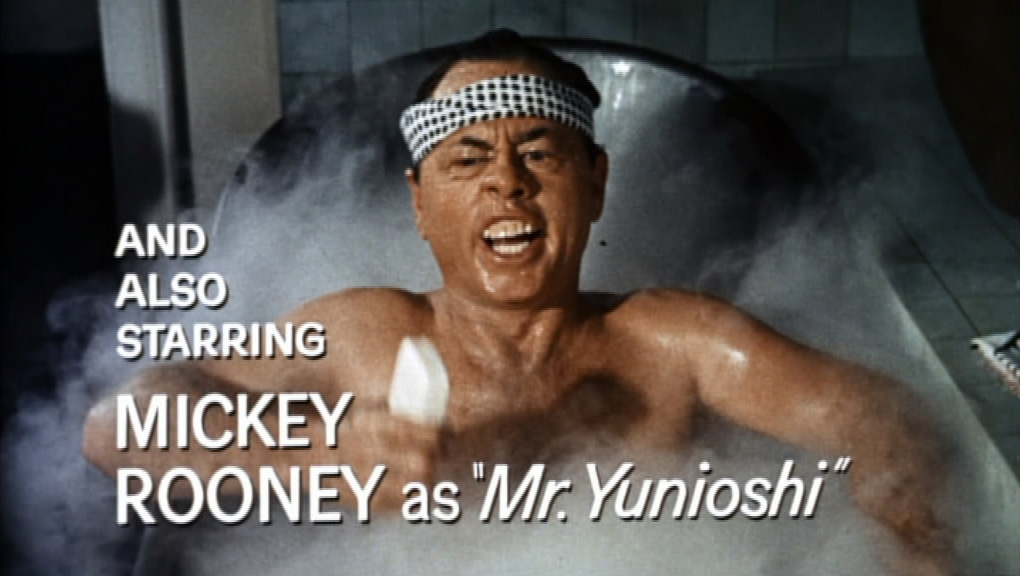
So let’s start with Audrey Hepburn. The whole damn point of Audrey Hepburn was that she could be elegant and sexy without the need for big knockers or an enhanced cleavage and certainly felt no obligation to flash around what little she had. If there’s a single movie legend who looks out of place advertising bras, it’s either Audrey or John Wayne. And, as inevitably happens when people try to sum up her particular charm, it’s Breakfast at Tiffany’s, one of her worst movies, that gets picked as a reference point. And in it, Audrey was playing a character who may not have been a hooker exactly but was something pretty close, which I’m not sure is quite the sort of role model the brand wants to present to the Bangkok middle classes. Maybe this is just payback from Asia for Mickey Rooney’s horrific yellowface act in the film? If so, fair enough.


Next, on the left, we have Sharon Stone in Basic Instinct. Now, it’s a long time since I’ve seen the movie, but as I recall, the whole point of this scene is that Ms Stone’s character isn’t wearing any knickers — which makes it a very odd reference point for a company that makes undergarments. I’m not even sure who the one on the right is meant to be, by the way. Edie Sedgwick? Frankie from The Saturdays? A very young Angela Merkel? Answers, please, on a pair of Sharon Stone’s unworn knickers.


But this is the one that really unnerves me. The reference is presumably to Dominique Swain in the 1997 adaptation of Lolita, which may have been more faithful to Nabokov than Kubrick’s earlier version but was otherwise worse in pretty much every respect. Leaving that aside, child abuse is at the heart of the movie and the seductive, lolly-licking, bra-strap-dropping, skirt-lifting character being portrayed in this picture is meant, in the novel at least, to be just 12 years old. In this case, I really do hope they’ve missed the point.

Wednesday, March 26, 2014

Criticism: it’s not what you know

It’s frequently said, with varying degrees of regret, that there’s no need for full-time critics any more. Do potential punters really need to know what someone from The Guardian or New Yorker said about a specific book or restaurant or movie or conceptual installation, we’re asked, when anyone can see that it got four and a bit stars on Amazon or TripAdvisor?

I’m a little torn on this. I see exactly why TripAdvisor exists, and I’m glad that it does, but it does require a healthy dose of scepticism on the part of the reader; not just when it comes to disguised conflicts of interests (giving a crap review to a rival, for example) but also straightforward ignorance from the reviewer. I was talking to a hugely skilled and experienced chef yesterday, the sort of guy who can take all sorts of criticism on the chin, but he was deeply irritated that someone had said that his ravioles were all wrong. Not bad, note – wrong. “I make them how they’re meant to be made,” he sighed. “If someone doesn’t like that, fair enough. But I really don’t know what this guy’s comparing them with.”

I sympathise with the chef, so you’d expect me to be singing hosannas to Ted Gioia, who in a Daily Beast piece last week railed against music critics who don’t have any grounding in musical theory. Well, no. Apart from the fact that I used to scrabble around on the fringes of the music crit biz and I couldn’t tell a diminuendo from a diminished fifth, this does suggest that technical ability should be the most important consideration when it comes to judging music, which would ultimately mean that Emerson, Lake and Palmer or Level 42 are somehow empirically better than Bo Diddley or the Ramones, a prospect I simply refuse to countenance. And moreover, modern popular music – even more than any other art form – has been about rather more than the music for several decades. How could one possibly contemplate, say, a Public Enemy album in purely musicological terms? (Further responses to Gioia’s piece from Ian Rogers at The Vine, Jody Rosen at Vulture and Mike Powell at Pitchfork.)


So who are the authority figures supposed to be? What are the criteria? Who judges the judges? As the BBC announces plans for an updated version of its legendary art history series Civilisation, heads are being scratched as to who would be the best frontperson. Kenneth Clark, the original civiliser-in-chief, certainly knew his stuff, but would a similar level of patrician assurance suit Civ 2.0? No, but at the same time we wouldn’t fancy Ant and/or Dec in the role either. Or, for that matter, someone randomly plucked from TripAdvisor. We need an expert whose expertise is implied, not woven into his bespoke suit.

At least art and music benefit from functioning criticial communities, both professional and amateur, informed and otherwise. I’ve long wondered how the fashion industry would function if there were a solid mass of critics who felt sufficiently empowered not simply to report on the latest Versace show but to offer a qualitative analysis, to say that a whole collection is good or bad or mixed, just as their counterparts in other fields would be able to say about a new Beyoncé album or Martin Amis novel or Tracey Emin retrospective. Indeed, what are the chances of there being a successful fashion journalist who argues that Versace’s clothes look as if they’ve been designed by a committee of colour-blind drag queens? Sure there are catty fashion blogs, such as the still-funny-sometimes Go Fug Yourself, but they do seem to reserve their vitriol for the people wearing the clothes rather than the people who make and sell them. If such a daft concept as normcore had come along in any other field, the critics’ knives would have been out, but Vogue journalists seem to have their bullshit detectors disabled when they get their first paycheck: all they can offer is a very gently furrowed brow. Surely it’s better to risk the occasional interruption from someone who doesn’t know who Donatello or Donatella are than to jettison all critical intelligence entirely?

Tuesday, March 18, 2014

Stephen Bayley and Claude Lorrain, accidental hipsters

I’m reading Stephen Bayley’s new book Charm, in which he discusses the 18th-century notion of the picturesque and the influence of the landscape artist Claude Lorrain, a hundred years before:
So much so that picturesque enthusiasts carried with them a ‘Claude glass’ – a distorting optical glass that turned a modern green English valley into antique Italy. Charm distorts the ordinary in the same way.
And I don’t know whether it’s an indication that Bayley is supremely self-disciplined or simply utterly out of touch that he manages to move onto the next paragraph without once mentioning the conceptual similarity between the Claude glass and Instagram filters. That said, here’s an article on how to make your own Claude glass, which includes references to film cameras and the phrase “ultimate hipster way to take a picture”. So maybe Bayley, in avoiding such a clunkingly obvious comparison with yet another social media package used by millions of – ugh – ordinary people, some of them decidely un-charming, is just being archly, knowingly, skinny-trouseredly, Zeitgeisty, in a retro kinda way, with a fixed-gear bike and some comedy facial hair.

And maybe by September everyone in Shoreditch will look like Claude Lorrain.

Thursday, November 28, 2013

American Psycho: perfect skin


When I first heard that American Psycho was being made into a musical I wondered on what elevated level of irony we were working. Was the whole thing a wry joke, or are there people out there who take Patrick Bateman’s evaluation of Huey, Whitney and Genesis as legitimate music criticism? OK, the blurb describes the show as “a satirical commentary on capitalism” but Oliver Stone said much the same thing about Wall Street and plenty of punters walked out of that movie determined to become bankers.

Of course, such responses may be ironic in themselves. So I’m prepared to be charitable about Karen Dacre’s article in the Evening Standard, which focuses almost exclusively on the sartorial aspects of the show. After all, when someone comes up with a sentence like
Bateman’s preoccupations — sourcing the right suit, maintaining perfect skin, looking his best — are the same worries faced by Londoners today and explain why Easton Ellis’s tale remains so compelling 22 years on.
...she has to be joking. Right?

Right?

Wednesday, July 24, 2013

Swastikas over Asia (and the royal baby, obviously)

A few months ago, walking down Sathorn Road, one of the poshest thoroughfares in Bangkok, I passed a young Thai man wearing a t-shirt. It bore a swastika, the name and image of George Lincoln Rockwell, founder and leader of the American Nazi Party, and the slogan “WHITE POWER”.

Of course, it’s very easy to read too much into such things. In Thailand and beyond I’ve often seen people sporting texts that they clearly don’t understand; my favourite was a septuagenarian lady whose shirt was emblazoned with a Pepsi logo tweaked to say “PENIS”. But that sort of occurrence prompts nothing more than sniggering condescension on the part of farang, aka gweilo, gaijin, etc; the same westerners, incidentally, who will happily (albeit ignorantly) acquire a Chinese tattoo that proclaims their own intellectual limitations. They’re less relaxed when they see a young Asian decked out in the imagery of the Third Reich. And sometimes they voice their disapproval. In recent years, various levels of brouhaha have been provoked by a school in northern Thailand staging a Nazi-themed parade; a billboard featuring Hitler at a graduation ceremony in Bangkok; Nazi cosplay in Japan and elsewhere; and restaurants in India, Korea, Thailand and most recently Indonesia appropriating a Nazi aesthetic to promote their wares.

So is Asia a time-bomb of neo-Nazi sympathies? No, but it’s not quite as simple as that. Certainly there are widely held and openly aired attitudes to racial difference that would make many good western liberals feel slightly nauseous; and in Muslim-majority countries such as Malaysia, anti-Jewish polemic is accepted as part of the political discourse. Moreover, the historical perspective on World War II and its outcomes is different from that generally held in Europe or North America. Countries such as Britain and France were colonial occupiers and the Indian independence campaigner Subhas Chandra Bose was certainly not the only one to favour a pragmatic alliance with the Axis powers as a means of securing self-determination. The concept of the Greater East Asian Co-Prosperity Sphere, which would supposedly have replaced the economic infrastuctures of the western empires had Japan prevailed, must have looked like an attractive alternative to being ordered around by some whey-faced product of Eton and Oxbridge.


But for the majority of people who wear swastika t-shirts or carry cuddly Hitler dolls or perform Nazi salutes at inopportune moments, it’s nothing to do with wresting the historical narrative away from its Eurocentric perspective. It’s pure, honest-to-goodness ignorance, with a side-order of not giving a shit. When Sid Vicious or Siouxsie Sioux wore the hakenkreuz, it was a conscious decision to provoke and outrage. But Asian teens today know as little about der Führer as their counterparts in London or New York know of Chairman Mao, General Tojo or Pandit Nehru. Adolf’s just this funny-looking guy from the olden days who did this wacky thing with his arm and had a bad hipster haircut. And in some ways that’s even more disconcerting to a westerner than the thought that the kids might have absorbed his ideology.

Which leads – no, bear with me for a moment – to the as-yet unnamed offspring of the Duke and Duchess of Cambridge. Now, I wish the child no particular ill; but I’m already thoroughly sick of the media’s obsession with his gestation, birth and now his existence. I suppose I shouldn’t be surprised that the likes of the Mail and Telegraph have gone batshit for this, but I couldn’t find any respite from the coverage on Radio 4. The next time someone bleats about the left-wing bias of the BBC, ask them why they couldn’t dredge up a single republican voice to counter the sentimental wittering. Not that I’m a particularly trenchant anti-monarchist; to me, it’s just another manifestation of tacky celebrity culture, which other people are more than welcome to enjoy but I get annoyed if it impinges on my own consciousness too much and too often. However, even the expression of this state of disgruntled apathy is too much for some of the starry-eyed supplicants; “If you really don’t care, why are you going on about it so much?” seems to be a consistent refrain on social media when commentators such as Brian Reade and Andrew Collins articulate the extent of their apathy. Well, why shouldn’t they? Why does it perturb you so? Possibly because you know that the British monarchy will never succumb to the threat of pitchforks and guillotines because that’s not the way we do things; but not caring one way or another is a psychological weapon with its own special potency.

PS: The last word on media coverage.

PPS: This is quite good as well.

Thursday, May 09, 2013

The Met Gala: “My dog ate a safety pin”


The witterings of various F-list slebs at the Met Gala in New York earlier this week have attracted much scorn. But to be honest, wasn’t the event itself just asking for trouble, with the theme ‘Punk: From Chaos To Couture’? There was no point asking the red carpet crew about punk because the whole shebang was about the end of punk, the death of punk, the absorption of punk into the belly of the money beast. In Situationist terms it was about recuperation, the act of taking something revolutionary and making it safe for capitalism. And it’s not as if the gala itself represents any kind of major movement in that process; punk as a potent visual genre was already mortally gored in 1977 when Zandra Rhodes tarted up an evening frock with safety pins. The likes of Madonna and Sarah Jessica Parker had been invited not to celebrate punk but to dance badly on its grave; surely they can be forgiven if they couldn’t get it together to improvise a coherent funeral hymn at the same time.

PS: And here are three things that are more punk.

Tuesday, July 03, 2012

Walk away René Magritte

I very rarely find myself in an “I-wish-I’d-had-a-camera” moment because I’m hopeless at taking pictures and in any case deep within my DNA I think there’s a little bit of that superstition (Amish? Inca? Nepalese? Can never remember...) that capturing someone’s image is a way of grabbing their soul. And I’m really rather shy, so I could never do that thing of stopping perfect strangers on the street and asking to photograph their groovy clothes; and I’m also very wary of confrontation, so I could never risk taking pictures surreptitiously, in case the subject objected. No, words is what I do, which is why I was massively tempted to turn the end of that last sentence into a pun about word order, by inserting the word “verb” but I didn’t, so hurrah for me.

But anyway, on Saturday night, in the gift shop of a posh hotel in Bangkok, I wished I’d had a camera. A youngish couple walked in; from what I could hear of their conversation I think they were Korean. He was wearing a blue-and-white striped polo shirt and on the right breast was Magritte’s pipe. Oh, you know the one:


That’s the chap. Except he just had the pipe – not the words. The words that seem to be a lie and then you suddenly realise they’re telling the truth, because it’s not a pipe, it’s a picture of a pipe. The words that encapsulate Magritte’s dry, self-deprecating, deliciously Belgian wit; the words that brought metafiction to visual art; the words that make you look at all art before or since through different eyes; the words without which it would still be a pipe, because nobody’s telling you otherwise. But I didn’t take a photo, for all the reasons I mentioned.

And because I don’t know the Korean for “Do you mind if I take your photo for my new website youvecompletelymissedthebloodypoint.tumblr.com?”