The government and its ideological bedfellows in the media are unanimous in the assertion that “woke” is a bad thing, while cleverly sidestepping any obligation to explain what woke actually means. Until now, when one of the leading witchfinders of woke accidentally reveals that it means you eat cornflakes and may even read books. So, now we know.
A slightly confusing poll from the BBC finds that 49% of us resort to “self-censorship” when interacting with people we’ve just met. I don’t know about you (and that’s partly the problem) but I find that figure remarkably low. If I don’t know someone well, there are all sorts of assumptions I can’t make, thresholds that can’t easily be stepped over, and not just to do with their views or mine on immigration or trans rights or Brexit. Most significantly, what is the extent of their cultural hinterland? If I make a passing reference to a Billy Wilder film or a book by Angela Carter or a B-side by Primal Scream, or use what linguists define as “high register” language, or will they stare at me blankly, or become uncomfortable? And if they’re interested in Formula One or Made In Chelsea or chemical engineering or Scottish country dancing, they’re presumably doing the same thing, wondering whether I’ll respond with confusion or disdain or fear. (All of the above, probably.)
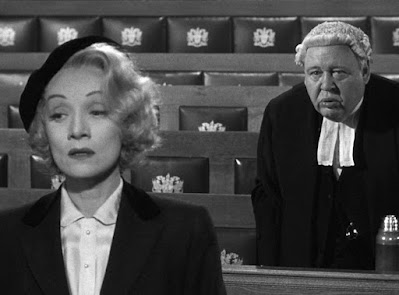
So we don’t go there, at least in the first few conversational parries. Almost instinctively, we tease our way past obstacles of social class and education and language and how many thousands of miles apart we were brought up towards a common ground of shared knowledge and preference and prejudice, until we find out that, yes, our interlocutor can quote pages of Witness For The Prosecution and/or believes Ayrton Senna's abilities have been overestimated because of his untimely end and then we become more comfortable and can speak more freely. It takes a while to get there, though and before then, we effectively censor ourselves. Except that 51% of us don’t, apparently.
PS: An example: a few years ago, I met a nice couple at a party (remember parties?) and, after a few glasses, I began regaling them, and anyone else in the vicinity, with my opinions about a singer/songwriter whose music, I suggested, was unaccountably popular. (“Not even interesting enough to be bad” was my verdict, I think, so you can probably guess the identity of said troubadour.) It was only later that I discovered they’d chosen said music as a highlight of their forthcoming wedding. I wasn’t cancelled, but it was a tad awkward, to say the least. I really should have self-censored, shouldn’t I?
The Globe Theatre’s decision to include a content warning with publicity about its production of Romeo and Juliet has prompted the usual feeding frenzy from a right-wing press the sole purpose of which appears to be a ceaseless campaign against what it deems to be wokery.
In normal circumstances I’m sceptical about attempts to cover an audience in cotton wool, but I don’t really have a problem with this. It’s a bit like those contextual labels that some National Trust properties want to put up, explaining historical links to slavery; visitors are perfectly able to ignore them, and just look at the pretty gardens and suits of armour if that’s what they want, and I don’t see how warnings about violence and trauma in R&J will spoil anyone’s enjoyment. Many years ago I saw Deborah Warner’s notoriously brutal production of Titus Andronicus, which had many audience members fainting or running for the exits. I suspect they may have appreciated a hint of what was to come.
Shakespeare has long been the victim of censorious intervention, from the fiddling of Nahum Tate and Thomas Bowdler, to the edition of Macbeth I used when I was doing my O-levels in the 1980s, from which the funniest bits of the Porter’s speech were excised. As far as I know, the Globe production doesn’t mess with the words – you know, the important stuff. And in any case, I’d take The Sun’s proprietorial attitude to the Bard far more seriously if they actually gave proper critical coverage to modern productions of his work, rather than just exploiting him now and again as one more weapon in an increasingly tedious and silly culture war.
Adam Rutherford, regarding the murky legacy of eugenicists such as Francis Galton and their ghostly presence in modern academia, expresses an attitude that could equally be applied in the arts and elsewhere:
I think Galton’s a shit, but he’s also a shit who’s a genius, whose legacy we absolutely rely on... We’ve got to be mature enough at a university to recognise that people can be both brilliant and awful at the same time.
The core idea of PC, I guess, isn’t too objectionable. All societies have codes of discourse, defining what is and isn’t acceptable, and all that has happened since some time in the 1980s is that these codes have been recalibrated so that people are more aware of the sensitivities of previously marginalised groups. Ideally, it makes it easier, smoother to converse with a wider range of people. At least if you offend someone, you’re probably doing it deliberately.
The problem with all such codes, both those stemming from PC and also the ones that preceded them, is that they become rigid and oppressive, ultimately making such discourse harder rather than easier. Even if one’s intentions are pure, fear of being misconstrued, deliberately or not (and the barracking that will inevitably ensue), inevitably shuts things down. And those who do have malign intent realise that it’s bloody easy to get publicity, simply by deploying the occasional outrage bomb. The rise of Trump, Farage, Bolsonaro, et al, can be seen less as riding the populist surge, more like a particularly ambitious burst of trolling. And while they achieved it on the back of the gammon tendency, the disgruntled, the suspicious, the believers in a fake collective nostalgia, it’s clear that the pearl-clutching snowflakes have also eased their way to success.
A few examples from the past week:
In a discussion regarding my last post, about the question of whether the rules of cultural appropriation apply to the interaction between two non-white cultures, I was taken to task for not considering whether the black man wearing the Vietnamese hat may actually have been Vietnamese. When I asked whether such consideration might be extended to white people wearing Native American head dresses... ah, let’s not go there.
In another discussion, about the unproven sexual shenanigans of yet another bloody actor, I made the passing comment that the films for which he is most famous are pretty bad, and was sternly entreated to “read the room”. I wasn’t familiar with the phrase, but I understand it to mean “work out what everyone else is thinking, and don’t say anything that challenges it, because it might upset them.” Incidentally, it seems that many of the misdemeanours of which people are accused are down to this inability to read the room, episodes of social gaucheness rather than anything more serious. (Which does make me wonder, how much consideration is given to people on the autistic spectrum; or are some oppressed minorities more minor than others?)
The construction “people of colour” (i.e., anyone who is isn’t white) has already been appropriated and tweaked into “people of gender” (which surely means anyone who isn’t non-binary, unless non-binary is a gender in and of itself); and this morning I heard someone on the radio referring to “people of class”. Which means... everyone, surely?
Apparently the Oxford Union has invited the usual cadre of tiresome right-wingers to argue against the policy of No Platform and the equally tiresome cadre of student leftists want to no-platform at least one of them.
As I said, the core idea of political correctness has much to commend it. In execution, however, it has precisely the opposite effect to that intended, breeding resentment and suspicion and hostility where it claims to prompt support and respect.
A man in Arizona is objecting to an old photograph of coal miners in a bar because it reminds him of blackface. He accepts that the picture isn’t intended to represent blackface, but “a business’ photograph of men with blackened faces culturally says to me “Whites Only.” It says people like me are not welcome.” Ultimately, whatever the reality of what the image depicts (and we’re almost getting into Magritte territory here), “the context of the photograph is not the issue.” It’s a starting line, a springboard for a bigger, nastier conversation. Which is probably one we ought to have, but it makes people uncomfortable, so. nah, let’s just take down the photo.
A few days later, a piece in the New York Times traces a fairly convoluted line between blackface traditions and the soot-smeared chimney sweeps of Mary Poppins, rather ignoring the fact that, whatever the original intent of PL Travers, or Walt Disney, or long-forgotten vaudevillians, or even the blessed St Dick of Van Dyke, sweeps’ faces are black because of the nature of their work, not as part of a secret plot to ensure white superiority. Like the miners, they work with dirt.
The argument is no longer about whether blackface was “just a harmless bit of fun” (it clearly wasn’t) but whether it was something so heinous that any cultural product that might accidentally remind someone that blackface even existed should be cast onto the scrapheap. Clearly this sets precedents. Should we ban the Beatles’ ‘Hey Jude’ because the refrain could prompt flashbacks to Kristallnacht? Or possibly consign the routines of Les Dawson to the margins, not because of his rather unenlightened attitude to his mother-in-law, but because his forename is still occasionally deployed as a homophobic slur?
Beyond the inevitable PC GORN MAD headlines, we need to remember that everything is offensive and hurtful to someone. Coalminers and chimney sweeps and designers of truly horrible jumpers may take offence at the brouhaha that’s arisen from these stories. But as Rashaad Thomas, the author of the article about the miners argues, the context is not the issue. How we respond is the issue.
And increasingly, my response is to search out the nearest coal mine and wonder what it’s like down there.
A comedian intending to perform at a benefit gig at SOAS has been asked to sign a behavioural agreement form that commits him to abjuring “racism, sexism, classism, ageism, ableism, homophobia, biphobia, transphobia, xenophobia, Islamophobia or anti-religion or anti-atheism”. This is [adopts Fotherington-Tomas voice] “to ensure an environment where joy, love and acceptance are reciprocated by all.” Wouldn’t the only permissible funny thing left be to go on stage and read out that form? PS: It sounds as if that’s what he did...
Have I become that bloke who just complains about political correctness bubbling through various stages of mental wellness? Well, anyway, I’ve just seen a discussion on a movie site prefaced with a trigger warning that it may contain discussions of food.
It’s terrible. And it’s a terrible way to live as an artist. You see it affecting the arts on a vague, vague but vast scale – where is the taboo? Where is the Other? So what if it’s offensive? Good! Where is this bizarre idea of art created by committee, by a democracy, coming from? Art isn’t created by a democracy! And there seems to be this thing, especially on social media, of group-approved art, that’s chilling.
I wouldn’t have been the writer I am if I’d been raised in a very safe, no-bully environment with a nice mom and dad who looked after me and made sure everything was ok... I think your experiences of pain and alienation and people marginalizing you is what forces out this expressiveness. I think we’re becoming a society that wants to erase all of that. Put everyone into this safe group that is all taken care of and everyone’s the same and no one’s different and we all love each other and we’re eradicating all pain and it’s all very nice and it’s all very utopian; I just don’t think that’s who we really are and I don’t know what the end game of that is.
An interesting article from the Chicago Tribune about the trend for publishers and authors to hire “sensitivity readers” to scan texts for That Which May Offend. A couple of excerpts:
Clayton [one of the readers], who is black, sees her role as a vital one. “Books for me are supposed to be vehicles for pleasure, they're supposed to be escapist and fun,” she says. They're not supposed to be a place where readers “encounter harmful versions” and stereotypes of people like them.
Vehicles for pleasure? Escapist and fun? Why would you pay for your book to be read by someone who has such a reductive view of what reading is for? Then author Kate Messner opines:
I wouldn’t dream of sending those books out into the world without getting help to make sure I’m representing those issues in a way that’s realistic and sensitive.
Realistic and sensitive? If you had to make a choice between the two, Kate, which would you pick?
Oh dear, this one has the potential to get me into all sorts of trouble, so I should state at the outset that I fully support the right of trans people to be accepted as whatever gender (or none) they present and, er, that’s it.
OK, the current series of the venerable TV quiz show Mastermind is trundling merrily along and until now the only real controversy it’s spawned is whether creaky old sitcoms should be allowed as specialised subjects alongside such solemn, improving material as Mussorgsky’s Paradiddles and Endangered Invertebrates Of The Isle Of Wight.
But a few days ago (well, it was broadcast a few days ago, would have been recorded a few months ago, but you get my point), one of the contestants made an unusual request — and here’s where things get particularly awkward because it’s very difficult to describe what happened without effectively taking sides. Charley Hasted (specialised subject Sherlock Holmes) is a non-binary person who prefers to have the pronouns they/them applied to them. (See what I mean?) The occasionally-irascible host John Humphrys apparently didn’t accede to this request on the show. As the respected archivist of all things British and gameshowy, Iain Weaver described it:
Extreme discourtesy from host John Humphries [sic], who refused to address Charley Hasted by their preferred pronoun. “It would be confusing,” fumed the question-asker off screen. No, it’s not confusing. It’s terribly simple, it’s basic manners.
It seems to be an open-and-shut case of a curmudgeonly septuagenerian stick-in-the-mud refusing to acknowledge that traditional gender roles and identities are merely arbitrary social constructs and he ought to check his cis privilege, right? Well, yes and no. It is indeed polite to use address people as they wish to be addressed (and I’m not sure whether Weaver’s misspelling of Humphrys’ name is passive-aggressive snark or just a goof) but it can also sometimes be confusing. While Charley may prefer to be addressed as “they”, there are reasons this isn’t such a great idea that are nothing to do with stomping all over anyone’s gender identity. “They” has a very specific grammatical meaning, as a third-person plural pronoun. It refers to more than one person or thing, none/neither of whom is either the person speaking or the person being addressed. If it’s used in other ways, it gets very confusing. Consider this extract from an article about record shopping:
I spoke with Glenna of Gramaphone Records about dealing with the woes of “bros being bros” over plates of shrimp in a small mariscos restaurant. They perform under the name Sold and serves as techno buyer for the Lakeview shop that’s been providing DJs dance music since 1969.
OK, so we start with Glenna, singular; one infers (from the name) female, but that may not be the case. Then suddenly “They” throws us into the plural world, especially as it’s followed by “perform” which implies plurality; but “under the name Sold” could denote either be a solo or group identity; but then, retrospectively, so could Glenna. And then “serves”, which suggests third person singular. It’s a grammatical car crash, leaving the casual reader to worry more about how many people are talking than what’s being said. Maybe Humphrys has a point after all.
There are two potential objections to my (and JH’s) objections. One is that the third-person plural has long been accepted as a way of creating a gender-neutral third person singular; for example, “if you call for a plumber, they’ll come within the hour”. Well, to be honest, I’ve always hated that, while applauding the core sentiment behind it. There are multiple ways to construct a sentence that avoids both the implication that all plumbers are male, and the implication that plumbers always work in groups. “A plumber will come within an hour of your call.” There, not that difficult, was it?
Others might infer that my objection to the use of “they” in this way is something akin to the response of reactionaries who grumbled about the hijacking of the honest, innocent word “gay” to describe all sorts of frightfulness. Well, no, because there are any number of synonyms for “gay”; “they” and “them” and “their” mean what they say and are pretty much irreplaceable, unless you’re going to avoid pronouns altogether, which would sound a bit like:
Charley took Charley’s place on the black chair and did very well on Charley’s specialist subject, although Charley’s general knowledge round let Charley down a bit, as Charley would be first to admit.
But, as I said, I fully endorse Charley’s right to live as Charley likes and be treated as Charley likes. Language changes, evolves, sure, but it can only do that successfully if it allows people to keep up, otherwise a move that aims to encourage acceptance and inclusiveness will only breed resistance and hostility, not to mention unnecessary confusion and ambiguity.
So here’s my suggestion: think up a new set of pronouns, applicable specifically to people who’d rather not be stuck in either of the boring old “male”/“female” boxes. There are plenty of monosyllables that don’t have any particular meaning. “Zoy”, maybe. “Zoy” as subject, “zom” as object, “zor” as possessive. It really doesn’t matter, so long as everyone knows what it means.
Essentially, it’s perfectly OK to ask to be excused from petty rules and restrictions, especially because it might wake people up to the fact that such rules are rather outmoded and needn’t be applied to anyone. But every now and then, we find out that such rules do actually serve a purpose, which is nothing to do with forcing non-binary people into restrictive cis boxes, just ensuring that we can all say what we mean. Anyway, this:
No, this isn’t really about Jimmy Savile himself, or what he did, or what he’s alleged to have done. That’s all bad; it’s pretty clear that the man was a vicious abuser who used his charitable deeds as both cover and as a cynical, implicit bargaining tool; you don’t need me to tell you any of that. This is more about the responses and reactions to what we know.
First, about the rumours that were apparently circulating for decades about Savile’s behaviour, and the fact that nobody ever acted about them. Well, of course there were rumours, because Savile was a very famous person and there are always rumours about very famous people. Way back when I was completely outside the media loop, I heard rumours about Jimmy Savile; oddly, all of them revolved around his apparent fondness for acts of necrophilia, which he supposedly indulged under the cover of his voluntary work as a hospital porter; I don’t recall anything about child abuse. And I heard other rumours too, about all sorts of people, about the Queen Mother and Michael Portillo and Morrissey and Bobby Moore and Prince Edward and Bill Treacher and Jason Donovan and Patrick Moore and Kevin Keegan and Gerald Kaufman and Una Stubbs and any number of Radio One DJs. Some were accusations of serious criminal behaviour, some were about harmless quirks that, supposedly, the relevant parties preferred not to disclose. Anyone remember Scallywag magazine? The John Major story was pretty bland compared to some of the stuff they came up with.
I have no idea how many of these tales were wholly or partly true and I probably never will. I’m not suggesting that the accusations about Savile are fabricated, but if journalists followed up every celeb-related rumour that some bloke in the pub insisted was God’s honest truth, there would be a hell of a lot of libel suits knocking around, and even more dead-cert stories that turned out to be dead ends. You need more than urban myth or gut instinct. Yes, Savile was odd, eccentric, weird, creepy. People said dodgy things about him. He had strange hair. The same goes for Chris Jeffries, the entirely innocent Bristol landlord caught up in a murder investigation a couple of years ago. That didn’t end well for the papers concerned, did it?
But a big chunk of the press seems to be using the Savile saga as leverage to redeem itself after the whole phone-hacking/Leveson enquiry saga. Look what happens when celebrities get the upper hand, they bleat, when the fine upstanding spirit of British journalism is cowed by libel and privacy laws. Which is utter bollocks, frankly. If they were using their various scams and skulduggeries to expose real, serious, extensive wrongdoing rather than just dicking around below the surface of Hello-magazine banality, then we’d be impressed. It was in the public interest to know that Savile was abusing girls; it was not in the public interest to know that Charlotte Church might be having boyfriend trouble. Which one made the front pages?
Moreover, certain papers also see the scandal as a stick with which to wallop their eternal nemesis, the BBC. Yes, I don’t doubt that there was a culture at the BBC in the 60s and 70s and even into the 80s that by modern standards would seem pretty toxic and that some men were able to use their power and influence to take sexual advantage of people with less clout. Again, that was bad and wrong, and we need to know about it. But are we to understand that everybody employed by The Sun and The Mail and The Telegraph at the time was entirely without sin? Or that, had any equivalent rumours been knocking around about high-profile journalists and editors at those papers, there wouldn’t have been a temptation to either cover things up, or deliberately look the other way?
Again – bollocks. The BBC was a product of its time, as was (and is) every other institution. It looks wrong now, but it was wrong everywhere, not just in the studios of Top of the Pops or Radio One. Low-level sexual assault could be passed off as horseplay and if anyone complained, it was evidence of a sense-of-humour failure or lesbianism or the time of the month. And once you allow that, the tolerance level for bad behaviour rises incrementally, until you get vulnerable girls being molested in dressing rooms.
But that wouldn’t be tolerated now. And this is the ultimate, sanctimonious hypocrisy of those currently laying into the BBC. A modern-day Savile would be stopped in his tracks because women and children would be empowered to speak up. He wouldn’t get the benefit of the doubt just because he was rich and popular and male. And do you know what caused this turnaround? Not the fearless investigation of plucky newspaper journalists, that’s for sure. No, it was the changes in attitude wrought by feminism and by so-called political correctness, gone mad or otherwise; the very social forces still roundly condemned on a regular basis in The Sun and The Mail and The Telegraph. As it happens.
I've written before about the difficulty of reconciling an artist's work and politics, and how it's sometimes necessary to draw a veil over some writers' more rabid asides.
For example, here's that old rogue Jorge Luis Borges, describing the return of the Gods in the parable 'Ragnarök':
It all began with a suspicion (perhaps exaggerated) that the Gods did not know how to talk. Centuries of fell and fugitive life had atrophied the human element in them; the moon of Islam and the cross of Rome had been implacable with these outlaws. Very low foreheads, yellow teeth, stringy mulatto or Chinese moustaches and thick bestial lips showed the degeneracy of the Olympian lineage.
...which isn't exactly an extract from Der Stürmer, but still, it's not really the sort of thing we like to hear nowadays, is it? There's a number of possible responses to this sort of thing. You can excuse it through context: it's a dream sequence; maybe it was translated badly; it's postmodern irony, stupid. Or you can treat it with polite, strained embarrassment, as if JLB were a glum uncle who's had one too many gins and starts mumbling about the blacks and the poofs and how they ought to bring back flogging.
In any case, within the space of a few lines, Borges offers up a sentence of pure, audacious magnificence:
We took out our heavy revolvers (all of a sudden there were revolvers in the dream) and joyfully killed the Gods.
Which is so glorious that it makes everything feel OK again. Doesn't it?
And how annoying to apply the politically correct spelling of Qur’an to show you’re right-on, but still pronounce it Koran because you’re frightened of sounding like a prat.
A few years ago, encouraged by my GP to lose a bit of flab, I entered a charity 10K race. Having, in the distant past, worked for a major running magazine, I had access to training plans for events of all distances, and sedulously applied myself to the mix of speed days, endurance days and rest days prescribed by the experts.
It was deviating from the plan that brought about my abject humiliation. One day I was scheduled to go for a bit of endurance, which usually involved walk/jogging to a grassy expanse round the back of the Purley Way, almost under the shadow of the mighty IKEA chimneys. Once there, I would do two circuits of the common at medium pace, then jog back slowly to warm down.
Possessed by an excess of enthusiasm, I decided to do three circuits, and then run back at the same pace. I realised something was wrong as I was crossing a road halfway home, when I became afflicted with stitches on both sides. I made it to the pavement, and did the most dangerous thing possible - I stopped. It was only then that I realised I hadn't really been breathing for the last couple of minutes. I stood, gasping for air, feeling the veins in my head and neck throbbing as if they wanted to escape. My legs started shaking and hurting. I felt sick, but nothing wanted to come up. I bent over, just in case.
"I must look a bloody mess," I thought. Having occasionally caught sight of myself in the mirror during my rare excursions to the gym, I knew that excessive activity usually turned my face a vibrant shade of raspberry. Sweat splashed onto the pavement as I retched saliva and tried to acquire some oxygen from somewhere, anywhere. And then I heard the tapping sound.
I'd pulled up by the left-hand fork of a T-junction, and a minibus had stopped there, waiting for a gap in the traffic. With some difficulty I got myself into a vaguely upright position and turned to look at the vehicle, to see whether it was the source of the noise. And then I realised it wasn't just any old minibus.
It was the blue bus.
It was the blue bus that belonged to the school for children with learning difficulties.
The special school.
And they were in the blue bus, tapping on the window and pointing. And they were laughing hysterically. They were pointing and laughing. At me.
And as I stood there, damp, hot, bedraggled, aching, gasping, I felt that maybe this was some sort of karmic payback for all the times I'd thoughtlessly mocked someone with words like "spaz" or "mong" or "flid" or "joey". And I was suddenly thankful that my face had already gone red.
"Did you have a good run?" asked Small Boo when I got home. I told her what had happened, hoping for a little sympathy.
As Life On Mars settles into its second and final series, it's apparently being marketed to the same viewers who lap up Top Gear and its ilk, as wish fulfilment for overgrown schoolboys who feel emasculated by the 21st century. Interview chores this time round have been taken on not by John Simm, who plays nominal hero Sam Tyler; but by Philip Glenister, whose DCI Gene Hunt would take 'unreconstructed' as a compliment, after he'd chinned you for being a university-educated ponce. Glenister's certainly on-message if he wants to appeal to the Clarkson fans out there: "I talk to a lot of people and here's a funny thing," he told the Telegraph. "I haven't yet met one who has said to me: 'This political correctness business - isn't it great that we've got it?'"
It might appear that Life On Mars has fallen victim to the same fate as Johnny Speight's Till Death Us Do Part, which set out to satirise racism, then saw its villain become a hero. Tyler hates being stuck in this backwater of bigotry, confronting, whereas the viewers see it as a rather refreshing diversion. But is the tale of the stranded copper really as dangerous as it thinks? Sure, the pre-PC PCs smoke and drink and pinch birds' bums, and Hunt is a marvellously judged tribute to the mighty Jack Regan. But, for the most part, we laugh at them, not with them, and sigh along with the more enlightened Tyler. For example, one recent episode sees a black detective seconded to the squad. Ray Carling, the most Neanderthal member of the team, gets his jabs in, but the worst he can come up with is an anaodyne gag about "spadework". Is that really the nastiest abuse a non-white policeman could expect in the canteen culture of the 1970s? If frustrated blokes think they're getting a vicarious dose of the years when racism and sexism didn't need to come with quotation marks, they're deluding themselves.
Maybe this is the problem with retrospective pastiche: in attempting to achieve a perspective on the past, we lose the essence. But did TV ever really express the racism and sexism of the era? I recently watched the first episode of the 1969 sitcom Curry and Chips, also created by Speight, about a Pakistani starting work in a factory. Clips occasionally show up on cheerful compilations about 'TV Hell', or earnest documentaries about the representation of ethnic minorities in less enlightened times, but otherwise the show might as well be an urban myth.
First off, despite the presence of Eric Sykes and Spike Milligan, it's not very good. The jokes are heavy-handed, the pacing is non-existent, actors (especially Milligan) are visibly corpsing, and the jackal-like studio audience is profoundly annoying. But is it racist? Well, characters use words like 'wog' and 'Paki' a lot, which is disturbing to modern sensibilities. But it's made quite clear that the worst offender, the Powellite Norm, is a moron (as was the case with the similarly taboo Love Thy Neighbour). Sykes, as the manager, is a decent bloke who tries to help the new recruit to feel at home. Not that the moral battle lines are so cut and dried; you could almost call the whole thing nuanced. A black character, played by Kenny Lynch, joins in the abuse of the newcomer, arguing "At least I was born here". A landlady expresses reservations about taking him in, but relents after she decides that he's quite good looking. Could this have been the inspiration for last year's Oscar surprise, the bit-crap-and-muddled-but-its-heart's-in-the-right-place Crash?
Probably the aspect of the show that's hardest to stomach is the presence of Milligan, browned-up to play Kevin O'Grady (his mother was Irish, so the story goes), with an excruciating Gunga Din accent. White actors in minstrel mode make us very uneasy, but Milligan's performance is so stilted and unnatural, that the racial provenance soon becomes irrelevant. The whole point is that he's an outsider and a catalyst, and might have come from anywhere in space (like Mork from Ork) or time (like Sam Tyler). After all, it's hardly a documentary.
Perhaps that's the thing to remember, when pondering what Life On Mars tells us about the frustrations of contemporary masculinity. The past that viewers see, playing out to a glam-rock soundtrack, is a scrubbed-up version of the reality of those years. And the much-maligned 'political correctness' (if that includes the unspoken assumption that racism is a bad thing) was alive and well on TV even then.