Thursday, January 08, 2009

Diet of worms

I've got a feeling this may be the greatest advertisement ever created:


It's the double-whammy combination of initial kitsch overload, followed by the ghastly realisation (half-way down the right-hand side, maybe five seconds later) of what it's actually selling. Thanks to Eric D for bringing it to my attention.

Wednesday, January 07, 2009

Sexual swearwords ( Simon Bates)

Prompted by the bootylicious Slaminsky, I have submitted Cultural Snow to a rating service, which supposedly identifies an appropriate age restriction for the site. I am reliably informed that this blog warrants a PG, thanks to "...the presence of the following words: death (5x); dick (1x)."

Which puzzles me on a number of counts. For example, does Bambi get a similar rating? Is any site that links to the redoutable Dick Headley similarly restricted? And, most significantly, the rating would appear to have disregarded entirely the verbal sewer we emptied over the ginger head of L Brent Bozell a couple of years back.

So it's tempting to dismiss the whole thing as a lame attempt to plug a dating site. (Follow the link and that's where it takes you.) Until you remember that Culture Secretary Andy Burnham thinks a real website rating system might be a jolly good idea.

Which only tempts me to suggest that Mr Burnham resembles a rancid secretion from the more intimate regions of Mr Bozell's anatomy, which would at least earn me the 18-certificate I've sought all my life.

Monday, January 05, 2009

Jesus built my hotrod

I saw the above image on the back of a car over the weekend. Now, I'm fairly laid-back when it comes to the whole Creationism debate. People hold all sorts of apparently crazy, illogical beliefs but, hey, whatever gets you through the daily grind, you know? If I were to tell someone he wasn't allowed to believe that a beardy man in a nightshirt made everything out of magic clay in six days flat, he could just as easily turn round and tell me that, notwithstanding my own deeply-held beliefs, The Smiths were rubbish and hummus tastes like acrid Polyfilla. It goes nowhere, so I usually let it go.

But this badge nagged at me. OK, the owner of the car has rejected most of the fundamental assumptions that underpin modern biology, palaeontology and geology. Fair enough, his choice. But if he's gone that far, he's just as likely to reject the basic tenets of physics and engineering.

And should someone like that be in charge of a motor vehicle?

Saturday, January 03, 2009

Bloody awful poetry

I've finally read Vladimir Nabokov's Pale Fire, at the third or fourth attempt. Which, if nothing else, allowed me to savour for the first time such linguistic dim sum as "...an old but unused pocket diary optimistically maturing there until its calendric correspondencies came round again" or "...when I hear a critic speaking of an author's sincerity I know that either the critic or the author is a fool." And it's not even his first language, the bastard. Now I start to understand why the likes of Martin Amis turn into swooning schoolgirls at the merest whisper of Nabokov's name, and why his long-awaited posthumous novel is provoking such drooling anticipation; it's not just the one about James Mason being a nonce.

It's important to explain Pale Fire's unusual structure: it consists of a foreword; a four-canto, 999-line poem, 'Pale Fire', by the late John Shade; a wildly discursive commentary on the poem, by Charles Kinbote; and a brief index. In the course of the commentary (by far the longest section of the text), we learn that the three-way relationship between Kinbote, Shade and reality is not as it may seem, although the fine details of what the internal truth may be are still getting thrashed out by Nabokovians.

So how did I manage to get through it this time? Simple: I skipped the poem, which is where I came to grief at previous attempts. As I've said before, I seem to have lost the ability to process poetry; but 'Pale Fire', the poem, as far as I can deduce, is a MacGuffin, a framework upon which Kinbote hangs his delusions. The notes are the important bit.

As Shane Richmond pointed out a few months back, Tolstoy's historical ruminations in War and Peace are sometimes excised from the main text and put in their own appendix, which is surely an implicit admission of skippability. But is this justifiable? Isn't it like reading a Reader's Digest Condensed Book, or going into an exam with nothing but CliffsNotes in your head?

David Frum, sometime speechwriting wonk to the soon-to-be-ex-President of the United States, developed an intellectual defence of such superficiality:

When I was in law school, I devised my own idiosyncratic solution to the problem of studying a topic I knew nothing about. I'd wander into the library stacks, head to the relevant section, and pluck a book at random. I'd flip to the footnotes, and write down the books that seemed to occur most often. Then I'd pull them off the shelves, read their footnotes, and look at those books. It usually took only 2 or 3 rounds of this exercise before I had a pretty fair idea of who were the leading authorities in the field. After reading 3 or 4 of those books, I usually had at least enough orientation in the subject to understand what the main questions at issue were - and to seek my own answers, always provisional, always subject to new understanding, always requiring new reading and new thinking...

Except that the last bit sounds like wishful, rather than new thinking.

So, what's the biggest thing you've read or seen or heard or done, without really doing it properly?

Friday, January 02, 2009

The drawing board

Last night I had an idea for a novel, or maybe a film. Or possibly even an opera. The details were sketchy, but I know it involved some men in turbans and some other men in bowler hats who go to a troubled Arab nation to meet a soul singer. All I'm sure of beyond that is the title:

Sikhs and Droogs, Iraq and Rawls.

I think this is what industry people call high-concept.

Wednesday, December 31, 2008

Betamax blogging

I've decided not to close the year with a Best-of-2008 list because, quite frankly, I haven't read/heard/seen enough genuinely new stuff to fill 10 slots, let alone 10 things that have filled me with such enthusiasm and/or loathing that I can stack them in any particular order. Instead, I've been having one of those tedious internal debates about whether to herald 2009 with a bells-and-whistles redesign for Cultural Snow. I've barely done anything to the default design I picked when I started blogging three (!) years ago, leaving it, as Cath Elliott puts it, looking "too much like a Penguin Classic". I do sometimes feel a bit inadequate when I see the lovely pictures and clever squiggly bits with which the rest of you decorate your sites. I haven't even bothered to add on one of those doodads that tells me when the rest of you have updated. (I did try it, but it made a horrible mess all over my dashboard.) I've just bunged a few widgets down the right-hand margin, and if the spacing goes a bit wonky I just go off and make another cup of tea and hope the Blog Fairy will sort it all out.

So what's stopping me from creating Cultural Snow 2.0? Well, sheer bloody indolence for one thing; as well as a distinct lack of confidence in my own technical and creative abilities, the dashboard disaster being pretty much par for the course. And I've always been a late and nervous adopter of technological innovations, although I recently discovered that I was only the third person in Bangkok to sign up to Twitter.

I briefly considered following Mr Frith's lead and putting a call out to a hip young designslinger, although that would inevitably create tensions: as well as being indolent and incompetent, I can be a bit of a control freak when I put my mind to it, a lethal combination. But I've also come to the conclusion that now everyone else has a bells-and-whistles blog, mine no longer looks primitive and creaky; it looks minimalist and a wee bit retro. And I'm also reminded a little of Aunt Percy.

Aunt Percy (real name Persimmon) was a character in one of my favourite childhood books, Clement Freud's Grimble. She lived in a tower block where the flats didn't have numbers; instead, they were all painted different colours to distinguish them. Aunt Percy's door was buff. Unfortunately, because all the doors were exposed to the elements, the paint gradually faded, until all the doors were buff. One resident suggested that they should put their names on the door, but Aunt Percy objected. She'd made the right choice of door colour to start with, so why should she have to bother with putting her name up? So all the others put their names on the doors, and underneath they put "and Aunt Percy doesn't live here".

So when Grimble goes round to Aunt Percy's flat for his dinner, because his parents have unexpectedly gone on a cruise to Peru, he knows to look for the door with nothing on it.

Not quite sure where I meant to go with that.

Anyway, in the current turbulent circumstances, the best of good wishes alone can't hope to ensure a happy new year, per se; but let's hope that 2009 will at least be interesting. Even if your front door isn't.

Sunday, December 28, 2008

Dying the death

One of the reasons I stayed on at my secondary school into the sixth form was a desire to take part in the house play competition. As far as I recall, it was the only event in which the four houses (all named after English naval heroes, which gives you some idea of the environment in which I existed for seven years) battled each other in circumstances that didn't require a communal shower afterwards.

The normal process was to choose something sub-Coward, or Rattigan on a bad day; if you had a couple of actors who could attempt a non-specifically northern accent without sounding Sri Lankan, you might select from that unjustifiably crowded field, the School of Hobson's Choice.

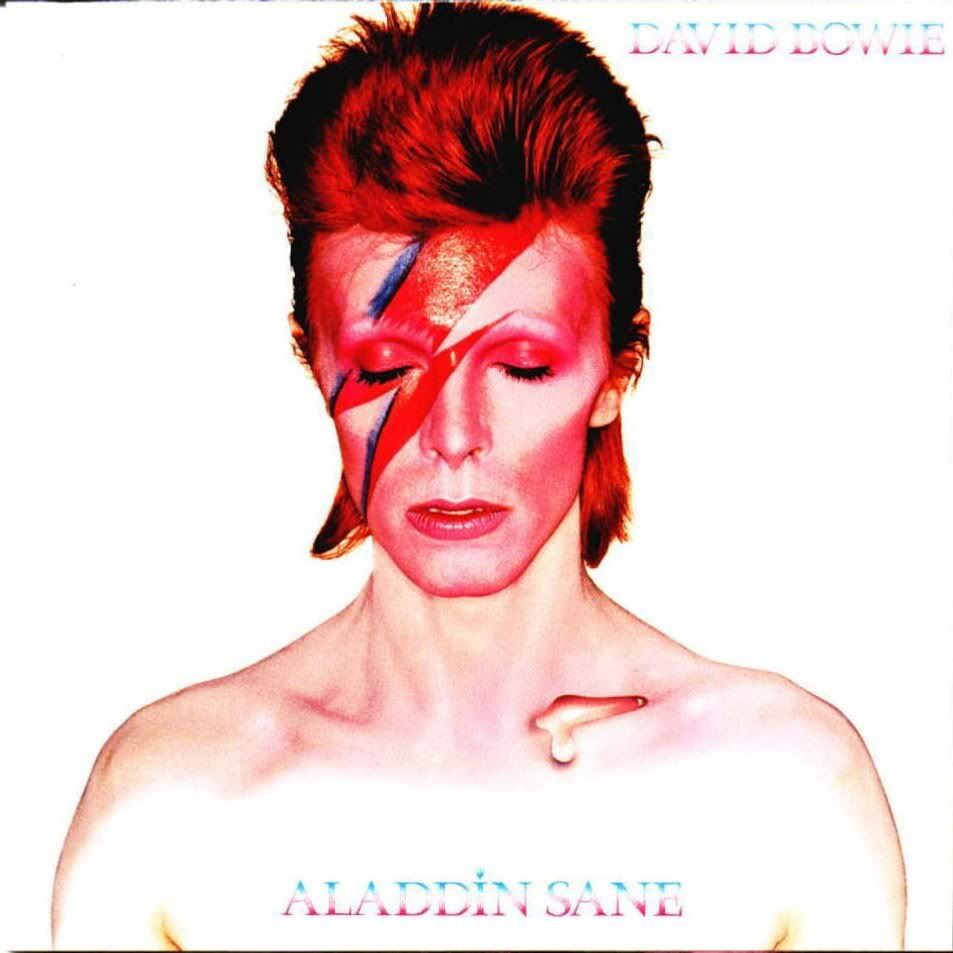
We (Charlie, Rick and I) didn't want to play safe. A few years before our number came up, one enterprising soul had staged the first act of Ibsen's An Enemy of the People, which was a bit of a disaster, but a brave disaster. We wanted to follow that example, either to triumph, or to go down in a blaze of incomprehension. We elected to put on Woody Allen's play Death (now probably better known as the source material for his underrated 1992 expressionist comedy thriller, Shadows and Fog). I can't remember why we dressed the hypnotist as Aladdin-Sane-era David Bowie, or gave the murderer a Fulham scarf to wear; or indeed why we chose 'Spread A Little Happiness' as the introductory music; but something seemed to work. The judges retired to a more salubrious venue, and the following morning the headmaster announced that we'd won.

It was a few days later that I discovered none of the judges had thought our production was the best. All had placed it second, then disagreed wildly about the merits of the other three plays, enabling us to come up through the middle. Despite our strivings, we'd achieved the one thing we dreaded most: a beta-plus; a polite verdict of all-round competence.

When, several years later, I put on a show at the Edinburgh Fringe, the critic from The Scotsman described it as "unbelievably atrocious". I was delighted, and notwithstanding the entreaties of my colleagues, put the quote on the posters; attendances doubled in the second week.

Thursday, December 25, 2008

Merrily on high

A persistent urban myth holds that when the sodden corpse of the free jazz saxophonist Albert Ayler was fished out of the East River in November, 1970, it was discovered that he'd been tied to a jukebox. Which surely suggests a particularly bleak parlour game, or maybe the pitch for a radio programme, Desert Island Discs reimagined by Chris Morris: if you were plunging towards a cold, dark, watery, inevitable doom, which records would you want to be playing on the lump of chrome and glass and bakelite that was dragging you under?

Albert Ayler: 'Bells' (1965).

Oh, Merry Christmas, by the way.