Thailand is not renowned as a bastion of sporting excellence. Thai people enjoy sport, and are enthusiastic for any sign of success. I still remember the triumphant homecoming of Thai medal-winners from the 2004 Olympics, parading down Sukhumwit Road in open-topped Bentleys. But overall, expertise seems to concentrate in sports that have yet to achieve worldwide popularity, as I discussed a few months ago.
So it's splendid news that a Thai sporting team entered the record books only yesterday. The fact that their claim to fame is being on the less favoured end of the biggest winning margin in modern ice hockey history (52-1) has not stopped the eternally patriotic Bangkok Post from focusing on the historic aspect of this achievement. And at least with ice hockey, the goalie doesn't usually have to fish the ball out of the net.
Chasms of the Earth: It's like a reading group, but with stronger coffee.
Tuesday, January 30, 2007


Saturday, January 27, 2007
Harmony in my head
My friend Dr Beatrice has directed me to the new Myspace page of her legendary goth-funk combo The Souls of Dead Librarians, which flourished long enough for them to release a demo tape (remember them?) in 1986.
I do wonder whether there's some sort of mathematical constant, similar to pi or the Golden Mean, that lays down the ratio of bands that actually make it to a debut performance, or even just rehearsal, and those that retain the purity and enthusiasm of conceptuality. About 1:5, maybe?
I was in at least two conceptual bands, as far as I can recall. Around the age of 14, I was a founder member of Yeux Bleus. The name came first, then the logo, which I happily etched onto my army surplus rucksack and several exercise books. I even concocted some lyrics, all scrupulously marked "© TJ Footman 1982".
The music wasn't so easy. My friend Alex had taken a few guitar lessons. Stephen liked the idea of the bass (John Taylor and Martin Kemp were the babe magnets of their respective combos at the time, remember), which left the drums for me, on the basis that they required the least talent. (Apologies to any drummers out there: it must be dreadful for you.)
Before any of us actually went out and bought proper instruments, Alex went off the idea, but by that stage Stephen and I had become increasingly enamoured of various synth combos, so the loss of the neophyte axeman could be presented as "creative differences". Moreover, "Yeux Bleus" (we'd briefly been The Morons, but returned to the original name after becoming a two-piece) would look better on the posters when we landed that crucial support slot with Depeche Mode, or even Classix Nouveaux.
 But Stephen and I had both fallen under the spell of the mighty Trio (famed for the glorious 'Da Da Da'), and pledged fealty to their less-is-more philosophy, which applied as much to expenditure and ability as to any specifically musical concept of minimalism. Spurning even the cheap-and-cheerful accessibility of the Casiotone keyboard, Stephen announced that he would build his own synthesiser, a device that turned out to be little more than a joy buzzer glued to a piece of balsa wood. Confronted with this, I announced that I would play my own analogue drum machine, which was a single maraca from a pair that my grandmother had brought back from a holiday in Spain.
I think that was the moment we both realised that it was time to go our separate ways. Stephen eventually went off to be a bank clerk and a devout Catholic, in that order. Alex currently manages all the property for the Anglican Church in Wales. And I went to university, where I was a founder member of equally conceptual Geschirrspülmaschine im Arschlock (which translates as "Dishwasher up the arse", if I recall correctly). All the songs would also be called 'Geschirrspülmaschine im Arschlock', and they would consist solely of the barked phrase 'Geschirrspülmaschine im Arschlock'. In a terribly elliptical tribute to Roxy Music, the line-up would consist of a fluctuating number of bass-players, with no other musicians present.
I can't remember what stopped Geschirrspülmaschine im Arschlock from moving from conceptuality to actuality, let alone Madison Square Garden. A combination of idleness and tequila, I suspect. But hey, enough of my yakkin'. Tell me about your own bands, real or imagined. Or somewhere in between. Because aren't those always the best kind?
I do wonder whether there's some sort of mathematical constant, similar to pi or the Golden Mean, that lays down the ratio of bands that actually make it to a debut performance, or even just rehearsal, and those that retain the purity and enthusiasm of conceptuality. About 1:5, maybe?
I was in at least two conceptual bands, as far as I can recall. Around the age of 14, I was a founder member of Yeux Bleus. The name came first, then the logo, which I happily etched onto my army surplus rucksack and several exercise books. I even concocted some lyrics, all scrupulously marked "© TJ Footman 1982".
The music wasn't so easy. My friend Alex had taken a few guitar lessons. Stephen liked the idea of the bass (John Taylor and Martin Kemp were the babe magnets of their respective combos at the time, remember), which left the drums for me, on the basis that they required the least talent. (Apologies to any drummers out there: it must be dreadful for you.)
Before any of us actually went out and bought proper instruments, Alex went off the idea, but by that stage Stephen and I had become increasingly enamoured of various synth combos, so the loss of the neophyte axeman could be presented as "creative differences". Moreover, "Yeux Bleus" (we'd briefly been The Morons, but returned to the original name after becoming a two-piece) would look better on the posters when we landed that crucial support slot with Depeche Mode, or even Classix Nouveaux.
But Stephen and I had both fallen under the spell of the mighty Trio (famed for the glorious 'Da Da Da'), and pledged fealty to their less-is-more philosophy, which applied as much to expenditure and ability as to any specifically musical concept of minimalism. Spurning even the cheap-and-cheerful accessibility of the Casiotone keyboard, Stephen announced that he would build his own synthesiser, a device that turned out to be little more than a joy buzzer glued to a piece of balsa wood. Confronted with this, I announced that I would play my own analogue drum machine, which was a single maraca from a pair that my grandmother had brought back from a holiday in Spain.I think that was the moment we both realised that it was time to go our separate ways. Stephen eventually went off to be a bank clerk and a devout Catholic, in that order. Alex currently manages all the property for the Anglican Church in Wales. And I went to university, where I was a founder member of equally conceptual Geschirrspülmaschine im Arschlock (which translates as "Dishwasher up the arse", if I recall correctly). All the songs would also be called 'Geschirrspülmaschine im Arschlock', and they would consist solely of the barked phrase 'Geschirrspülmaschine im Arschlock'. In a terribly elliptical tribute to Roxy Music, the line-up would consist of a fluctuating number of bass-players, with no other musicians present.
I can't remember what stopped Geschirrspülmaschine im Arschlock from moving from conceptuality to actuality, let alone Madison Square Garden. A combination of idleness and tequila, I suspect. But hey, enough of my yakkin'. Tell me about your own bands, real or imagined. Or somewhere in between. Because aren't those always the best kind?
Friday, January 26, 2007
Wednesday, January 24, 2007
Another fine mess
 It needs to be said from the outset that Colour Me Kubrick (Dir: Brian Cook, 2005) is not a very good film. The story of Alan Conway, a London conman who impersonated Stanley Kubrick, has the potential for an interesting meditation on ideas of fame, reputation and personal success. Instead, we get clunk-heavy references to Kubrick's films (bits of Strauss; two droogs threatening an elderly couple); and Jim Davidson, of all people, playing one of Conway's victims, a character that seems to be based on Joe Longthorne, channelled through Dale Winton (something that's even worse in reality than it sounds).
I only mention the film, because: a) while I was watching it last night, I remembered that when I began this blog, I had the idea that I'd use it to review every film, book, record, etc that passed under my nose, and I've been pretty slack in that respect; and b) I think it adds a brief footnote to a post I wrote a few months ago about the ambiguities that ensue when actors play 'themselves', which has parallels with the soul-searching about blog personas that everyone seems to be experiencing these days (see here, here, here and here).
 Conway is played by John Malkovich, an actor I like, but one who is always identifiably Malkovich in everything he does. Of course, since Being John Malkovich, this John Malkovich is interchangeable in the public mind with the pompous, self-obsessed 'John Malkovich', so casting him as someone who loses track of his own self in the assumed identity of someone else is a brave move, to say the least. The obvious comparison is with Geoffrey Rush's performance in The Life and Death of Peter Sellers, and not just because the real 'Kubrick' appears in that film as a character. Rush, an actor who can disappear into his parts, plays a man who did the same, to the extent that his whole personality seems to have been extinguished.
No such risk with Malkovich. Even his accents are self-consciously acTORRish: as Conway he verges between Dick Van Dyke in Mary Poppins and Keanu Reeves in Dracula; as 'Kubrick', he seems closer to a Catskills comic being Bernie Schwartz being Tony Curtis being Joe being Josephine being Junior being Archie Leach being Cary Grant, a near-infinite Russian doll of reinventions.
This is moviemaking for film students from the Rosebud School of Spotting the Reference. "So, you've never directed a Carry On film?" asks one of the less credulous characters that Conway meets. In comparison, the Carry Ons were masterpieces of subtlety. And that's the problem with making art that says "Look at me, look at me!" The worst thing is not for your potential audience to hate it. It's for the audience to say: "Yeah, I'm looking. And?"
PS: More film-related opinionating at CiF, as I suggest how to destroy the Oscars.
Tuesday, January 23, 2007
Back to analogue
It was on the tip of my tongue. What was the word I was searching for? They're people like blogchums, but they haven't got blogs.
Oh yeah, that's right.
The Chasms of the Earth: grammatical quibbles, theological mumbo-jumbo and loads of Audrey Tautou fetishes, all in one handy package.
Oh yeah, that's right.
The Chasms of the Earth: grammatical quibbles, theological mumbo-jumbo and loads of Audrey Tautou fetishes, all in one handy package.
Sunday, January 21, 2007
Cheesecloth and ashes
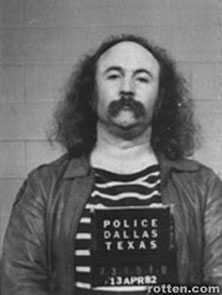 A few days ago, I watched Hotel California: LA from the Byrds to the Eagles. It was a well made doc, reinforcing BBC4's claim to be a still, small voice of critical intelligence squeaking against the celebrity/lifestyle dialectic that seems to run British factual TV these days. Since it was spun off from a book by the always perceptive and articulate Barney Hoskyns, you wouldn't expect otherwise. And I think everyone now is taking an interest in America in the early 1970s, because of the obvious resonances: a president slumping from adulation to contempt; an unwinnable war; a dream that died. For Watergate, Manson and Altamont, read Guantánamo and Abu Ghraib.
But, oh, sweet Jesus on a unicycle, the music! Seldom have I heard such a barrage of self-indulgent, witless, lame piffle being presented in the name of family entertainment.
In the mid-to-late 60s, Los Angeles was home to the Beach Boys and the Mamas and the Papas, the beauty of whose sunny harmonies barely cloaked the seething dysfunction that lurked beneath. The music scene was also home to a delicious strain of subversive humour, that encompassed the likes of the Monkees, the Turtles and Frank Zappa. And what replaced them? Po-faced singer-songwriters who insisted on embarking on a voyage of self-discovery, and charging the listener to accompany them. Personally, I've never understood the critical kudos handed out to the likes of Joni Mitchell and Gram Parsons, nor the redemption from ignominy that Jackson Browne and James Taylor have recently enjoyed. Then there was Linda Ronstadt, who escapes censure as part of the vile singer-songwriter tribe simply by virtue of the fact that she never wrote anything.
But the solo dullards were wimps who could be batted aside. The groups were harder to argue with, not least because their shrill harmonies formed a sort of choirboy wall of sound that created a mixture of paralysis, pain and nausea in any listener not under the thrall of marijuana, cocaine or fringed buckskin. And their egos made things worse. When David Crosby (of the the tedious, fey Crosby, Stills and Nash) indicated how bored he was by the tedious, obnoxious Eagles, I started constructing a new circle of hell for anybody found in possession of an acoustic guitar and an offensive poncho.
What was so infuriating was that many of these people were highly talented, often with excellent back catalogues. Crosby, of course, was a Byrd; Carole King was responsible for some of the best pop songs of the previous decade. Altamont and Manson didn't just kill the 1960s dream, it would appear; they killed self-deprecation, humour, balls, fun.
One figure transcended this ludicrous, up-their-own-arses-like-an-ice-cube-up-Gram's cabal, while still being counted among its number. He did not deign to be interviewed, but he was glimpsed in archive footage on many occasions, usually hovering to one side, glaring balefully at the proceedings from beneath his simian brow, or wielding a pair of BBC coffee cups as if they were offensive weapons. Towards the end of the film, we heard his alien yowl, as if he and only he knew how low music had fallen:
"The king is gone, but he's not forgotten. This is the story of Johnny Rotten."
Of all these tiresome people in their foolish cowboy boots and misconceived moustaches, only Neil Young, bless his curmudgeonly heart, understood how utterly necessary punk rock was.
Friday, January 19, 2007
Jaded
Right, I said to myself, I will not get involved in the latest Big Brother controversy, I don't want to give them any more publicity, it's demeaning, it's banal, it's a waste of time, it's...
Ah, bollocks.
Ah, bollocks.
Thursday, January 18, 2007
Angkor management
As I attempted for Manila and Tokyo, I offer five things about Cambodia (or, more specifically, Siem Reap and the temples of Angkor).

1. The Khmers invented Poohsticks. You put an identifying mark on a coconut and drop it down the well at the Bayon. About a week later, it should reappear in the great lake of Tonlé Sap; if you spot it, good fortune will be yours.
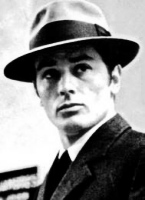 2. Coolest cigarette brand in the world: Alain Delon.
3. In the centre of Siem Reap, local people (mostly, but not exclusively, women) peddle second-hand books from carts. It's the usual mix of guidebooks, lurid volumes documenting the foul excesses of the Pol Pot regime, and the tome that now appears to be compulsory reading in the backpacky community: Mr Nice, by Howard Marks. Each cart has a large placard attached, giving a potted biography (in English, sometimes also in French) of the seller: name; age; number of children; disabilities and illnesses of any family members (polio, landmines, etc). It's difficult to know whether the details are accurate but, as spin doctors now tend to put it, the narrative is plausible. I think of the tart cards left in London phone boxes, and immediately feel guilty that I've made such a connection. But do you get my point?
4. Avoid the superficially charming monkeys of Angkor Wat. They climb trees and throw coconuts at innocent tourists. Bastards.

5. Most of the temples have been reclaimed from the jungle, but at Ta Prohm the trees have been allowed to take over. As a result, the stones are constantly shifting position; the tree trunks, meanwhile, seem petrified, a little like stalagmites. The whole place seems to sum up two key elements of Buddhist philosophy: anicca, the notion of impermanence; and the belief that existence is a never-ending cycle of life and death. It's not often that a man-made structure accidentally comes to embody the very concepts that it was built to commemorate.
1. The Khmers invented Poohsticks. You put an identifying mark on a coconut and drop it down the well at the Bayon. About a week later, it should reappear in the great lake of Tonlé Sap; if you spot it, good fortune will be yours.
2. Coolest cigarette brand in the world: Alain Delon.3. In the centre of Siem Reap, local people (mostly, but not exclusively, women) peddle second-hand books from carts. It's the usual mix of guidebooks, lurid volumes documenting the foul excesses of the Pol Pot regime, and the tome that now appears to be compulsory reading in the backpacky community: Mr Nice, by Howard Marks. Each cart has a large placard attached, giving a potted biography (in English, sometimes also in French) of the seller: name; age; number of children; disabilities and illnesses of any family members (polio, landmines, etc). It's difficult to know whether the details are accurate but, as spin doctors now tend to put it, the narrative is plausible. I think of the tart cards left in London phone boxes, and immediately feel guilty that I've made such a connection. But do you get my point?
4. Avoid the superficially charming monkeys of Angkor Wat. They climb trees and throw coconuts at innocent tourists. Bastards.
5. Most of the temples have been reclaimed from the jungle, but at Ta Prohm the trees have been allowed to take over. As a result, the stones are constantly shifting position; the tree trunks, meanwhile, seem petrified, a little like stalagmites. The whole place seems to sum up two key elements of Buddhist philosophy: anicca, the notion of impermanence; and the belief that existence is a never-ending cycle of life and death. It's not often that a man-made structure accidentally comes to embody the very concepts that it was built to commemorate.
Subscribe to:
Posts (Atom)