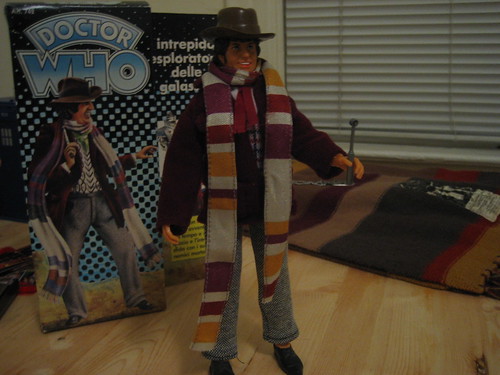
So, where were you when Wikipedia went off on its 24-hour strop? The inevitable one-liners about journalists and students suffering emotional meltdown in the absence of their fountain of facts did raise a few questions. I mean, is it OK to use Wikipedia as a source provided you attribute and cite appropriately? Or has the haranguing pedantry of the Wiki editors forced us into a state of neurotic overcitation?
 I’ve succumbed to this foible in the past, desperately ploughing through some arcane text that I haven’t really read so as to give a vaguely credible sheen to my inane ramblings. A little Adorno or McLuhan goes a long way. But Simon Reynolds has a better tactic, acknowledging that something is moderately interesting, but not important enough for a full-blown footnote. As he says in Retromania: “‘Plus/and’, a philosophical term of uncertain origins (I’m told Deleuze and Guattari used it), is the buzz concept.” The vague “I’m told...” is the clever bit. The Wikipedants would insist that he identify the person who told him.